








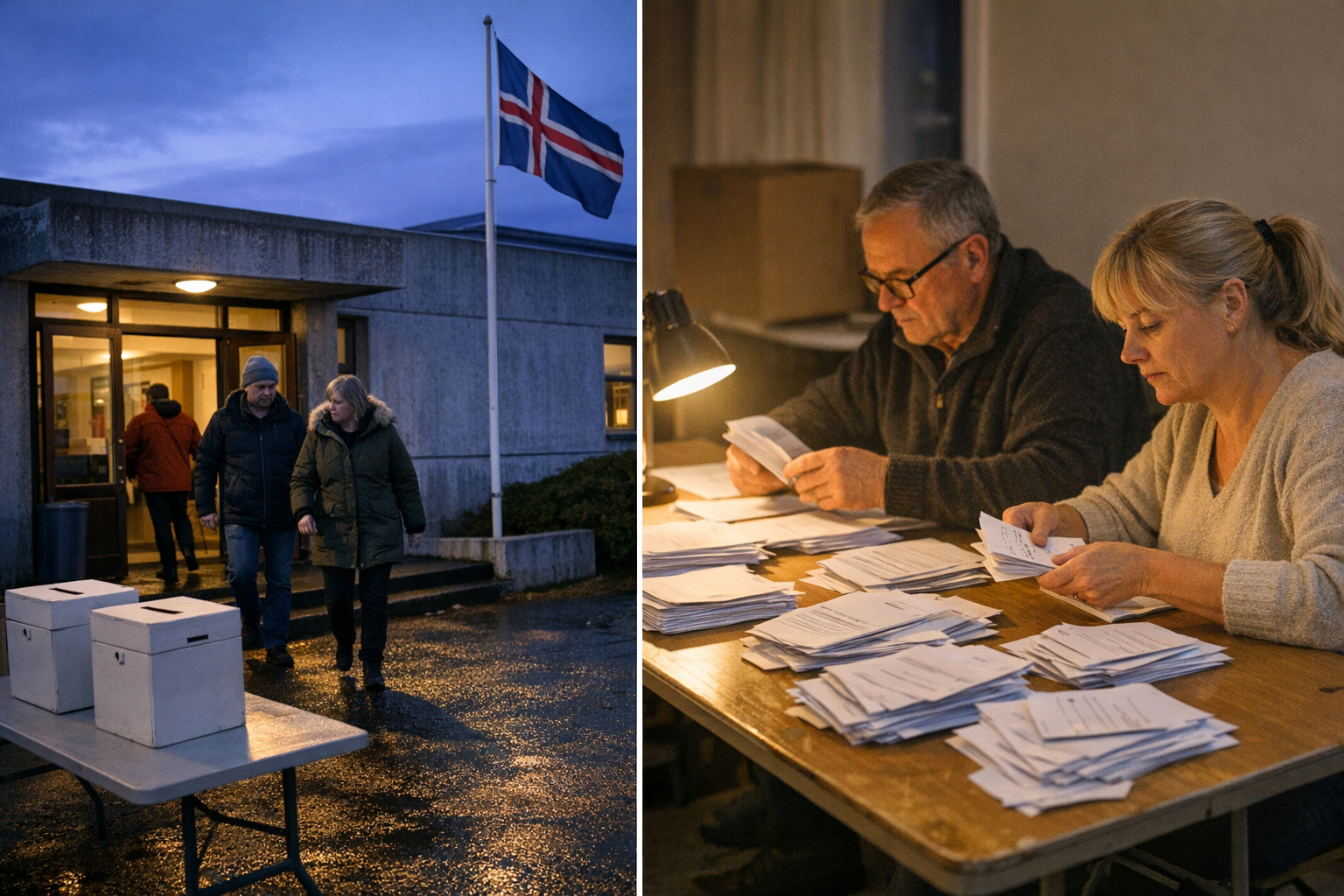
Icelandic voters headed to the polls on August 29, 2026, to decide whether their country should seek membership of the European Union. Officials warned that the result could be extremely close and that ballot counting would continue through the night, with electoral authorities required to verify and publish final totals once the count is complete.
Scenes from polling stations in the capital reflected a quiet but determined turnout, including a station inside Reykjavik City Hall, where staff assisted voters during the day. A photograph from the location carried the credit Marco Di Marco. Voting took place across municipalities, with measures in place to process ballots methodically as local officials reconciled tallies from each precinct.
The referendum’s outcome will determine the immediate political pathway in Reykjavik. A majority in favour would open the formal process of accession talks with the European Union, which typically involves detailed negotiations over laws, regulations and transition arrangements. A majority against would leave existing relations unchanged and maintain current arrangements between the country and the bloc. In either case, implementation steps and timelines would depend on subsequent government decisions and, if relevant, discussions with EU institutions and member states.
Analysts and political actors are expected to focus on the geographic and demographic breakdown of the vote once results are available, as the referendum reflects long-standing public debate about economic ties, fisheries policy and sovereignty. Electoral authorities will complete the official count and announce certified results when all ballots are reconciled. The referendum marks a pivotal moment in the nation’s relationship with Europe, with immediate procedural consequences and longer-term political implications to follow.