









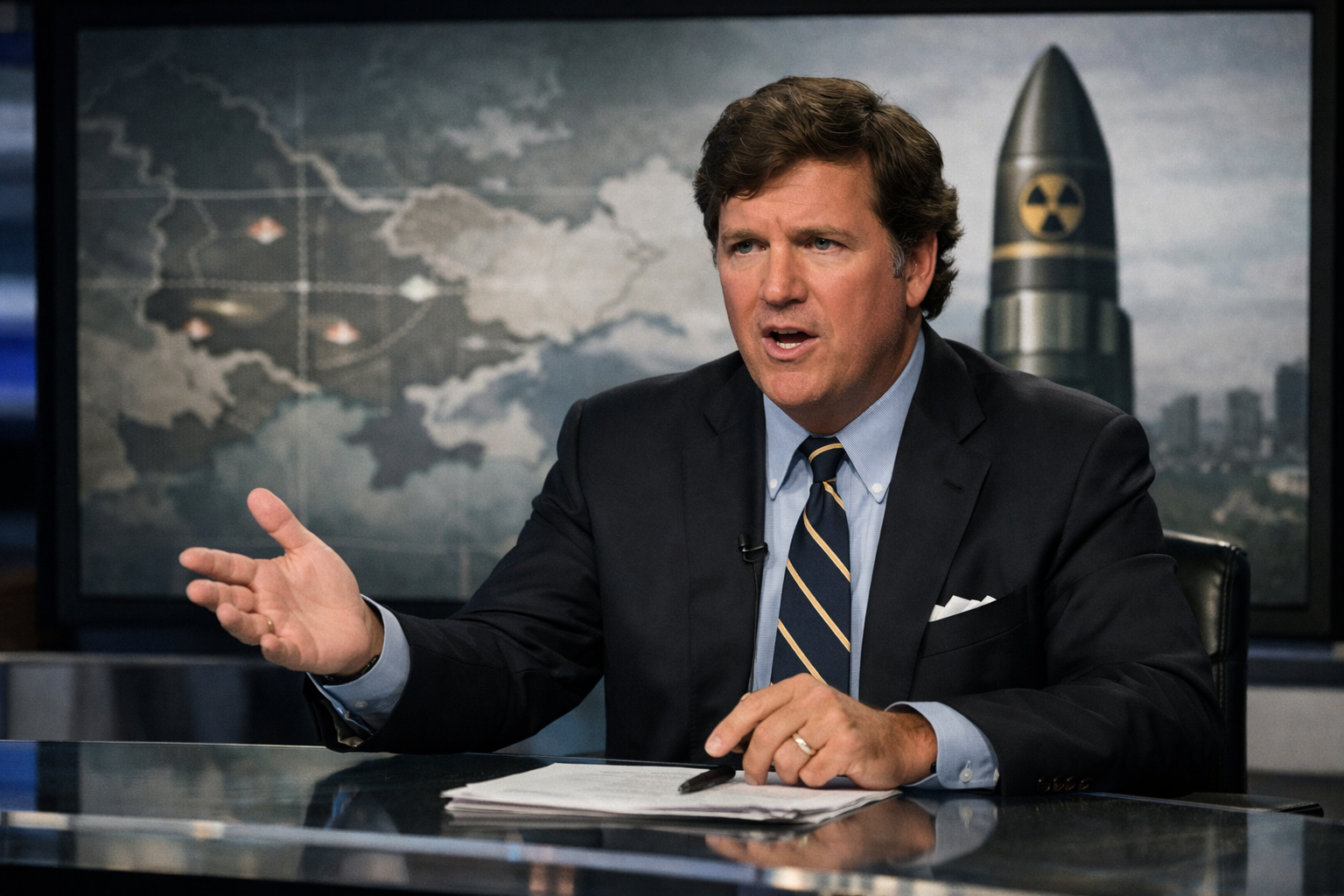
Tucker Carlson warned on Friday that a sitting president who even contemplates ordering the first use of nuclear weapons ought to be removed from office immediately. The conservative podcaster framed the possibility of a leader considering such an action as disqualifying for continued service, calling for rapid removal in that circumstance.
Tucker Carlson, who hosts a high-profile conservative podcast and previously anchored a cable news program, delivered the remarks during his show. He specifically addressed the hypothetical of a commander-in-chief weighing a preemptive nuclear strike and insisted that mere consideration of first use would necessitate removal. The comments focused attention on questions of judgment and the limits of presidential authority in extreme military scenarios.
The exchange touches on long-standing legal and constitutional issues about who can constrain a president’s control over nuclear forces and how a leader might be removed if judged unfit. Mechanisms such as impeachment and the Twenty-fifth Amendment are among the formal avenues available under U.S. law, while oversight by Congress and the Department of Defense plays a separate role in review and preparedness. Debates over safeguards around launch authority have periodically surfaced in public discourse, particularly when commentators raise concerns about a president’s judgment in crisis situations.
The remarks arrive amid continuing public discussion of nuclear policy and presidential fitness, and they are likely to prompt renewed attention from lawmakers, analysts and the media. Observers note that assertions about immediate removal in response to a private consideration of military options pose complex factual and procedural questions about evidence, timing and the responsibilities of institutions charged with preserving civilian control and national security. The debate underscores persistent anxieties about the balance between decisive leadership and institutional checks in U.S. politics.