








Geothermal power occupies an unusual place in America’s energy debate: it is neither easily labeled conservative nor progressive. Drawn from heat beneath the earth’s surface, it can provide steady electricity without relying on weather conditions. That makes geothermal energy attractive at a time when the United States is trying to expand reliable power supplies while also reducing emissions from the electricity sector.
The technology’s political appeal lies in its combination of domestic production, industrial know-how and low-carbon output. It speaks to those focused on energy security, grid reliability and local development, while also fitting climate and clean-power goals. Unlike some parts of the energy transition that have become symbols in partisan disputes, geothermal can be framed less as a red or blue project than as a practical source of firm electricity. In that sense, its “purple” identity is not a slogan but a reflection of how broadly it can fit into existing policy priorities.
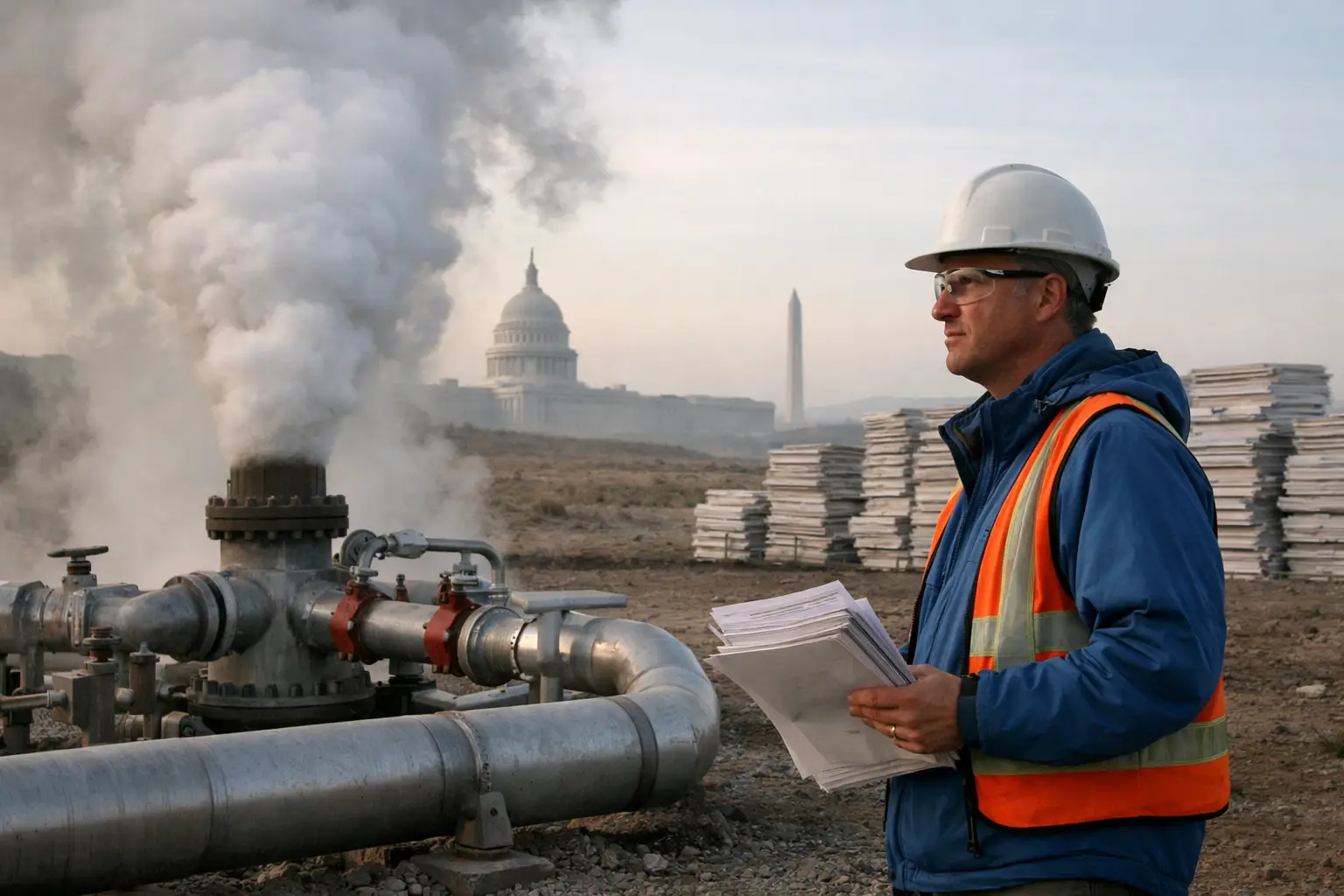
The obstacle is not simply technology or resource potential. Slow federal permitting remains a major barrier to wider deployment. Geothermal projects often require exploration, drilling and approvals on federal land, placing them within regulatory processes that can stretch timelines and increase uncertainty. The U.S. Department of Energy identifies geothermal as a renewable resource with the ability to contribute to the nation’s energy supply, while the Bureau of Land Management oversees geothermal leasing and development on public lands. When those procedures move slowly, projects that could add dependable capacity face delays before they reach construction.
That timing matters because electricity demand is rising and the grid needs resources that can operate around the clock. Wind and solar have grown quickly, but their output varies with weather and daylight. Geothermal plants, where viable, can complement those sources by supplying continuous power. Delays in permitting therefore affect more than individual developers; they influence planning for utilities, investment decisions and the pace at which cleaner firm capacity can enter the system. A project held up in review is also a project that cannot help meet demand or stabilize supply.
For policymakers, the challenge is to maintain environmental safeguards while making federal approval processes more predictable. Faster decisions do not require abandoning oversight, but prolonged uncertainty can weaken a technology that otherwise aligns with several national objectives. If geothermal is to become a larger part of the American energy policy landscape, Washington’s permitting system will need to match the urgency of the country’s power needs. The resource may be politically purple, but its progress still depends on decisions made in federal offices.