






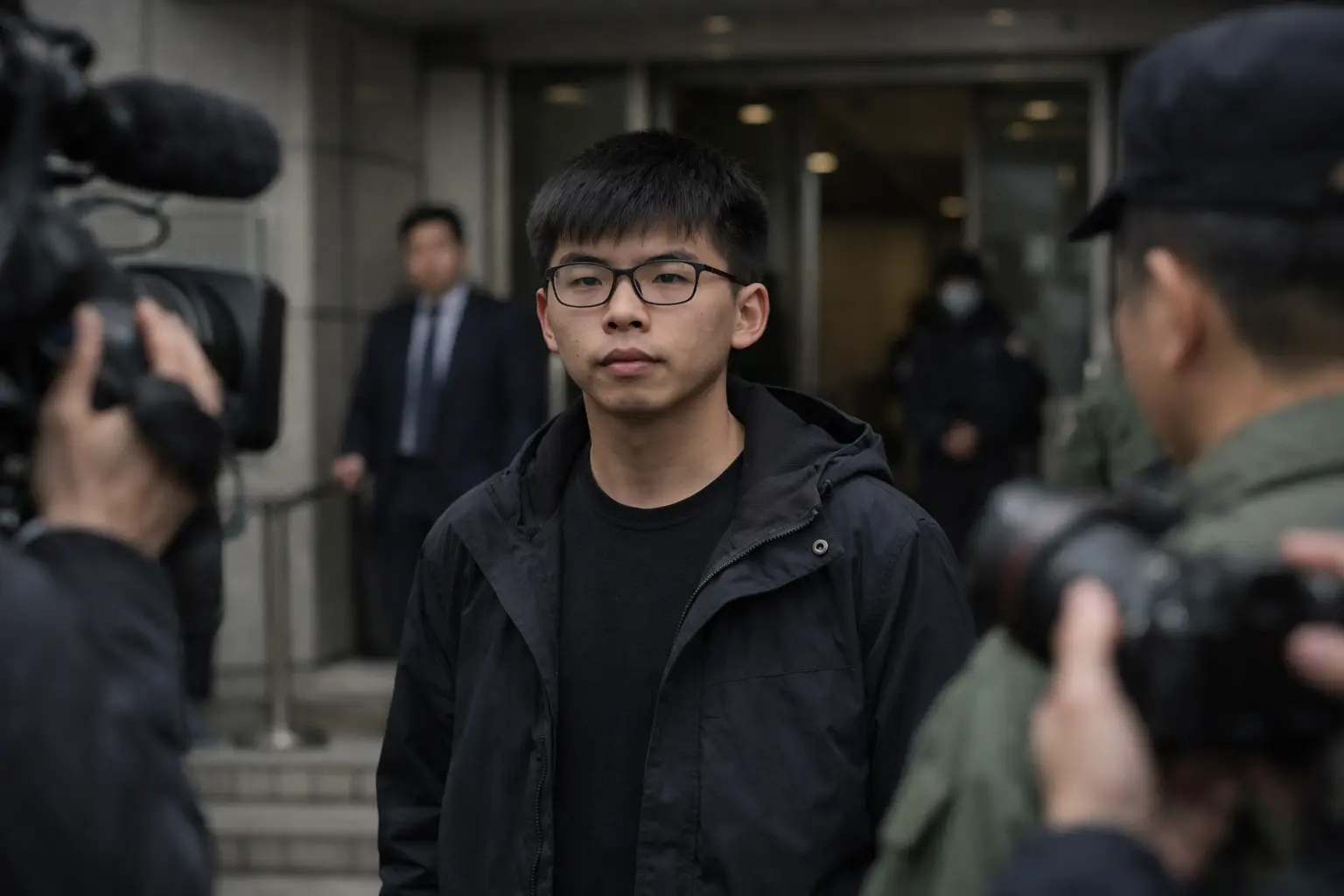
Joshua Wong’s ten-year sentence marks another severe turn for Hong Kong’s pro-democracy camp, which has faced mounting legal pressure since Beijing imposed a sweeping security framework on the city. The activist, one of the most internationally recognized figures of a generation of campaigners, was sentenced after his second conviction under the national security law.
The case places Joshua Wong once again at the center of Hong Kong’s transformed political landscape. He first became widely known as a teenage student leader during the 2014 Umbrella Movement, when yellow umbrellas became a symbol of public demands for greater democratic participation. A decade later, the space for organized opposition has narrowed sharply, and several prominent activists have been prosecuted, jailed or driven out of public life.
The sentence was delivered within a legal environment reshaped by the security law introduced in 2020, a measure imposed by Beijing after months of mass demonstrations in the city. Authorities present the law as a tool to restore order and safeguard stability. Critics view its use against political campaigners as evidence of a broader crackdown on the freedoms that had distinguished Hong Kong from mainland China under the “one country, two systems” model.
Proceedings before the Hong Kong Judiciary have become a central focus for observers tracking the city’s institutional autonomy. Wong’s second conviction under the national security framework adds to concerns among civil liberties groups and foreign governments about the durability of political rights, public dissent and independent civic organizing in the territory. The case also reinforces the legal risks now faced by activists associated with the city’s former pro-democracy movement.
For Hong Kong, the ruling carries significance beyond one defendant. It reflects how the city’s political opposition has been contained through court cases, disqualifications and a changed electoral environment. Wong’s sentence will be read internationally as another measure of how far the former British colony has moved from the open protest culture that once defined its public life.