









For much of the twentieth century, cities were organized around a relatively predictable routine. Residential neighborhoods, business districts and transport systems evolved to support daily commuting between home and the workplace. Today, that model is changing as new patterns of work reshape how people choose to live, travel and use urban spaces.
The expansion of remote and hybrid work has altered one of the main reasons people concentrated in city centers. While offices remain important in many industries, a growing number of employees divide their time between home and the workplace. This shift is influencing decisions about where people live, how often they commute and what they expect from their neighborhoods.
Housing preferences have evolved alongside these changes. For some households, proximity to the office is no longer the primary factor when choosing where to live. Access to larger living spaces, quieter environments or better local amenities has become increasingly important, particularly where remote work reduces the need for daily travel.
These changes are affecting urban real estate markets. In some cities, demand for office space has become more variable, while residential areas outside traditional business districts have attracted greater interest. Property developers and local authorities are reassessing how commercial buildings and mixed-use neighborhoods can respond to changing patterns of demand.
Public transport systems are adapting as well. Passenger flows that were once concentrated during morning and evening rush hours have become more evenly distributed throughout the week in some metropolitan areas. Transport operators are reviewing schedules, pricing models and infrastructure investments to reflect these evolving travel habits.
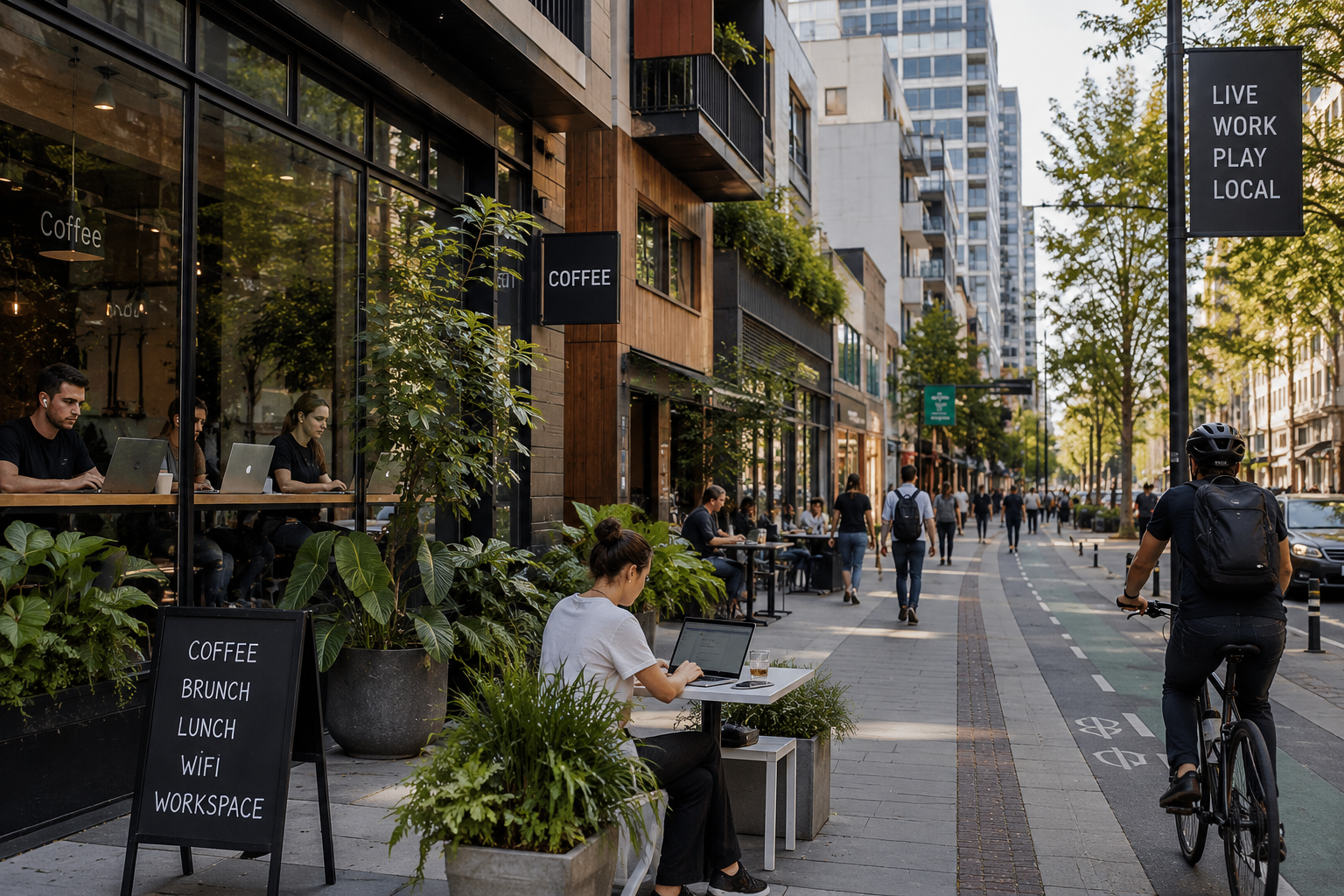
The local economy is also experiencing significant adjustments. Restaurants, cafés and retail businesses that depended heavily on office workers have seen changes in customer patterns, while neighborhood commercial areas have benefited from increased daytime activity. As more people spend working hours closer to home, demand for local services has grown in many residential communities.
Flexible work has also influenced how people organize their daily routines. Time previously dedicated to commuting may now be used for exercise, family responsibilities, education or leisure. Co-working spaces, neighborhood cafés and public libraries increasingly serve as alternative workplaces, expanding the range of environments where professional activities take place.
Employers are responding by redesigning office spaces. Rather than maximizing the number of desks, many organizations are creating environments intended to support collaboration, meetings and team activities. Offices are increasingly viewed as shared spaces for interaction rather than locations where every task is performed.
Urban planning is evolving in response to these trends. Many cities are promoting mixed-use developments where housing, services, workplaces and public spaces coexist within shorter distances. This approach aims to reduce travel needs while improving accessibility and neighborhood vitality.
Technology remains a central driver of these changes. High-speed internet, cloud computing and digital collaboration platforms allow many professionals to work effectively from different locations. At the same time, this flexibility depends on reliable digital infrastructure, making connectivity an increasingly important component of urban development.
The transformation of work patterns is therefore influencing much more than employment itself. It is reshaping housing markets, transportation systems, commercial districts and public spaces, gradually redefining how cities function and how residents balance professional responsibilities with everyday life.