






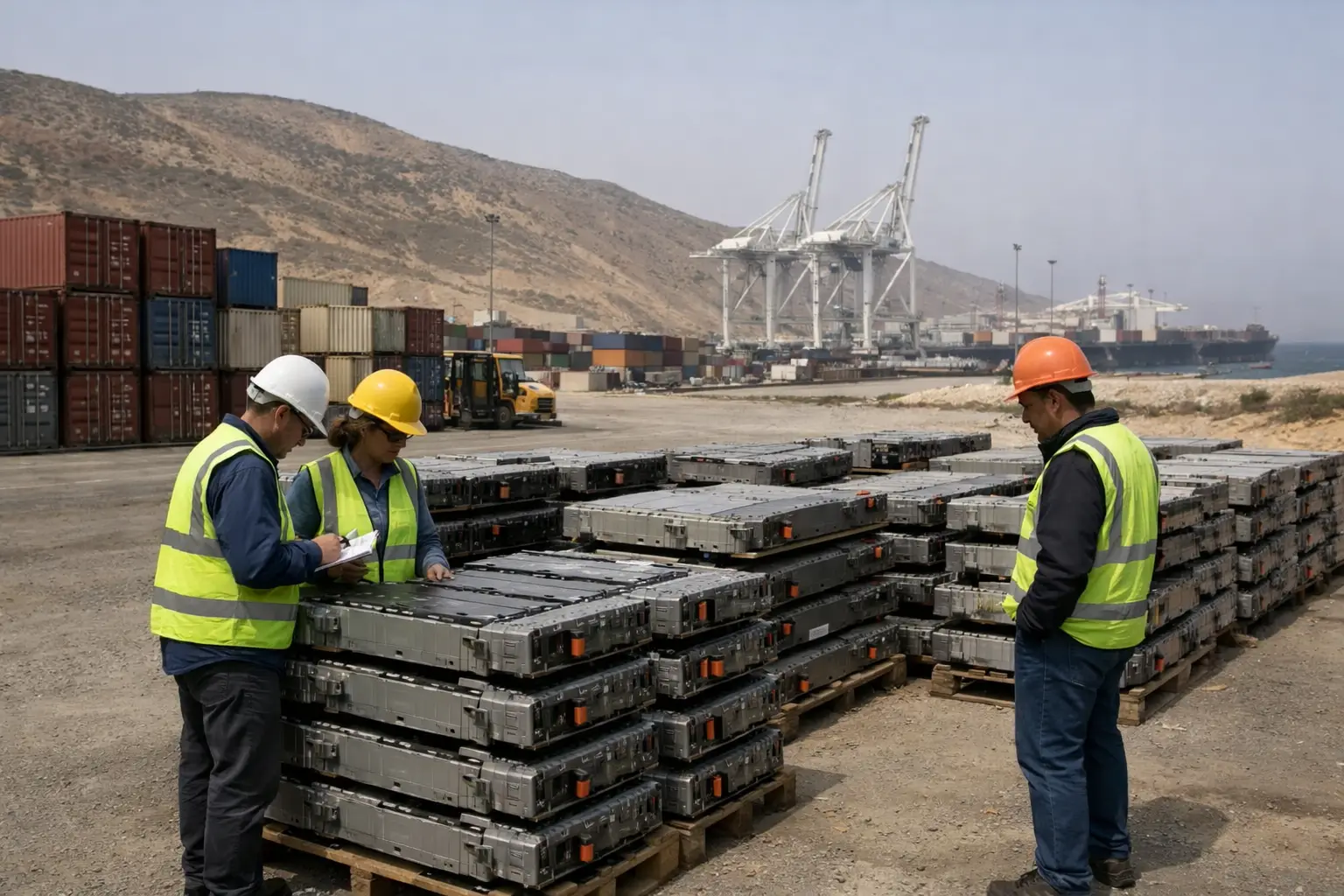
China’s electric vehicle industry is adjusting to a tougher trade environment in Europe by expanding its industrial footprint beyond its own borders. Morocco has emerged as one of the most visible testing grounds for that shift, offering Chinese manufacturers and suppliers a base close to the European market at a time when the European Commission is applying new trade measures to China-made electric cars.
The strategy reflects a broader change in Beijing’s industrial playbook. Rather than relying only on exports from Chinese factories, companies linked to the Chinese electric vehicle ecosystem are increasingly looking for production and supply-chain locations that can serve Europe more directly. Morocco’s appeal lies in its established automotive sector, its geographic position across the Mediterranean and its trade relationship with the European Union, which together make the country relevant for battery materials, components and vehicle-related manufacturing.
For European policymakers, this development complicates the task of protecting domestic industry while keeping supply chains competitive. Tariffs on China-made electric vehicles are designed to address concerns over state support and price competition, but they do not automatically cover every product assembled or processed outside China. If production in Morocco meets applicable rules of origin, it can become part of a different commercial pathway into the European market. That makes the distinction between relocation, diversification and tariff avoidance increasingly important.
Morocco also gains from the shift. The country has spent years building itself into a manufacturing platform for global carmakers and parts suppliers. Its role in electric vehicles could deepen as battery supply chains become more regional and as carmakers seek to reduce transport costs, political risk and dependence on a single production base. Chinese investment can accelerate this process, while also tying Morocco more closely to the fast-changing competition between Asian producers and European industrial policy.
The outcome will depend on how companies structure production and how regulators assess origin, subsidies and market access. What is already clear is that Europe’s EV tariff debate is no longer confined to vehicles shipped directly from China. It is becoming a wider contest over where the next generation of automotive supply chains will be built, and Morocco is now one of the places where that contest is taking shape.