









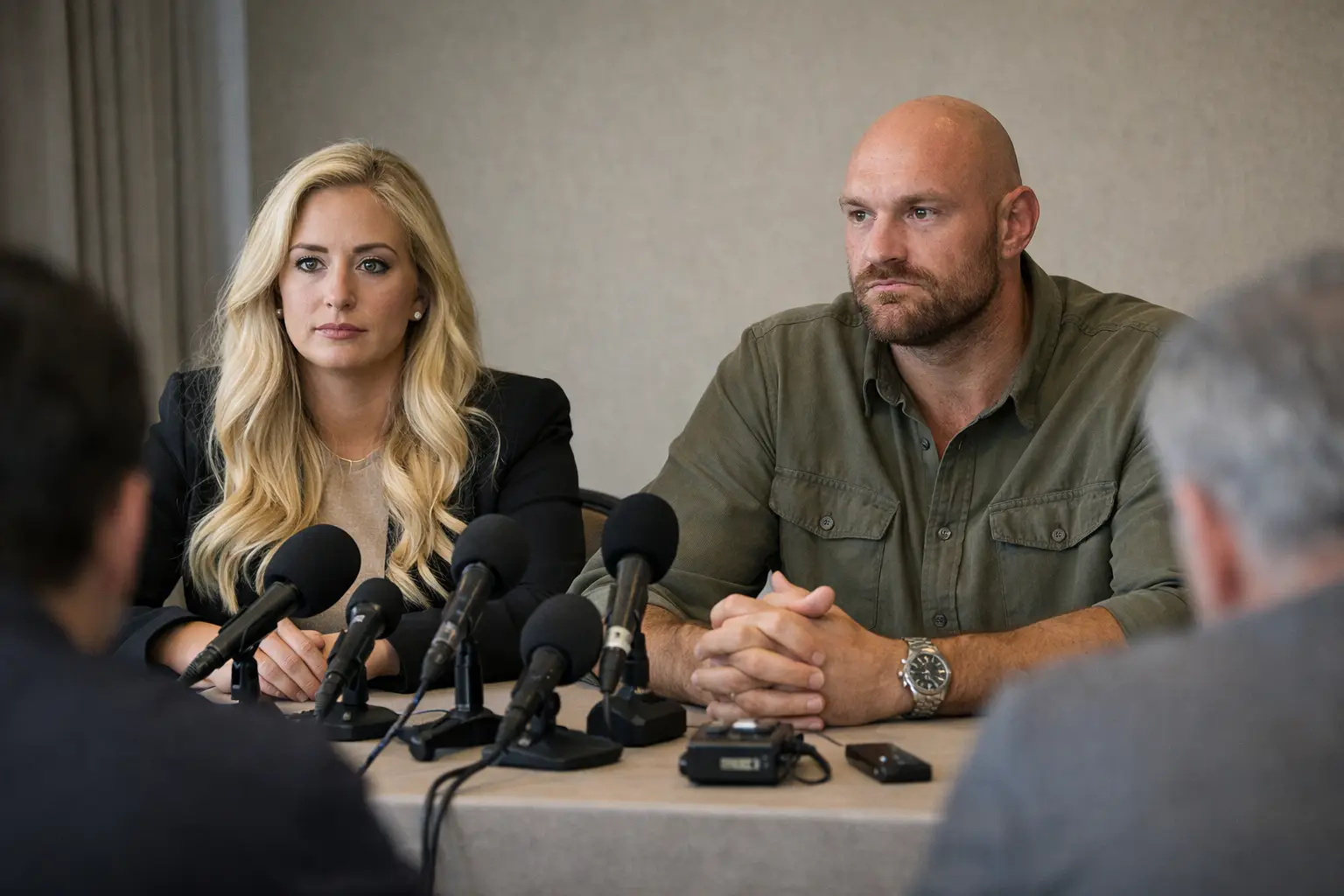
Paris Fury has withdrawn her claim that Tyson Fury had been diagnosed with schizophrenia, correcting a statement that quickly drew attention because of the boxer’s long-standing public association with mental health discussions. The clarification leaves no confirmed basis, from her remarks, for describing the former world heavyweight champion as having received that diagnosis. The retraction is significant not because it changes Fury’s sporting record, but because medical labels carry weight, especially when they are attached to a public figure whose personal struggles have often been discussed alongside his career in boxing.
The correction also underlines a broader issue in celebrity and sports coverage: mental health conditions require precision, not approximation. Schizophrenia is a specific psychiatric disorder, and public references to it can shape how audiences understand both the individual concerned and the condition itself. Health authorities such as the NHS describe schizophrenia as a serious condition involving disturbances in perception, thought and behaviour, which is why presenting it as a confirmed diagnosis without a verified basis risks misleading readers and reinforcing stigma.
Tyson Fury has previously spoken publicly about his mental health, and those disclosures have become part of the public narrative surrounding his comeback and status within heavyweight boxing. That history, however, does not justify extending his record into unverified diagnostic territory. The distinction matters: a person may describe episodes of distress, depression or psychological crisis without that amounting to a disclosed diagnosis of schizophrenia. In public reporting, especially on mental health, the difference between personal experience and clinical diagnosis is essential.
For Paris Fury, the retraction narrows the matter to a correction of the public record. For media outlets and readers, it is a reminder that mental health coverage involving athletes should avoid shortcuts and rely only on confirmed information. Fury remains one of the most recognisable names in modern heavyweight boxing, and scrutiny of his personal life is unlikely to fade. But the episode shows why care is needed when private medical matters enter public conversation: accuracy protects both the individual and the wider public understanding of mental illness.