







Seeing Africa’s potential requires discarding old stereotypes and recognising the continent as a source of practical, scalable solutions. Across health, finance, energy and agriculture, innovations developed in African cities and rural communities respond directly to constraints shared by richer countries: limited infrastructure, rising urban populations and the need for cost‑effective, rapid deployment of services. Observers from government agencies, universities and private firms are increasingly attentive to these experiments and to the lessons they may hold for global policy and business strategies. The story is not one of simple imitation but of selective adoption and adaptation.
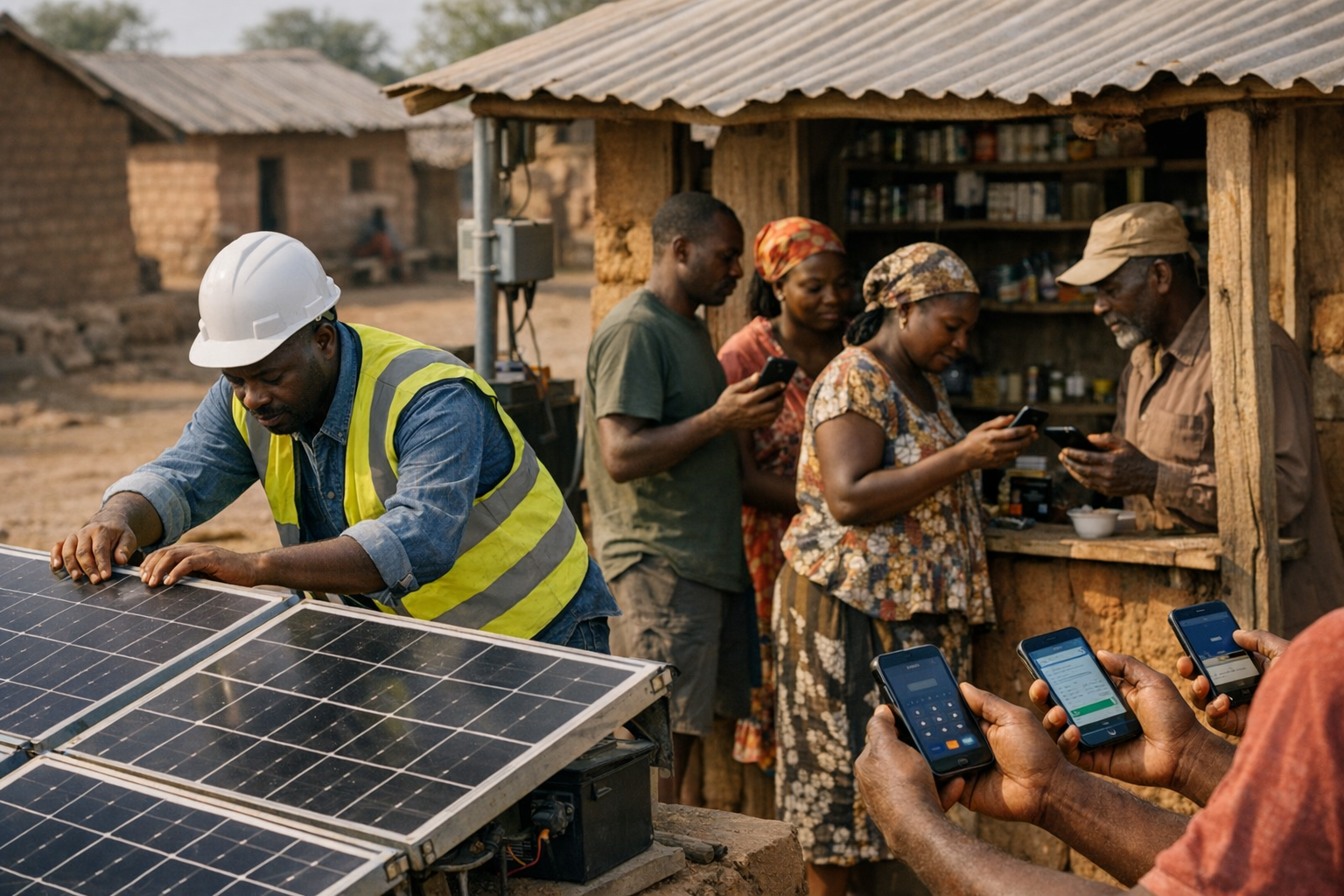
In the realm of payments and financial inclusion, initiatives that began to address local needs have produced tools with broader applicability. In places such as Kenya, mobile‑based transfers and digital wallets have expanded access to basic financial services where traditional bank branches are scarce. Services like M-Pesa illustrate how technology can lower transaction costs, facilitate remittances and enable small enterprises to operate more efficiently. Analysts point to these developments as evidence that different starting conditions can produce solutions that travel well across contexts, including advanced economies seeking to reach underserved populations. See coverage of fintech at /tag/fintech/.
Energy and infrastructure projects show a similar pattern of pragmatic innovation. Off‑grid solar systems, mini‑grids and pay‑as‑you‑go models have scaled where centralized grids are unreliable or absent, creating locally managed services that reduce upfront costs for households and businesses. These approaches are relevant to remote communities everywhere and to urban peripheries facing frequent outages. The proliferation of small‑scale renewable deployments also informs debates about resilience and decentralised systems as complements, not replacements, for national grids. Relevant reporting sits under /tag/energy/.
In agriculture and entrepreneurship, digital platforms for market information, mobile extension services and a growing ecosystem of startups are reshaping value chains and employment pathways. Regional institutions and international partners, including African Union and the World Bank, support many programmes that seek to scale successful models. The combined effect is an expanding body of tested practices that policymakers and private actors can study, adapt and deploy within their own legal and social frameworks.
Recognising these developments reframes the relationship between problem and solution: many pressing issues are now addressed through local ingenuity that yields lessons for the global community. That shift matters for international cooperation, investment strategies and research agendas, which increasingly prioritise mutual learning and partnerships that respect local ownership and evidence‑based replication.