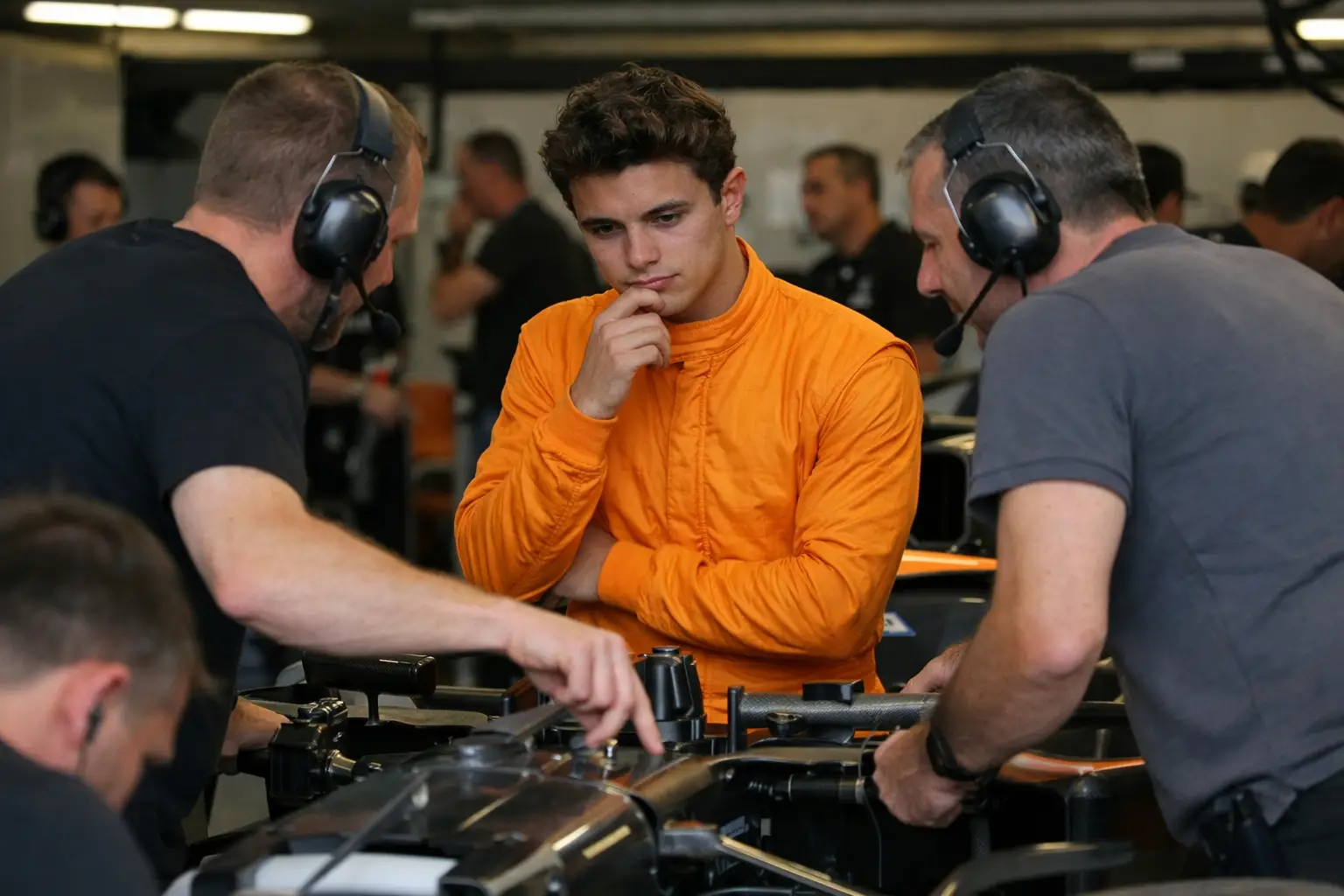








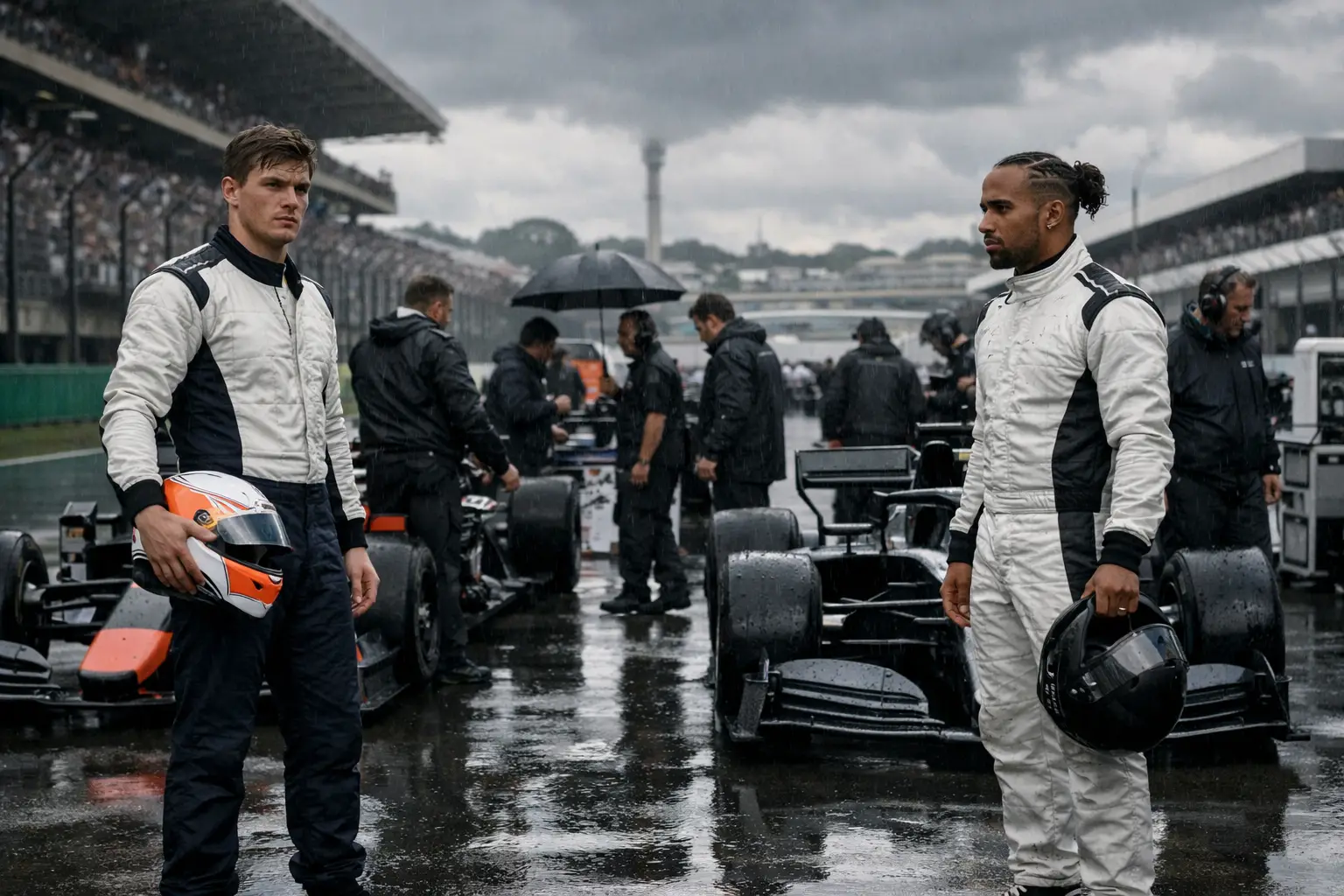
The São Paulo Grand Prix has been set up as one of the most intriguing races of the Formula 1 season, with an unsettled grid and rain in the forecast creating a demanding Sunday at Interlagos. The prospect of leading names, including Max Verstappen and Lewis Hamilton, having to fight through traffic gives the race a competitive shape rarely produced by a conventional qualifying order.
The event at the Autódromo José Carlos Pace, widely known as Interlagos, has often rewarded drivers who can combine patience with sharp decision-making. A mixed starting order changes the usual rhythm of a Grand Prix: faster cars may meet slower traffic early, tyre management becomes harder to control, and every overtaking attempt carries greater strategic cost. For Formula 1, that kind of scenario places execution above pure pace.
Verstappen and Hamilton bring exceptional experience to that challenge. Both are multiple world champions and have built reputations around race craft in difficult conditions. Yet a recovery drive at São Paulo is rarely straightforward. Interlagos is compact, undulating and exposed to changing weather, with braking zones that invite overtaking but also punish misjudgment. If rain arrives, visibility, tyre choice and timing of pit stops could become as important as outright speed.
The importance of the forecast lies not only in the possibility of wet running, but in the uncertainty it creates before the start. Teams must balance dry-weather plans against the risk of sudden showers, while drivers at the back or in the midfield may be forced to decide whether to attack immediately or wait for the race to evolve. The official championship framework is governed by the FIA, while event information and timing are managed through Formula 1.
For spectators, the combination of a disrupted grid and unstable weather increases the likelihood of a race shaped by adaptation rather than routine. The São Paulo Grand Prix has the ingredients for a contest in which established favourites cannot rely solely on starting position. Whether the leading contenders can climb through the field will depend on clean overtaking, disciplined strategy and the ability to react faster than rivals when conditions change.