









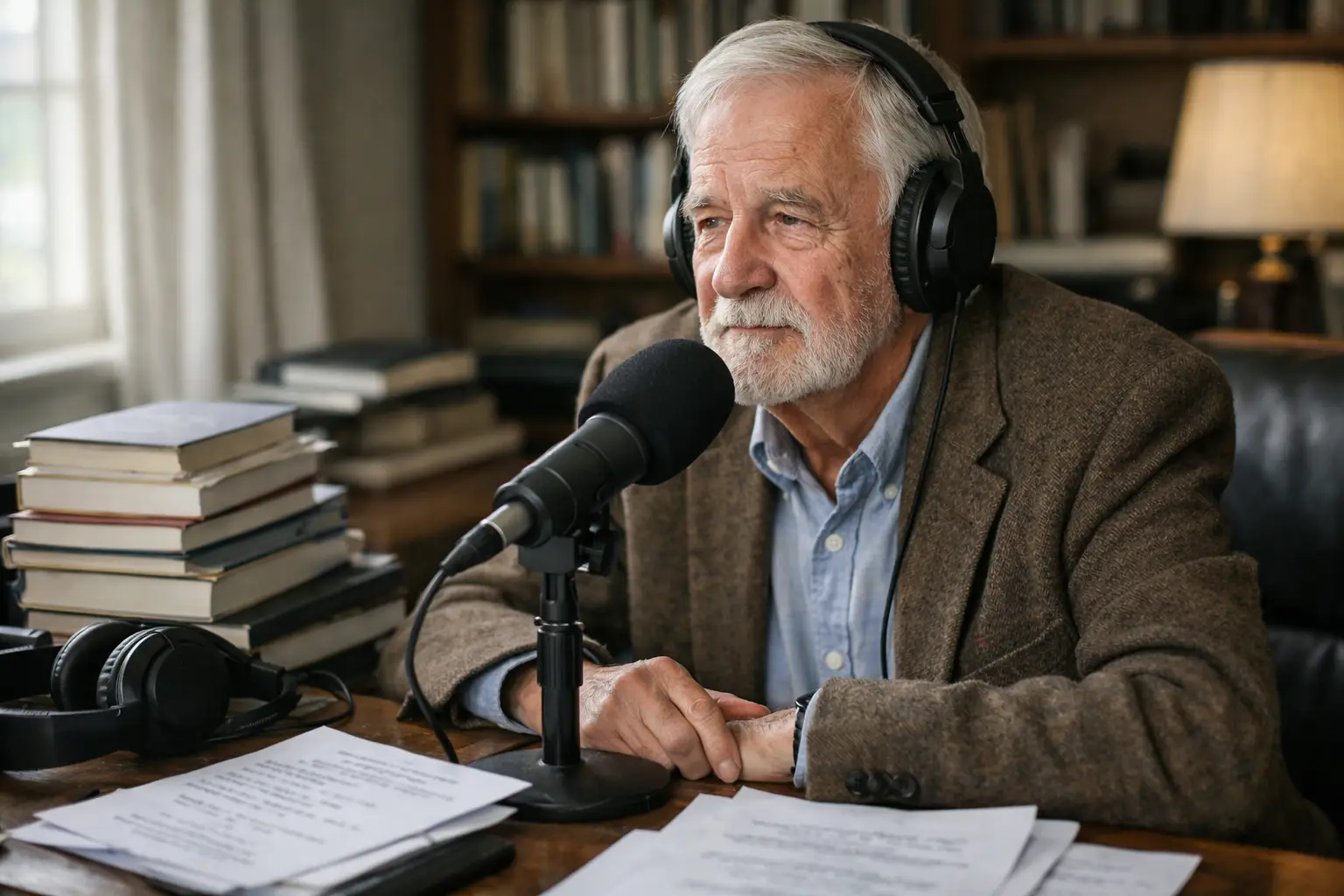
A retired professor has found an unexpected second act by turning close reading into a public conversation about Taylor Swift. At 72, he has moved from the traditional classroom to podcasting, applying academic attention to lyrics that have become part of a wider cultural discussion. The shift began with encouragement from his niece, who persuaded him to spend retirement examining Swift’s songwriting rather than stepping away from intellectual work altogether.
The result is a late-career reinvention built around analysis, curiosity and a willingness to meet a younger audience where it already gathers. By focusing on lyrics, the retired professor treats Swift’s songs not simply as entertainment but as texts that can be read for narrative structure, recurring themes and language. His work places him within a growing field of informal and academic interest in Taylor Swift, whose catalogue has drawn attention far beyond the music industry.
His success as a podcaster also reflects a broader change in how expertise circulates. Retirement once often meant leaving professional authority behind; digital media now allows specialists to rebuild public roles without an institution, a lecture hall or a formal syllabus. In this case, the podcast format gives literary analysis a conversational shape, making it accessible to listeners who may not identify with academic criticism but are already invested in pop culture.
The story also highlights the intergenerational force behind Swift’s audience. A niece’s suggestion became the bridge between a retired academic and one of the most active fan communities in contemporary music. That connection matters because Swift’s songs are frequently discussed through memory, identity, heartbreak and self-revision — subjects that invite listeners of different ages to bring their own experiences to the same material.
For the professor, the project has become more than a hobby. It has given retirement a new rhythm and turned scholarly habits into a public-facing venture at an age when many people are expected to withdraw from professional reinvention. His path shows how podcasts can extend the life of intellectual work, and how a pop songwriter’s lyrics can become the basis for serious, sustained discussion without needing to leave popular culture behind.