








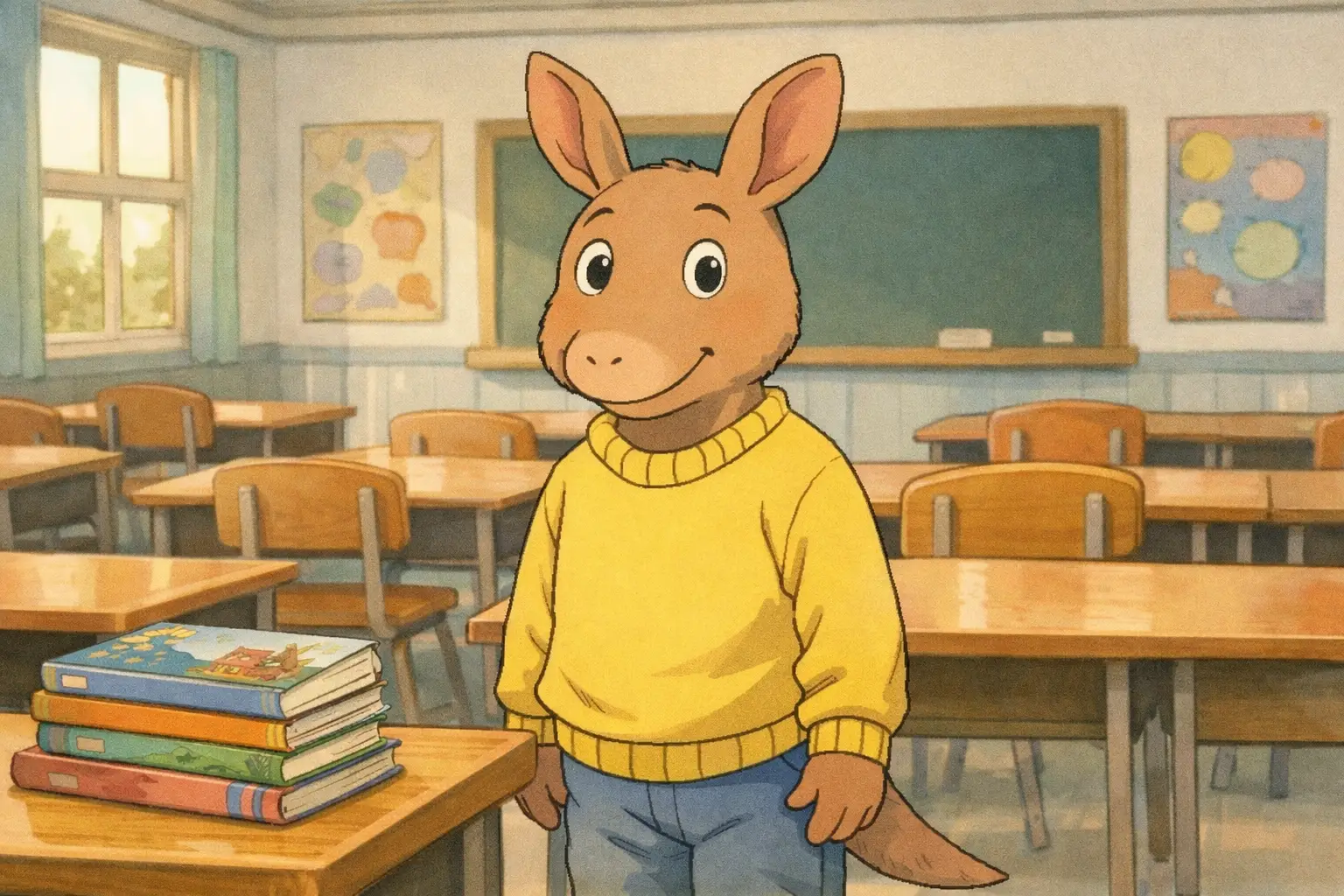
Thirty years ago the animated series Arthur launched on PBS Kids, premiering on October 7, 1996. Created from the picture books of Marc Brown, the show introduced young viewers to Arthur Read, an elementary-school aardvark, and his family and friends. Produced with the involvement of the WGBH Educational Foundation and partners, the series combined everyday stories with an explicit educational aim, shaping a consistent presence in children’s television schedules.
The program’s format centred on classroom and home life, following Arthur and supporting characters such as his younger sister D.W., classmates, and neighbours through commonplace dilemmas and learning moments. Rather than relying on spectacle, the episodes foregrounded conversations about schoolwork, friendships and family relationships. This narrative restraint allowed the series to address topics relevant to its audience’s daily experience, maintaining a clear pedagogical focus while remaining accessible to children.
Over three decades, the series became a reference point for early childhood content that blends entertainment and instruction. Educators and parents have used episodes as prompts for discussion about social skills, problem solving and emotional literacy. The show’s approach—grounding lessons in familiar settings and character-driven stories—contributed to its longevity and made it a recurring resource in both informal family viewing and classroom contexts concerned with social and emotional learning.
Marking its thirtieth anniversary invites reflection on the programme’s place in cultural memory and its continued availability to new audiences. Its archive of episodes and related materials remains a touchstone for creators and educators exploring how modest, character-led storytelling can support developmental learning. As media habits evolve, the enduring presence of Arthur underscores the lasting demand for content that treats children’s everyday lives with clarity and respect, and its legacy continues to inform contemporary approaches to children’s media.