




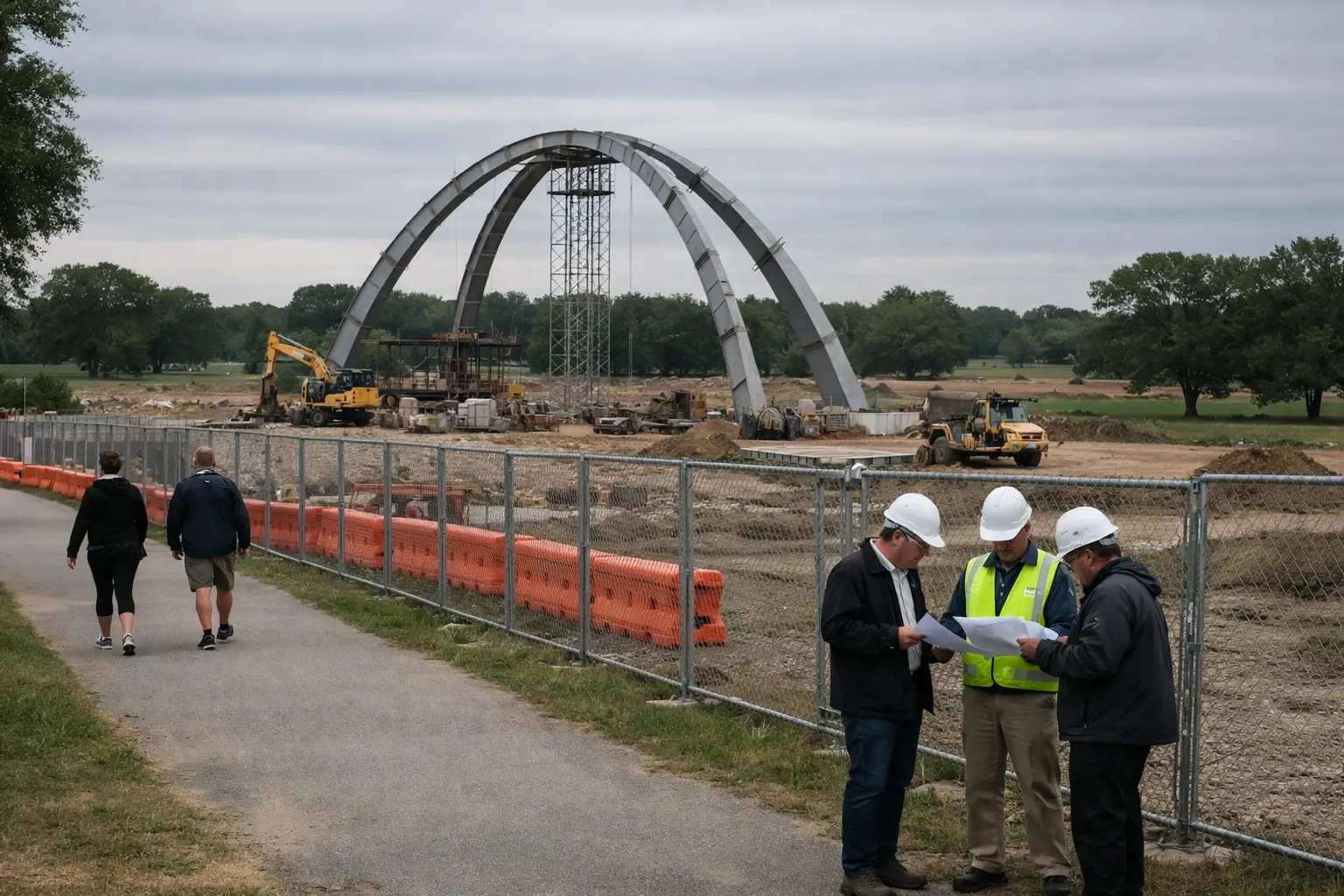
Federal court orders have placed two high-profile projects associated with Donald Trump on a brief pause, underscoring how quickly local development disputes in Washington can shift into the legal arena. One federal judge has twice delayed construction of Trump’s arch, while another has ordered that East Potomac Park remain open for now. The measures are temporary, but they have interrupted momentum around plans that affect prominent public spaces.
The decisions do not settle the merits of either dispute. Temporary restraining orders are designed to preserve the status quo for a limited period while courts review the arguments before them. In practice, that means construction and access decisions can be frozen for days rather than resolved permanently. For project sponsors, opponents and public agencies, the immediate consequence is uncertainty: work schedules, public access and administrative approvals all remain subject to the next court step.
East Potomac Park, a well-known federal parkland area in the capital, is also tied to a proposed golf course redesign. That plan received mixed feedback on Thursday from a federal arts panel, adding another layer of review outside the courtroom. The reaction matters because federal design oversight can influence how projects on significant public land proceed, especially when they affect views, access and the character of spaces used by residents and visitors.
The panel involved in that review, the U.S. Commission of Fine Arts, plays a consultative role in the design of federal and District of Columbia projects. Its feedback is not the same as a judicial ruling, but it can shape revisions and signal whether a proposal is likely to face further scrutiny. Together with the court orders, the panel’s response shows that the arch and golf redesign are moving through several layers of public oversight rather than a single approval track.
For now, the most important fact is the short duration of the legal pause. The judges’ orders have delayed action, not ended the projects. The coming days will determine whether the courts extend restrictions, narrow them or allow work and planning to resume. Until then, the disputes remain a test of how federal land, civic design and politically charged development proposals are managed in the nation’s capital.