









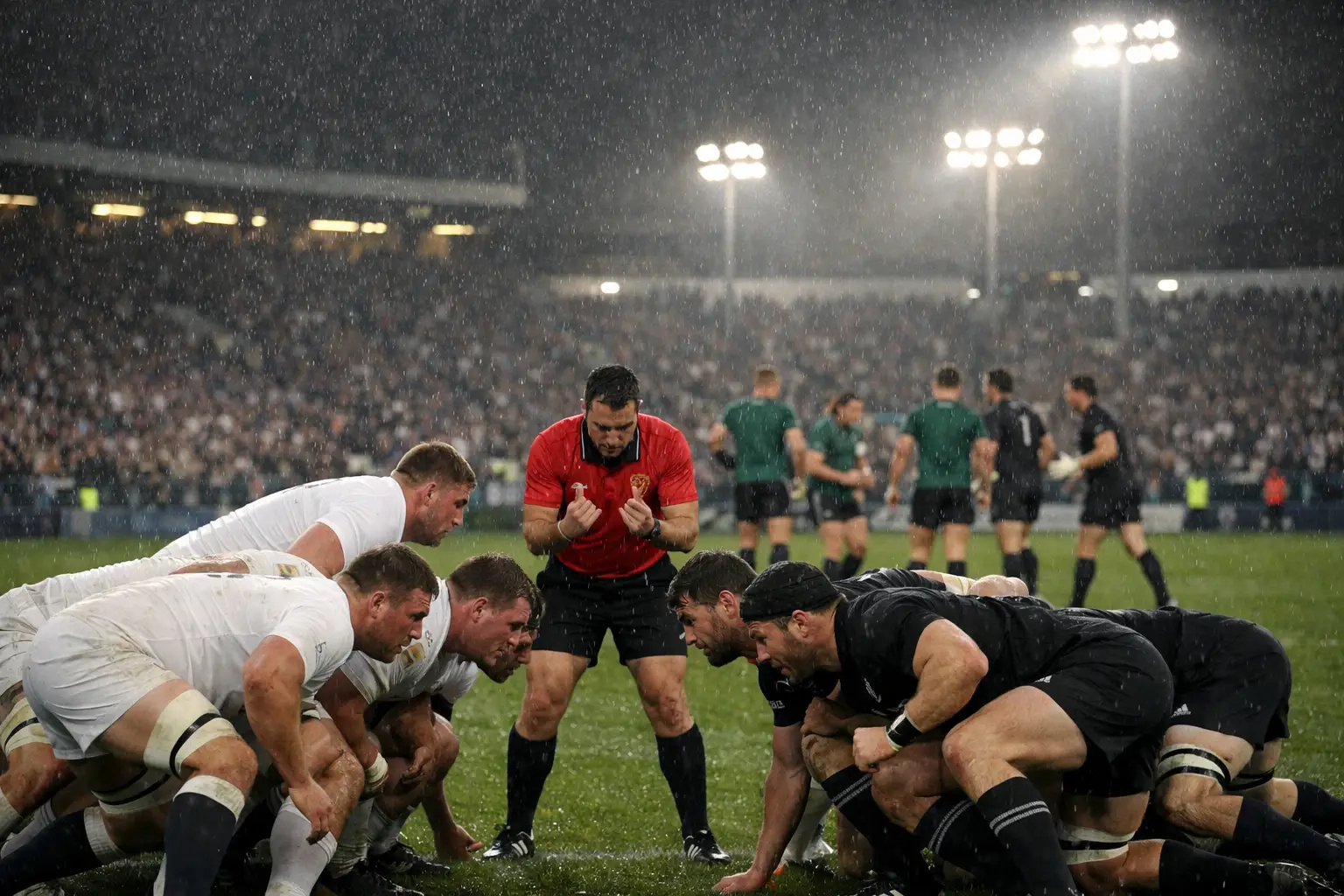
The northern hemisphere’s international window reaches a demanding third weekend, with two fixtures carrying particular weight for the balance of elite rugby. England host New Zealand in a test of pace, precision and composure, while Ireland face South Africa in Dublin days after a six-Test suspension was imposed on Rassie Erasmus. The matches form part of the Nations Championship Tests being played across the northern hemisphere, a series that has already placed several leading teams under close scrutiny.
At Twickenham, the meeting between England Rugby and the All Blacks brings together two sides whose encounters are rarely judged only by the scoreboard. For England, facing New Zealand remains one of the clearest measures of whether their structure can withstand sustained pressure and rapid transitions. For the visitors, represented by All Blacks, the fixture offers another opportunity to assert standards in an international season where every performance against top-tier opposition carries reputational importance.
The Dublin match has an additional layer because of the sanction involving Rassie Erasmus, one of the most visible figures in modern South African rugby. The six-Test suspension has sharpened attention on the build-up to South Africa’s visit to Ireland, even as the contest itself remains a major sporting challenge on the field. The Springboks’ identity is built on set-piece strength, defensive pressure and territorial control, elements that will test Ireland’s ability to manage rhythm and possession against one of the game’s most physically demanding opponents.
The disciplinary decision also places World Rugby under the spotlight, because sanctions involving high-profile coaches often become part of wider debates about touchline conduct, officiating and the responsibilities of team leaders. The governing body, World Rugby, remains central to maintaining the framework in which international matches are contested, particularly during congested windows when attention extends beyond selection and tactics.
For supporters and selectors alike, the weekend offers more than isolated results. England’s meeting with New Zealand and Ireland’s clash with South Africa will help define the tone of the November schedule, revealing how established teams cope with pressure, disruption and the demands of back-to-back elite opposition. With the northern hemisphere hosting heavyweight visitors, the latest round of Nations Championship Tests provides a clear snapshot of rugby’s competitive hierarchy at a decisive point in the international calendar.