







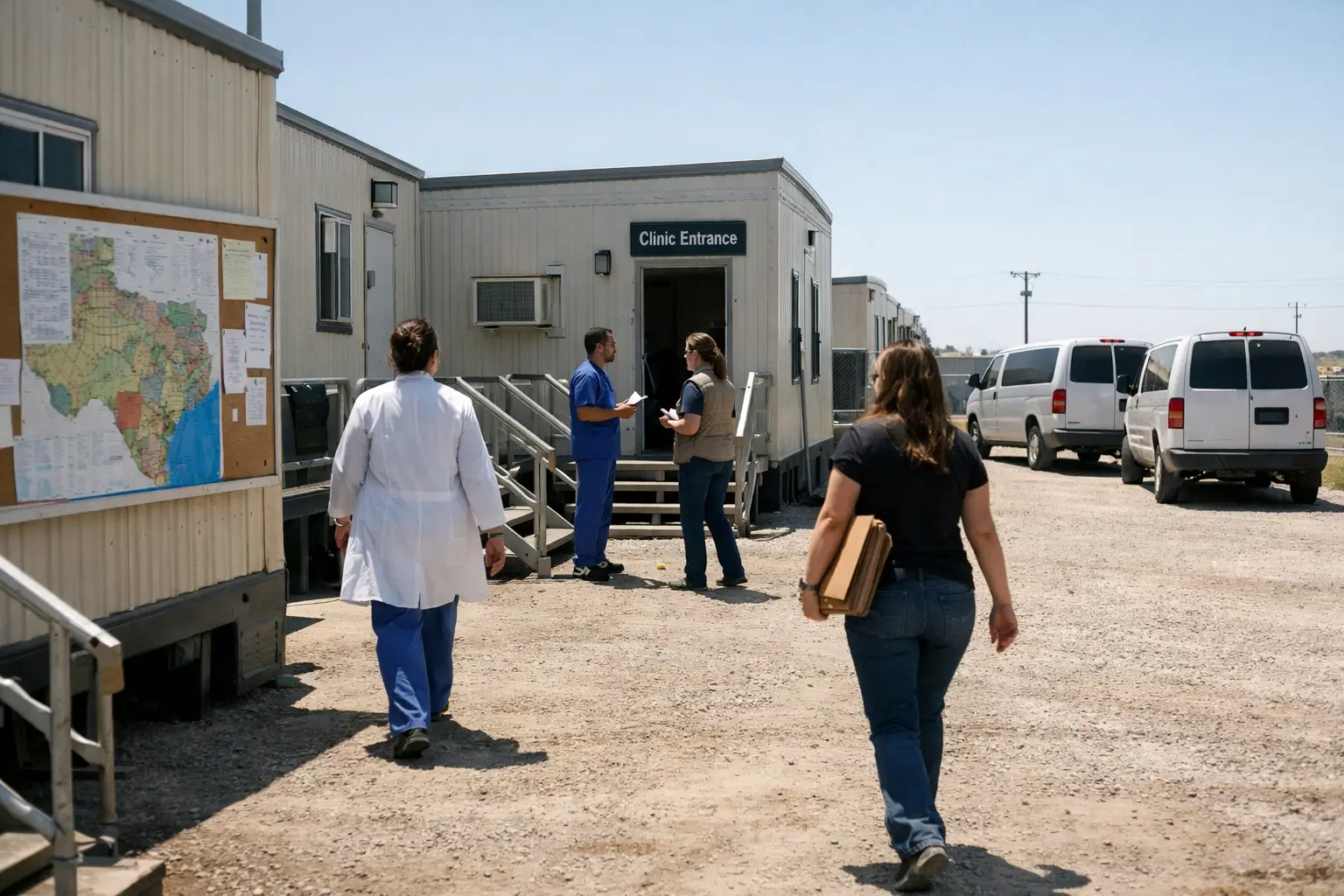
Pregnant unaccompanied migrant children in federal custody have continued to be sent to South Texas, where some have had to leave the state to obtain medical care that is not available locally, including abortions. The placements have drawn attention to the intersection of immigration custody, child welfare and access to reproductive health care in Texas.
The federal government began holding pregnant unaccompanied migrant children at the Urban Strategies shelter in San Benito in July 2025. The facility is part of the shelter network used for children who arrive in the United States without a parent or legal guardian. Oversight of that system sits with the Office of Refugee Resettlement, an agency within the U.S. Department of Health and Human Services.
The location of these placements carries direct consequences for minors who may need time-sensitive care. Texas has some of the country’s most restrictive abortion laws, and the original report noted that several children had to travel out of state for treatment, including abortions. For pregnant children in custody, any medical appointment can involve federal authorization, transportation, supervision and coordination with providers, making geography and state law central to whether care can be delivered promptly.
U.S. Rep. Joaquin Castro, whose official office can be found through the U.S. House of Representatives, visited the San Benito facility in April. At that point, health officials were placing pregnant girls at another shelter nearby rather than at the same site. The shift did not remove the broader issue: pregnant unaccompanied minors remained in federal care in a region where certain medical services are inaccessible under state policy.
The case adds to national scrutiny of how the Trump administration manages vulnerable migrant children after they enter federal custody. Unaccompanied minors are not adult detainees, and federal shelters are expected to provide care while immigration cases proceed. When pregnancy and restricted medical access overlap, decisions about placement become more than administrative: they shape the practical ability of children to receive legally available health care outside the state.