









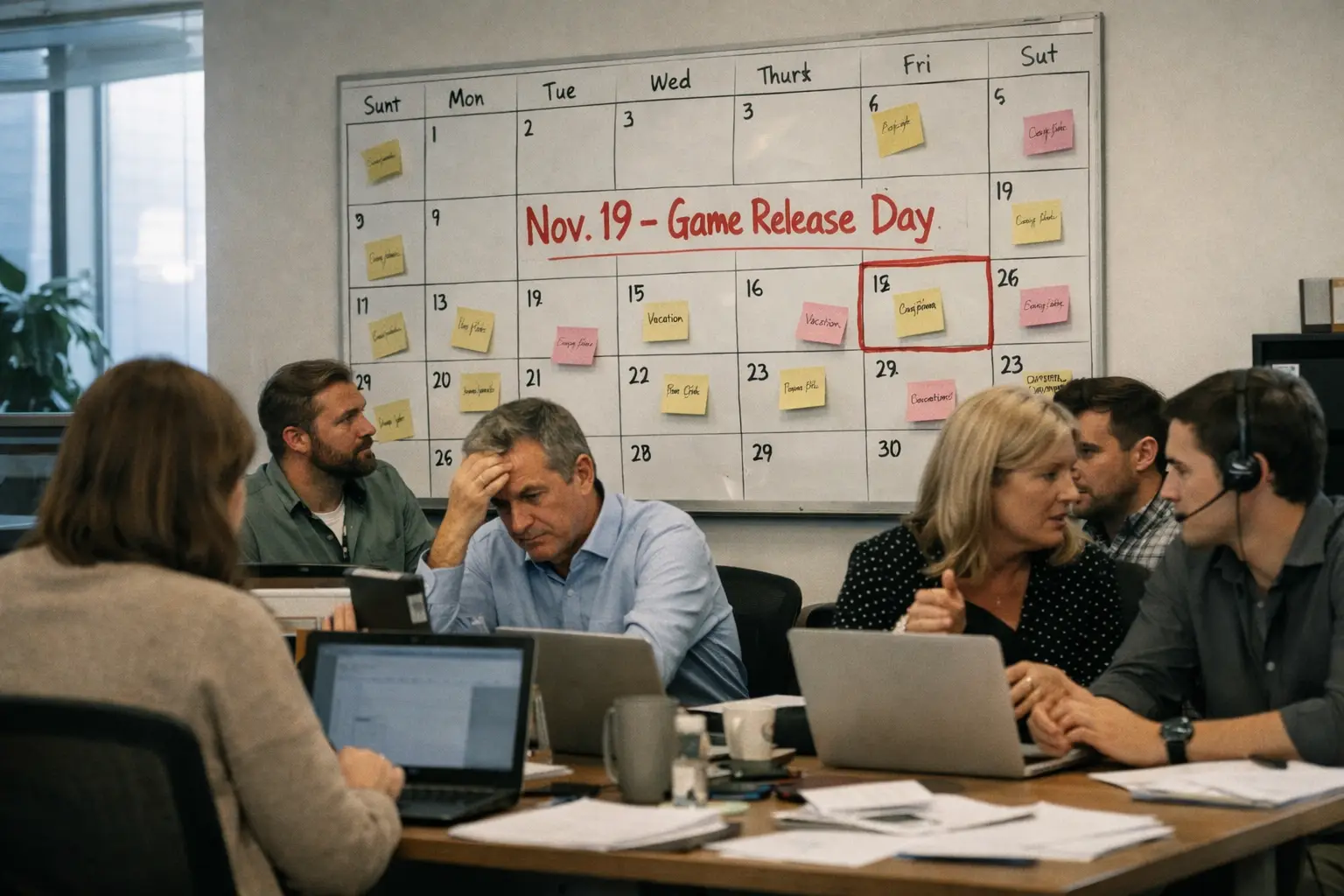
For many GTA fans, Nov. 19 is no longer just a date on the entertainment calendar. It is becoming a planned day away from work. After a 13-year wait for Grand Theft Auto VI, almost one-fifth of workers say they intend to take the day off when the game is released, reflecting the scale of anticipation around one of the most closely watched launches in video games.
The figure highlights how major game releases now compete with film premieres, sports finals and live cultural events for people’s time. The arrival of a new Grand Theft Auto title carries particular weight because of the gap since the previous mainline installment and the size of the audience that has followed the franchise across console generations. The planned absences are less a sign of novelty than of pent-up demand: many players have waited years for a fixed moment to return to the series.
Rockstar Games, the studio behind the franchise, has built Grand Theft Auto VI into one of the most anticipated entertainment products in the world. The title’s release date gives fans a clear point around which to organise time off, social plans and early play sessions. For employers, the phenomenon may be another example of how gaming increasingly shapes ordinary scheduling decisions, especially among workers who treat a major launch as a shared event rather than a private purchase.
The decision to use annual leave for a game release also underlines a broader change in the way blockbuster entertainment is consumed. Digital launches can create immediate pressure to participate, avoid spoilers and join online conversation from the first day. In that environment, waiting even a few days can feel like missing part of the moment. That urgency helps explain why some fans are making room in their workplace calendars rather than fitting gameplay around normal routines.
Grand Theft Auto VI is published by Rockstar Games, whose releases typically draw attention beyond the traditional gaming audience. The reported level of planned time off ahead of Nov. 19 shows the commercial and cultural importance attached to the launch. It also signals how large-scale interactive entertainment continues to blur the boundary between leisure, online culture and the rhythms of working life.