






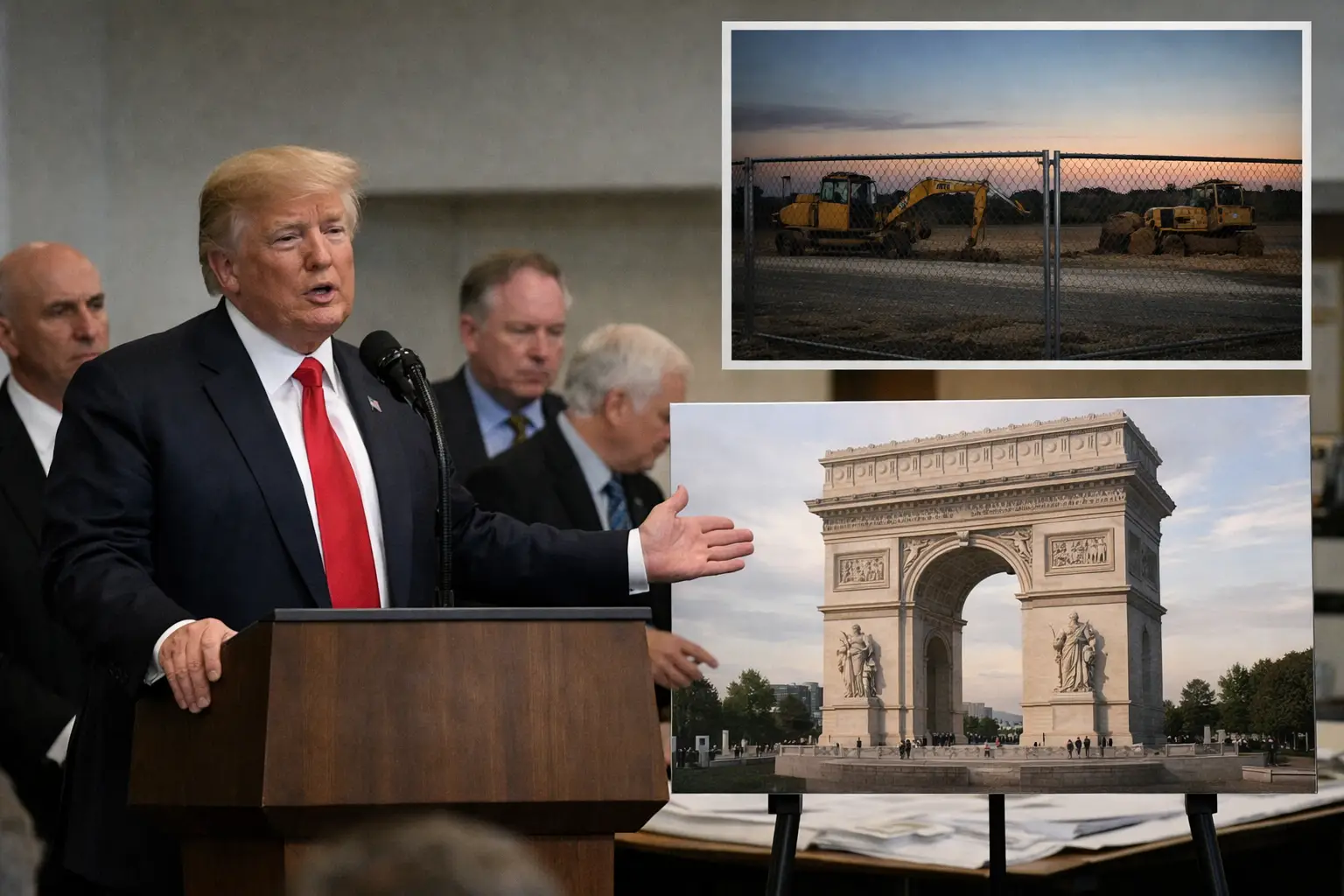
A federal judge has temporarily halted construction of President Trump’s proposed arch, intervening just after midnight following a late Thursday vote by a federal panel that cleared the project to move forward. The order blocks work for 14 days, preventing the Trump administration from beginning construction immediately after securing the approval it had sought.
The decision created an abrupt pause in a project that had already drawn public opposition. Hours before the court order, the federal panel heard extended testimony from concerned residents and other members of the public. Demonstrators gathered at Memorial Circle on Thursday night to protest the proposed structure as the panel weighed whether to approve it. The panel ultimately voted in favor of the arch, setting up what administration officials had hoped would be a swift start to work.
The judge’s order keeps the project in place legally but freezes physical activity while the next phase of review unfolds in federal court. A 14-day block is limited in duration, yet it can be decisive in disputes involving construction, public land and government approvals because it preserves the status quo before irreversible work begins. The order does not resolve the broader dispute over the arch or determine whether the project can eventually proceed.
The case highlights the tension that can emerge when executive priorities, federal approval processes and public objections converge around a public monument. The late-night timing underscored the speed with which the administration sought to act once the panel voted. The court’s intervention, however, shows that administrative approval is not always the final step when legal challenges or procedural objections are still active.
For now, the proposed arch remains approved by the federal panel but administratively stalled by judicial order. The immediate consequence is a two-week pause, during which the parties will face the next legal steps before any construction can begin. The dispute now shifts from the hearing room and protest site to the courtroom, where the project’s short-term future will be determined.