







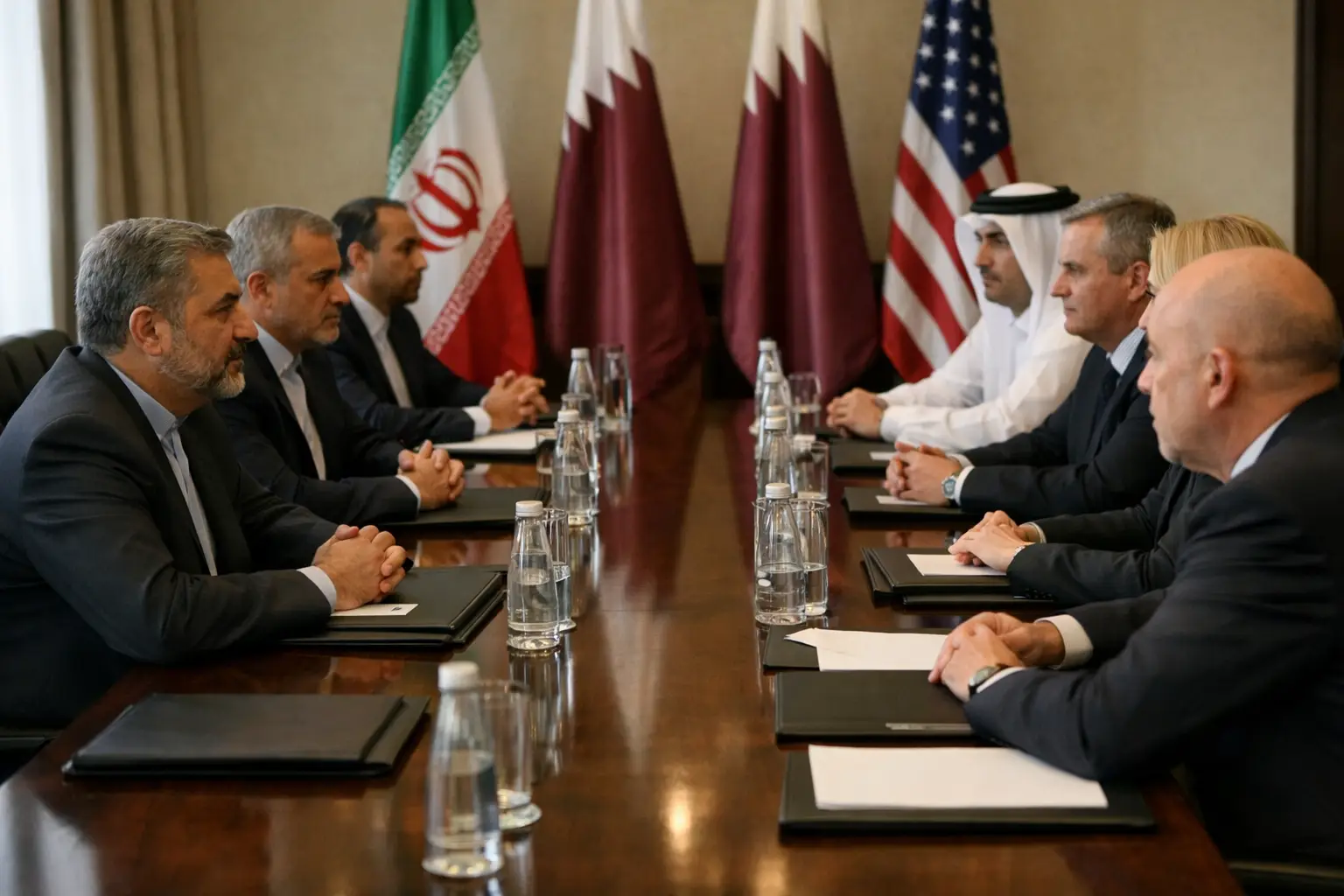
Iran has delivered a nuclear proposal to the United States through Qatar, a senior Iranian official told Reuters, adding that Tehran wants the document discussed only after Washington meets seven demands. The official, who spoke on condition of anonymity, said the United States was reviewing the proposal but did not disclose its contents or the nature of the demands. The move places Qatar once again in the role of intermediary between two governments that have limited direct diplomatic channels.
The communication involves two capitals at the center of a long-running dispute over nuclear negotiations, sanctions and regional security. The official account indicates that Tehran is seeking to frame any discussion of the proposal around prior conditions, rather than presenting it as the start of an immediate bargaining process. No public statement detailing the proposal has been issued by the Iranian Ministry of Foreign Affairs or the U.S. Department of State.
The use of Doha as a channel is significant because indirect diplomacy has often been used when Washington and Tehran need to exchange messages without formal face-to-face talks. Iran and the United States have no diplomatic relations, making third-party mediation a practical route for sensitive documents and political signals. In this case, the senior official identified Qatar’s Ministry of Foreign Affairs as the pathway through which the proposal reached Washington.
The absence of details leaves the substance of the plan unclear. The official did not specify whether Tehran’s seven demands relate to sanctions, guarantees or technical aspects of its nuclear program. That uncertainty limits immediate assessment of whether the document could create momentum or simply restate existing positions. What is clear is that Iran is linking any discussion of the proposal to prior action by Washington, a sequencing issue that has repeatedly complicated nuclear diplomacy.
For now, the matter appears to be at a review stage in Washington. The fact that the proposal was transmitted, rather than publicly announced in full, points to a controlled diplomatic exchange at a sensitive moment. Any further movement will depend on whether the United States formally responds and whether Iran clarifies the conditions it has attached to the process.