









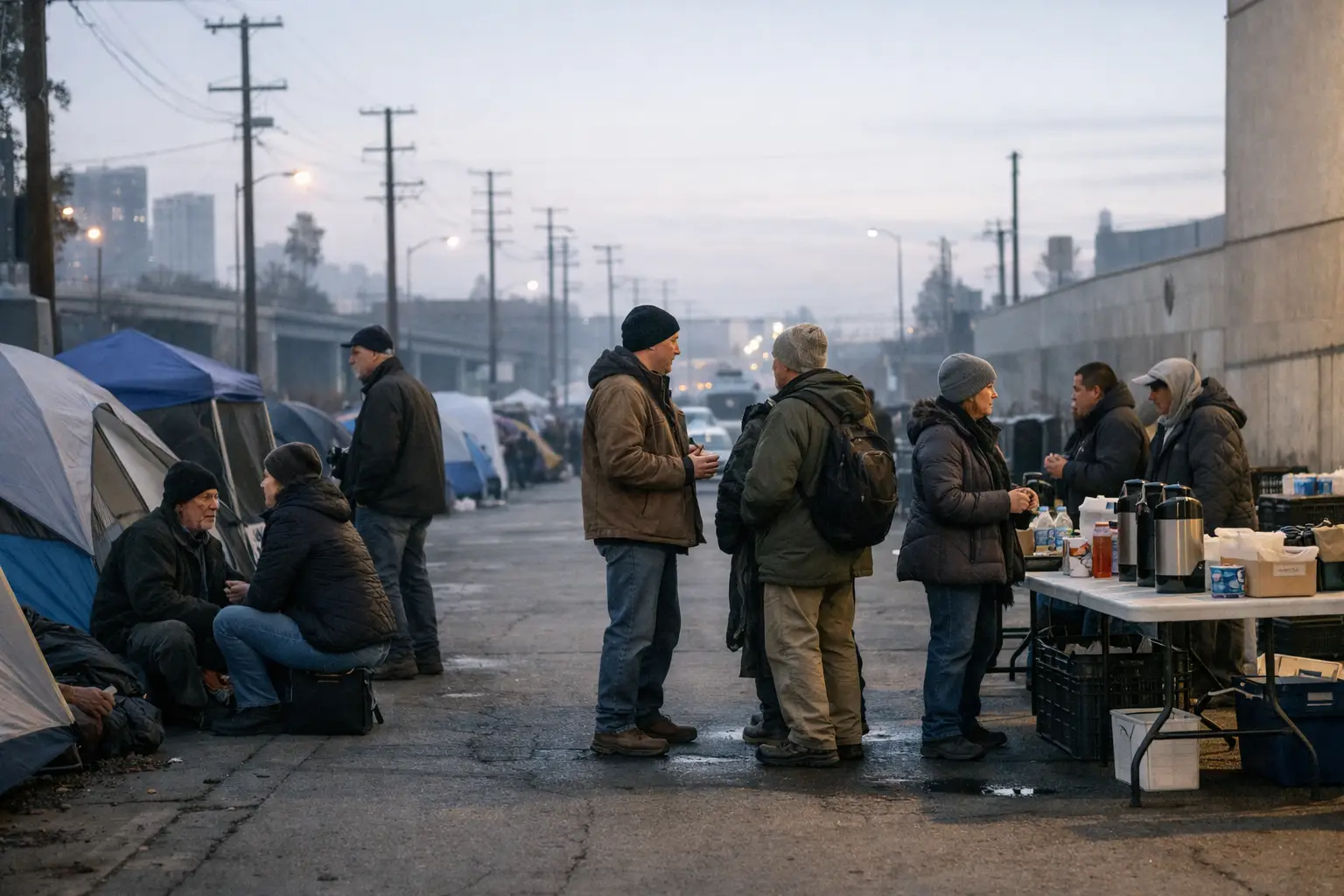
America’s homelessness count has fallen by its widest margin in more than ten years, marking a notable shift after several years in which the number of people without stable housing reached record levels. The decline offers a rare positive signal in the country’s long-running homelessness crisis, but the scale of the problem remains severe: the total still stands at nearly 700,000 people across the United States.
The figures place new attention on the national systems used to measure and respond to housing insecurity. The annual count is a central reference point for public policy, helping shape how emergency shelter, outreach, rental assistance and permanent housing programs are assessed. Even with the latest improvement, the number underscores how deeply homelessness is tied to housing costs, income instability, gaps in health care and the availability of local services.
The U.S. Department of Housing and Urban Development, the federal agency responsible for national housing policy, plays a key role in tracking homelessness and funding local responses. Its work sits at the center of a politically charged debate over how to interpret the decline. The U.S. Department of Housing and Urban Development count is widely used by cities, states and service providers, but advocates have long stressed that any national snapshot can miss people who are temporarily doubled up, moving between unstable arrangements or avoiding formal shelter systems.
The fall in homelessness has also produced competing explanations. The Trump administration and homelessness advocacy groups cite different reasons for the improvement, reflecting broader disagreement over which policies are most effective. That distinction matters because the explanation attached to the decline can influence future funding choices, local enforcement strategies and the balance between emergency responses and longer-term housing support.
For local governments and nonprofit providers, the latest numbers are likely to be read as progress rather than resolution. A decline after record-high levels may ease pressure on some systems, but nearly 700,000 people without stable housing still represents a national emergency measured in shelters, encampments, waiting lists and overstretched outreach teams. The central question now is whether the reduction can be sustained without losing sight of the people still counted outside a secure home.