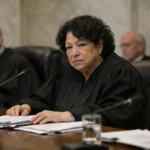



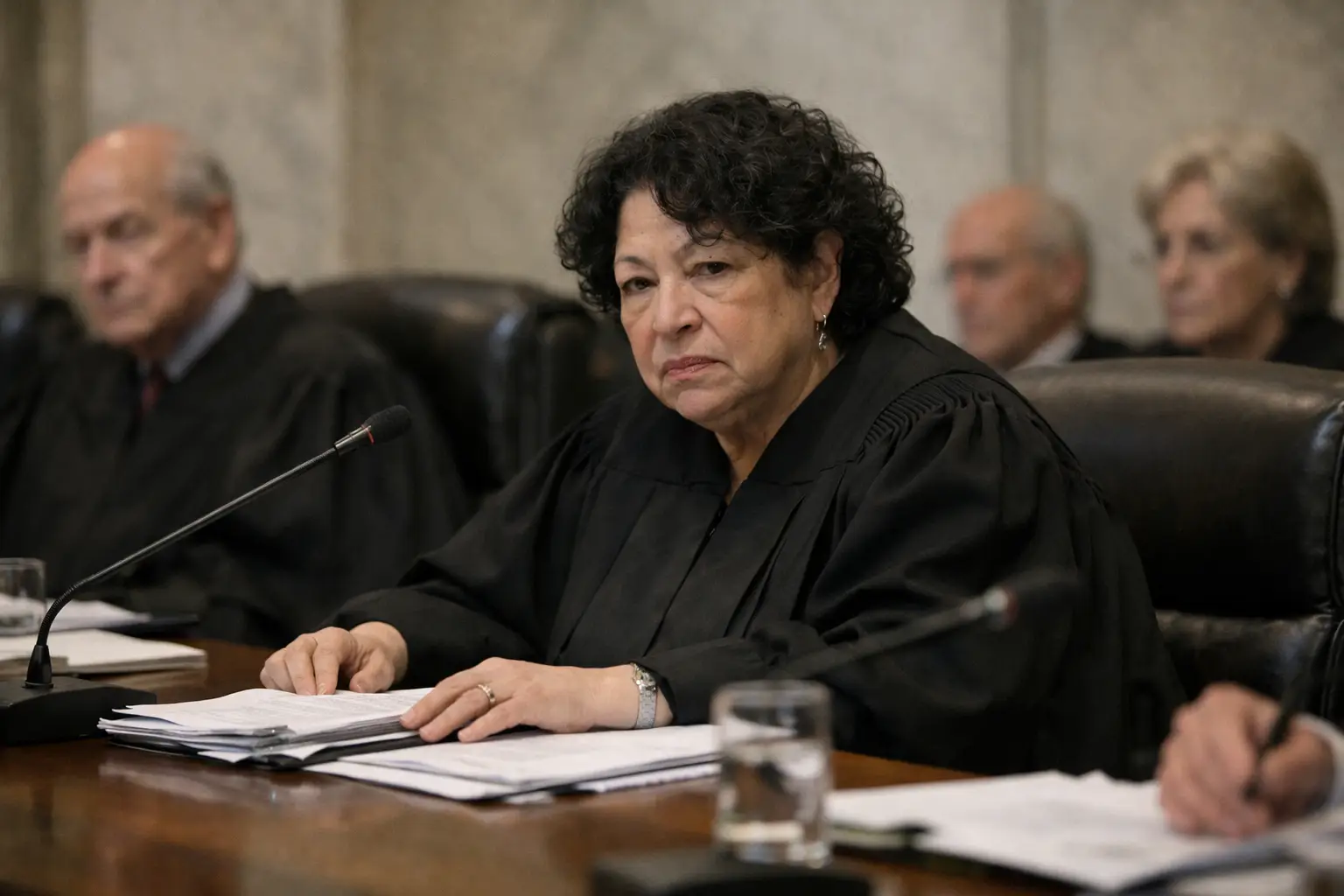
Justice Sonia Sotomayor urged the Supreme Court to one day reverse its landmark decision granting former presidents broad protection from criminal prosecution, marking one of her clearest public remarks on the issue since the ruling. Speaking on Saturday during a civics education event at George Washington’s Mount Vernon estate, the liberal justice said she hoped the Court would overturn the decision and added that her colleagues had done some “crazy things.”
The case, Trump v. United States, reshaped the legal boundaries surrounding presidential immunity by recognizing significant criminal immunity for actions tied to a president’s official duties. The ruling did not extend that protection to unofficial conduct, but it narrowed the circumstances in which a former president may face prosecution for acts carried out while in office. The decision became one of the Court’s most consequential statements on executive power in modern American law.
Sotomayor was among the justices who opposed the majority’s reasoning when the decision was issued. Her latest remarks stand out because Supreme Court justices rarely speak so directly in public about recent decisions, especially cases involving active political controversy. The setting at George Washington’s Mount Vernon, a venue associated with civic education and the presidency, underscored the institutional significance of her comments without changing the legal force of the ruling.
The immunity decision continues to carry major implications for US politics, presidential accountability and the balance of powers. By limiting potential criminal exposure for official presidential acts, the ruling affects how prosecutors, lower courts and future administrations interpret the reach of executive authority. It also places renewed attention on the Court’s role in defining the line between the constitutional responsibilities of the presidency and the principle that no officeholder is above the law.
Any reversal would require the Supreme Court itself to reconsider the precedent in a future case. Until then, the decision remains binding law for federal courts. Sotomayor’s comments do not alter that legal reality, but they add a prominent judicial voice to the continuing debate over how far presidential power should extend after a president leaves office.