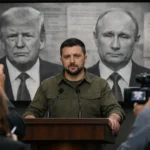







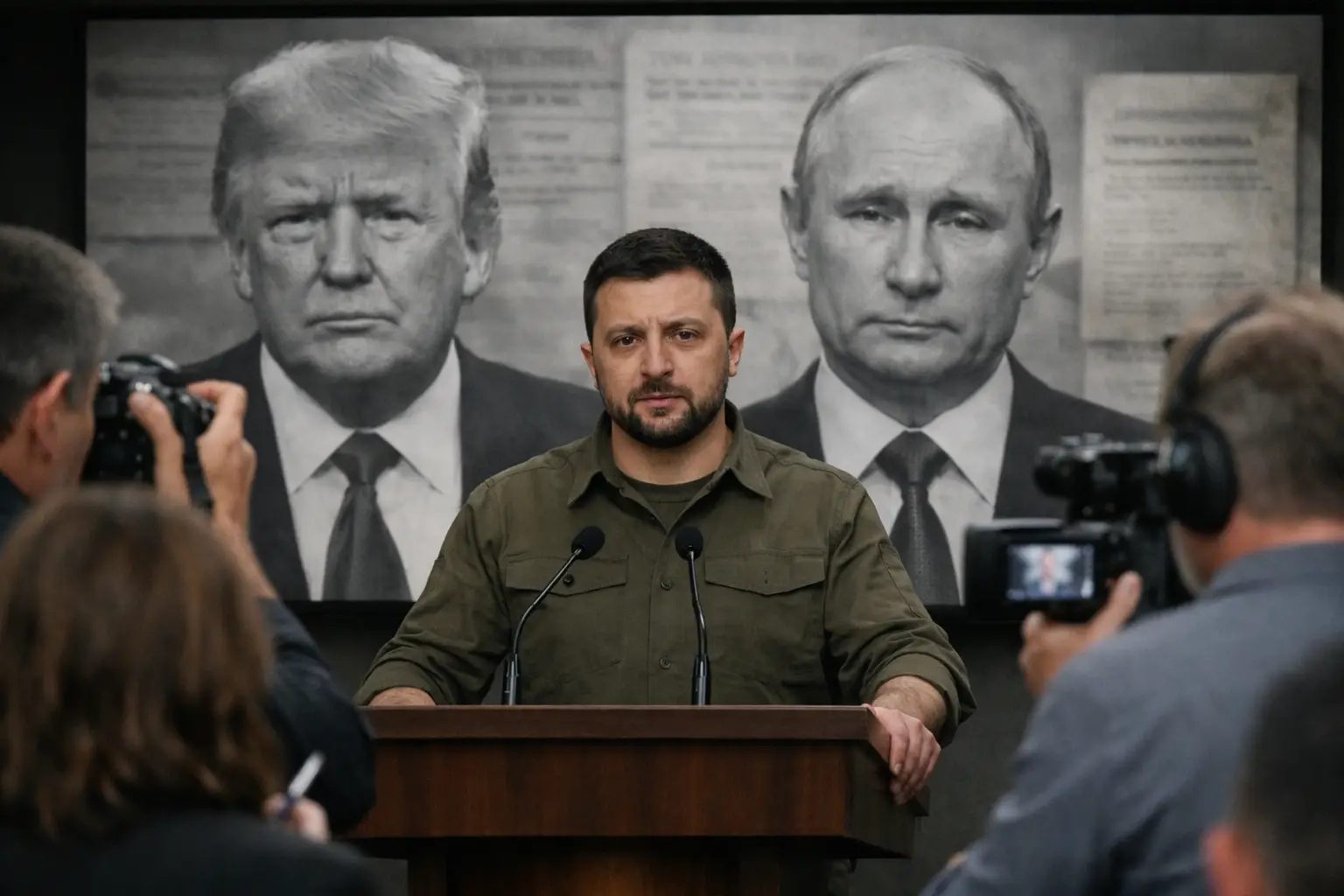
Volodymyr Zelensky has sharply questioned President Donald Trump’s decision to describe Russian President Vladimir Putin as a “friend,” saying the wording was “strange” and comparing it to how history would judge someone speaking that way about Adolf Hitler during the Second World War. The Ukrainian president made the remarks during an interview with the BBC, where he was asked directly about Trump’s language toward the Kremlin leader.
Zelensky said the choice of words ultimately belonged to the president of the United States, but he made clear that he viewed it as inappropriate in the context of Russia’s war against Ukraine. His comparison to World War II was intended to underline the moral weight Kyiv attaches to any rhetoric that appears to normalize Putin while Russian forces continue their campaign against Ukraine.
The comment highlights a recurring point of tension in international diplomacy: the language used by Western leaders toward Moscow carries political significance beyond protocol. For Ukraine, public descriptions of Russia’s president are not merely symbolic. They intersect with military aid, sanctions policy and the broader effort to maintain allied unity. Kyiv has consistently argued that Russia’s leadership must be treated as responsible for the invasion and its consequences, rather than as a conventional partner in negotiation.
Trump’s relationship with Putin has long drawn close scrutiny because any shift in tone from Washington can affect perceptions in Europe and in Ukraine. The White House plays a central role in sustaining Western support for Kyiv, while Moscow remains the focus of sanctions and diplomatic pressure from Ukraine’s allies. Zelensky’s response reflects concern that personal language in high-level politics may blur the distinction between engagement with an adversary and political recognition.
By invoking Hitler, Zelensky placed the remark within a historical frame familiar to Western audiences, while avoiding a broader personal attack on the American president. His statement was concise but pointed: the problem, in Kyiv’s view, is not the existence of diplomacy itself, but the signal sent when the leader of a state waging war is described in friendly terms. In a conflict shaped as much by international resolve as by battlefield developments, such signals remain closely watched.