



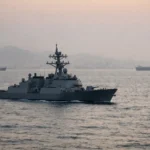



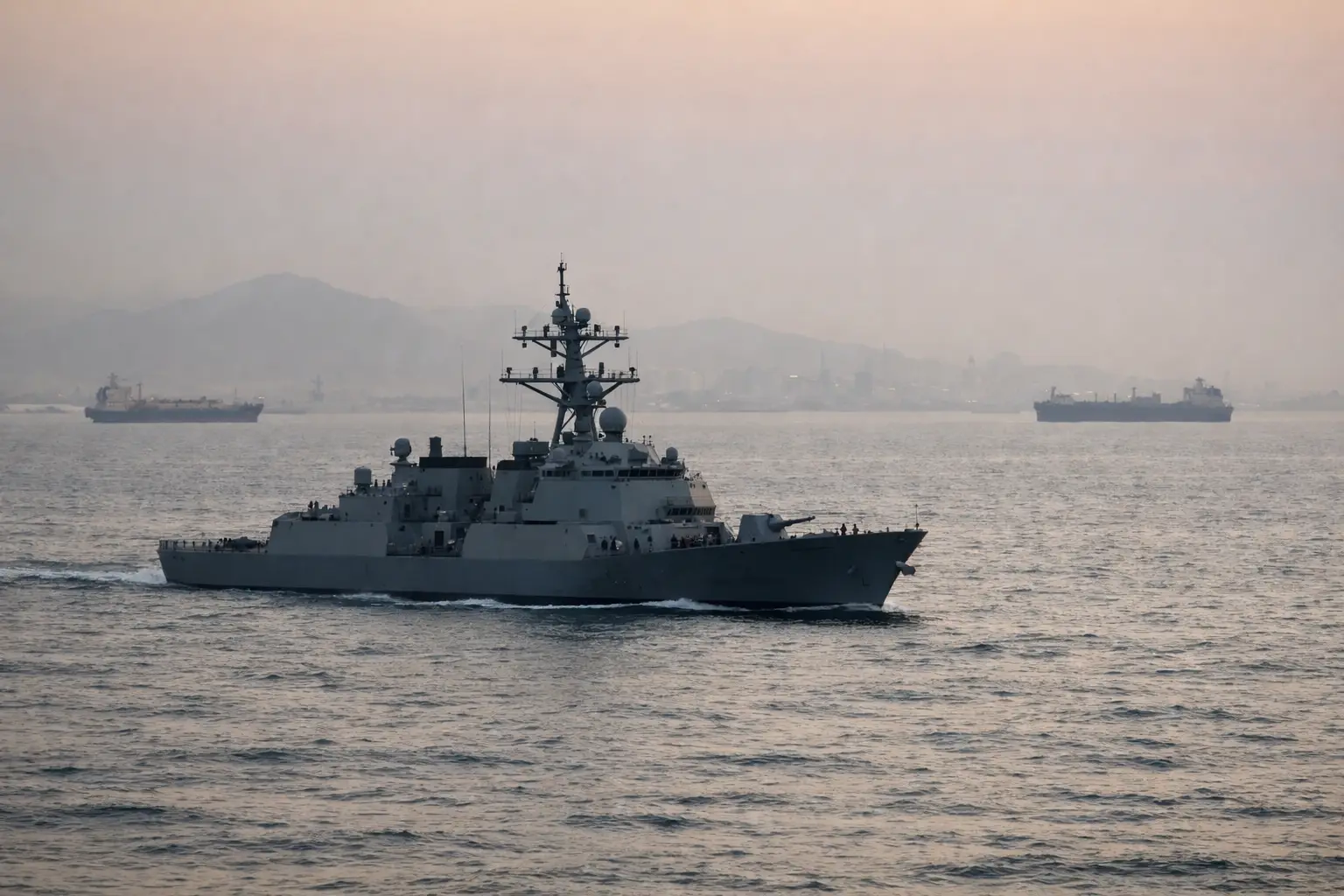
Iran has warned South Korea that a broader foreign military presence around the Gulf would risk increasing regional tensions, as Seoul prepares to extend the operational area of one of its naval units to waters south of the Gulf of Oman. The message was delivered during a telephone call on Thursday between Abbas Araqchi, Iran’s foreign minister, and Cho Hyun, his South Korean counterpart.
The Iranian Ministry of Foreign Affairs has consistently opposed the deployment of foreign forces in waters it considers central to regional security. In this exchange, Tehran’s core argument was that military involvement by outside actors in the Gulf region would not contribute to stability or peace. The warning comes at a sensitive moment for maritime security, with the Gulf of Oman linking the Arabian Sea to the Strait of Hormuz, one of the world’s most closely watched sea passages.
Seoul’s position was presented in more cautious terms. In a post on X on Friday, the Iranian embassy in Seoul said Cho Hyun reaffirmed that South Korea did not intend to enter any war and did not plan to deploy troops to the Gulf. The South Korean Ministry of Foreign Affairs has not been described as moving toward a combat role in the area. The planned change concerns the operational reach of a navy unit, extending it to waters south of the Gulf of Oman.
The distinction is important for both governments. For Iran, the presence of non-regional forces near Gulf waters is a recurring diplomatic and security concern. For South Korea, naval deployments outside its immediate region are closely tied to the protection of sea routes and the management of risks facing commercial shipping. Any adjustment in operating zones, even without a troop deployment to the Gulf itself, can therefore carry diplomatic weight when it involves waters adjacent to one of the Middle East’s most strategic maritime corridors.
The call highlights the narrow space in which Seoul must balance maritime security priorities with regional sensitivities. Iran’s warning does not signal a break in dialogue, but it places political emphasis on how South Korea frames any expanded naval activity. With Tehran insisting that stability should not be pursued through a larger foreign military footprint, the issue is likely to remain part of bilateral discussions as Seoul defines the scope and purpose of its naval role near the Gulf of Oman.