








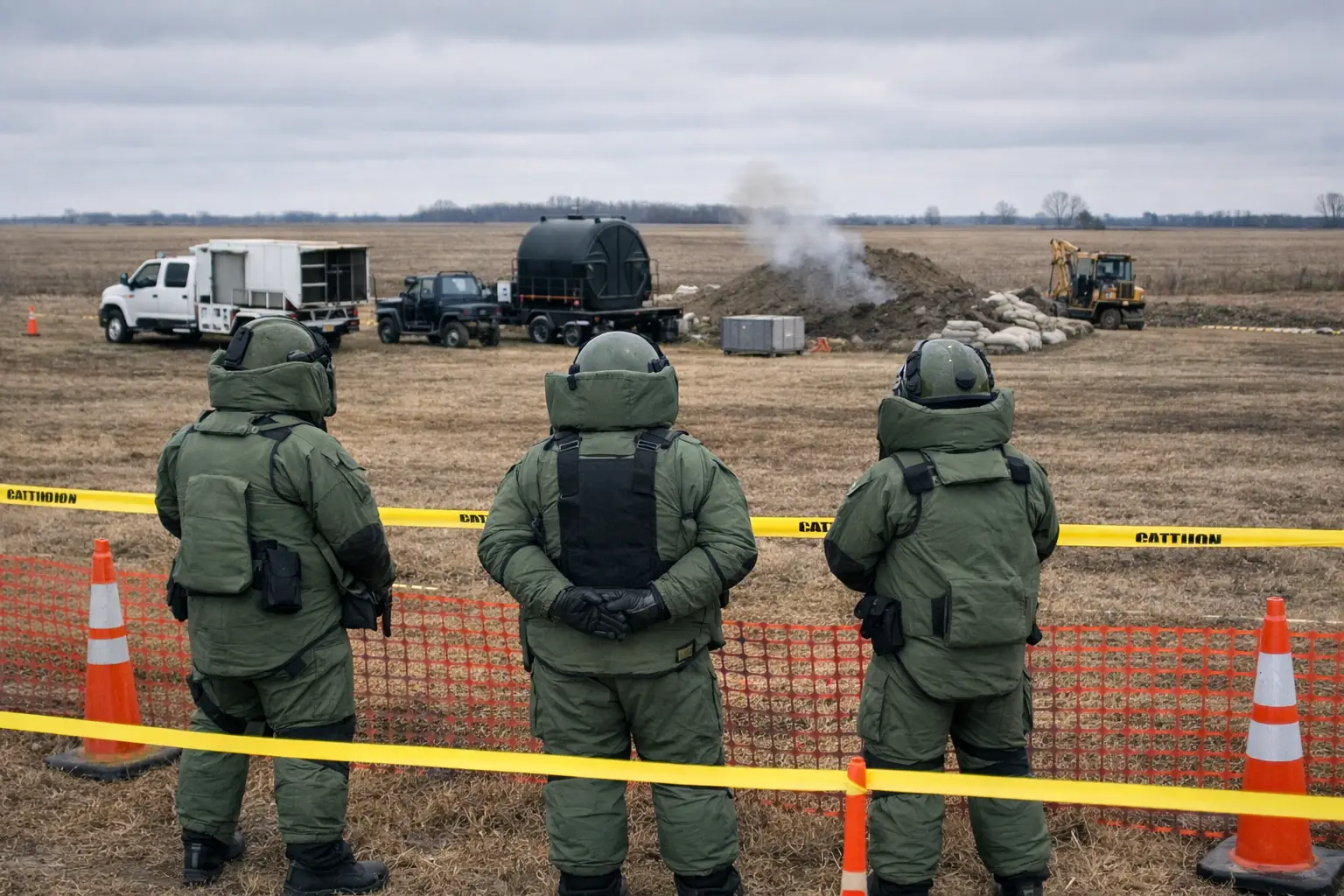
The U.S. Army will proceed on Wednesday with the controlled removal of lead-containing munitions in Iowa, keeping the operation on schedule despite renewed political uncertainty surrounding the case. The decision places public safety, environmental management and intergovernmental coordination at the center of a dispute that has drawn attention beyond the immediate area affected by the planned detonation.
Acting Army Secretary Adam Telle said the operation would move forward in coordination with state, local and federal authorities. “We are proceeding with the controlled removal in full coordination with all state, local and federal authorities, because the safety of Iowa’s citizens comes first,” he said. The statement underscores the position of the U.S. Army that the handling of the munitions remains a managed safety operation rather than a pause-worthy uncertainty.
The controversy intensified after President Trump introduced further uncertainty on Monday, though the Army’s latest position indicates that the planned action has not been halted. The presence of lead in munitions gives the operation a broader public-health and environmental dimension. Lead is a toxic metal, and any handling of lead-containing materials can raise concerns about exposure, residue and contamination if not controlled through proper safeguards.
Controlled detonations are typically used when munitions cannot be moved or dismantled without unacceptable risk. In this case, the Army is presenting coordination with multiple levels of government as central to the operation. That coordination is significant because decisions involving explosive materials and hazardous substances can affect emergency services, environmental oversight and local confidence in the safety of the process.
The Iowa operation now moves forward under scrutiny from residents, public officials and federal authorities. Its handling may influence how similar cases are communicated when military safety requirements intersect with environmental concerns. For the Army, Wednesday’s detonation is not only a technical disposal action; it is also a test of public trust in the management of military materials that carry potential public health consequences.