







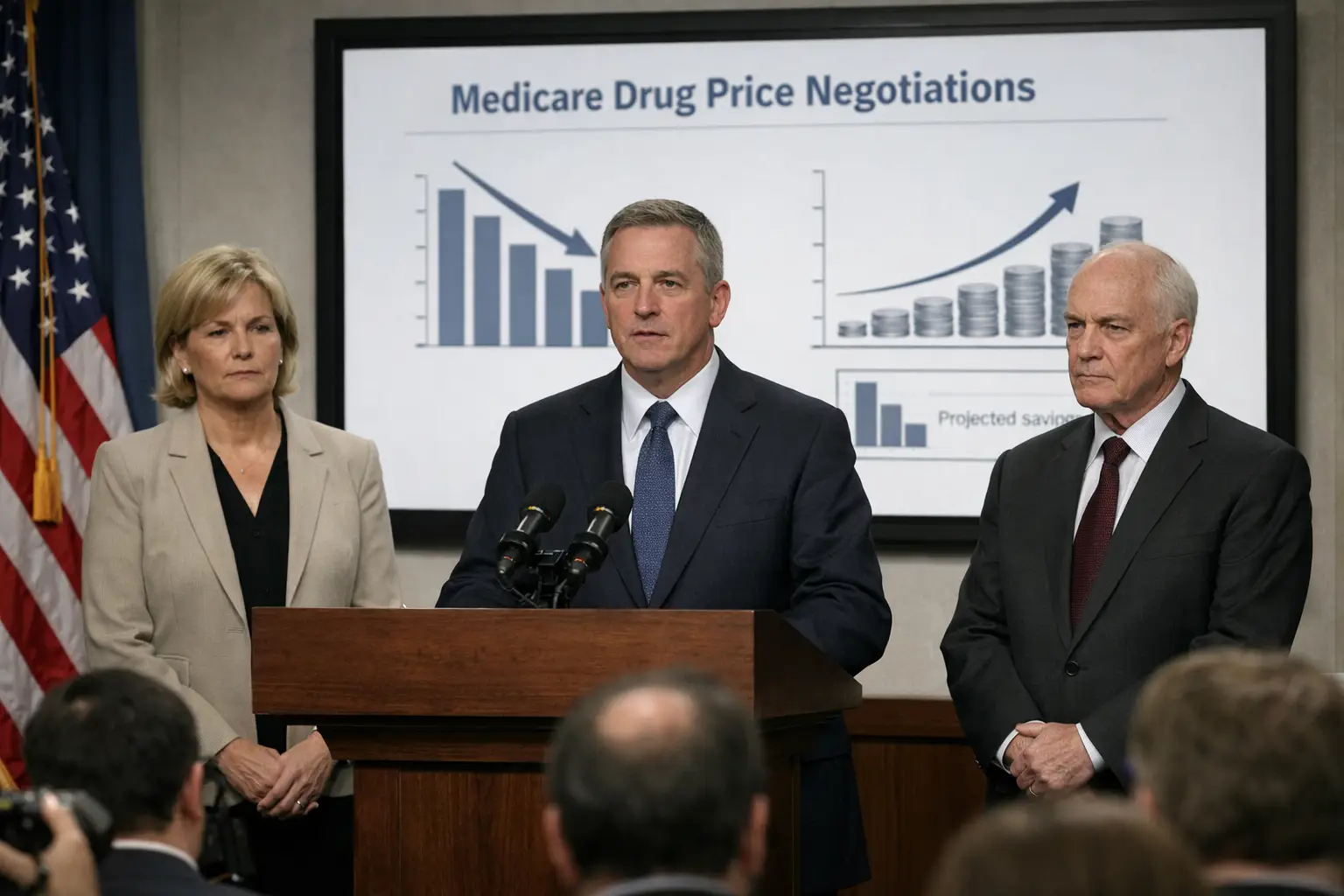
A new federal estimate puts the budget impact of the latest Medicare drug price negotiations at $9.2 billion in savings next year. The Trump administration announced Monday that negotiated prices for a new group of medicines would reduce what the federal government spends through the program by 45% on a net aggregate basis, measured against what Medicare would have paid last year if the new prices had already been in place.
The figure comes from the third round of negotiations carried out by the Centers for Medicare & Medicaid Services, the federal agency that oversees Medicare and Medicaid. The negotiation authority was created under the Inflation Reduction Act, a law that changed how the government can address high-cost prescription medicines in the federal health program. The latest round is notable because it expands beyond pharmacy drugs and includes, for the first time, medicines administered in physicians’ offices under Medicare Part B.
That shift matters for health policy because Part B covers many treatments delivered directly by clinicians, while earlier rounds were limited to retail prescription drugs covered under Part D. By bringing doctor-administered products into the negotiation process, CMS is applying the law to a broader section of Medicare drug spending. The change may increase the program’s relevance for patients who receive therapies in clinical settings rather than through a pharmacy benefit.
The headline savings estimate does not include manufacturer discounts paid through the Part D Manufacturer Discount Program. That program was also established by the Inflation Reduction Act and affects how much drugmakers ultimately contribute under Medicare’s pharmacy benefit. When those discounts are included in the calculation, the projected savings fall to about $5.5 billion, equivalent to a 33% reduction in net aggregate spending. The difference underscores how federal estimates can vary depending on whether overlapping pricing policies are counted together or separately.
The announcement adds another benchmark to the implementation of Medicare’s drug negotiation system, one of the most closely watched changes in U.S. pharmaceutical policy. For the federal government, the savings estimate highlights the potential budget effect of negotiated prices. For drug manufacturers, the expanded inclusion of Part B products signals a broader negotiating environment. The practical impact for beneficiaries will depend on how the negotiated prices interact with plan design, coverage rules and out-of-pocket costs within Medicare.