







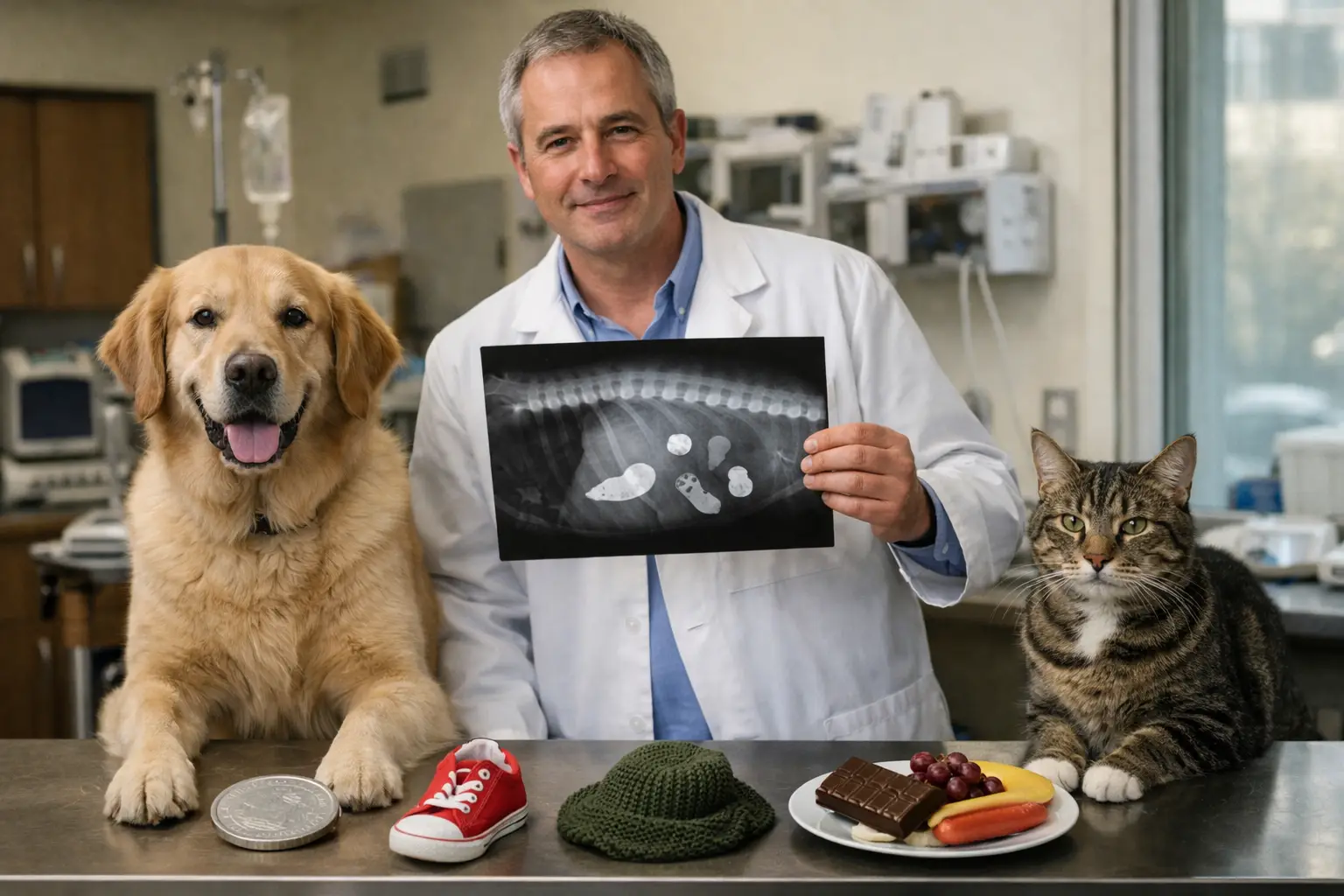
Hats, coins and shoes may look harmless in a visitor’s hand, but for an animal they can become a medical emergency. Veterinarians warn that objects swallowed by animals are often difficult to remove and, in some cases, can prove deadly. The warning behind “do not feed the animals” is not simply about diet: it also covers the broader risk created when people bring food, clothing or small items close enough for an animal to seize and ingest them.
The danger lies in what happens after an object disappears from view. Some foreign items can be retrieved with an endoscope, a tool that allows veterinary teams to reach into the digestive tract without open surgery. That option depends on where the object is, its size and whether it can be safely grasped. Once an item moves deeper into the intestinal tract, recovery becomes far more complex, and surgery is not always possible.
For zoos and animal-care facilities, the issue is central to animal welfare. Barriers, signs and feeding restrictions are designed to prevent contact that can put animals at risk. Even objects that seem too small to matter, such as coins, can create serious problems when swallowed. Larger or irregular items, including hats or shoes, add another layer of danger because they may be harder to pass naturally or remove safely.
The case of Fiona, the Nile hippopotamus at the Cincinnati Zoo & Botanical Garden, illustrates the contrast between controlled feeding and unsafe exposure. In January 2020, she was photographed eating a specialty birthday cake prepared for her third birthday inside her enclosure. Food provided by animal-care staff is planned for a species and an individual animal; items offered or dropped by visitors are not.
The practical message is straightforward: keeping personal belongings away from enclosures protects animals as much as it preserves public order. A single dropped object can require urgent veterinary intervention, and the outcome may depend on how quickly the problem is identified and where the item has traveled inside the body. Respecting feeding rules is therefore a basic part of responsible contact with animals, whether in a zoo, sanctuary or any managed wildlife setting.