







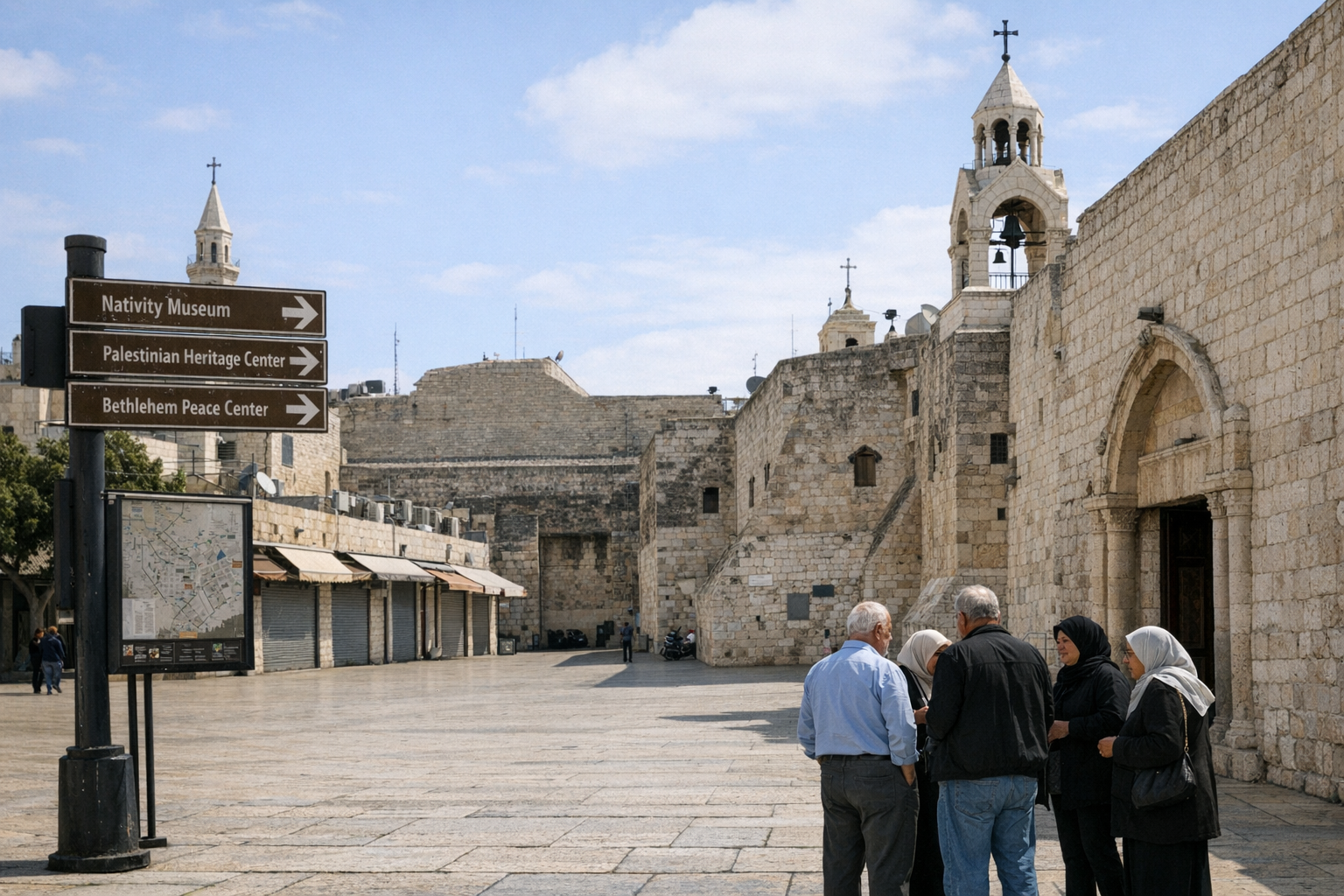
Palestinian Christian communities that trace their presence in the Holy Land over two millennia are confronting a sustained demographic decline that local leaders say threatens their future. Reverend Mitri Raheb, founder and president of Dar al-Kalima University in Bethlehem, warned that if current conditions persist, there may be no Palestinian Christians left by 2050.
Church leaders and municipal officials in the West Bank describe a combination of long-term push factors driving emigration: limited economic opportunities, restrictions on movement, and a lack of services that make it difficult for families to remain. While the Christian population has been a small minority for decades, local representatives emphasise that the pace of departure has accelerated in recent years, reducing community size in towns and villages historically associated with Christian heritage.
Institutions of civil society and faith-based organisations are seeking practical responses to stabilise communities. Dar al-Kalima University and several local churches continue to provide education, cultural programming and community services intended to support families and sustain cultural life. Municipal initiatives aimed at revitalising tourism and small businesses have also been promoted as ways to bolster local employment and encourage residents to stay.
Demographic change in the West Bank has implications beyond local community life, touching on the preservation of historical Christian sites and the religious diversity of the wider region. Community leaders call for coordinated policies from local and international actors to address economic and mobility challenges that underpin departures. Observers note that any long-term reversal will require sustained investment in livelihoods, services and infrastructure alongside measures that improve residents’ ability to move, work and plan for the future.