

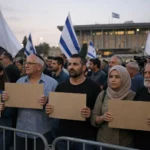



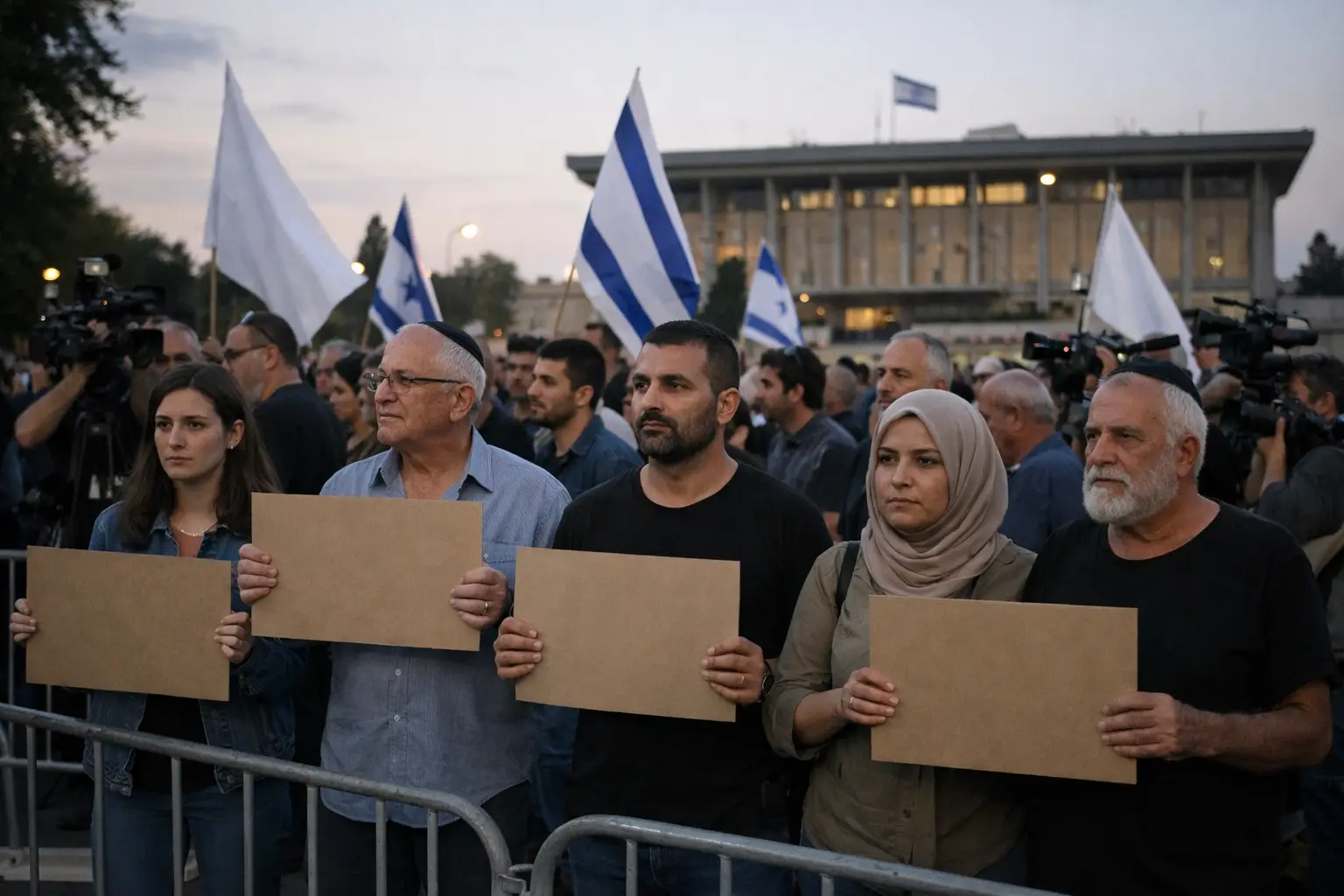
Hundreds of Israelis demonstrated on Saturday to push the opposition toward a politically sensitive alliance with Arab parties, arguing that such cooperation could be decisive in efforts to remove Benjamin Netanyahu from power. The protest highlighted the growing pressure on opposition leaders after Tuesday’s election, in which Arab-majority parties strengthened their position amid a campaign shaped by fierce disputes over minority representation and national politics.
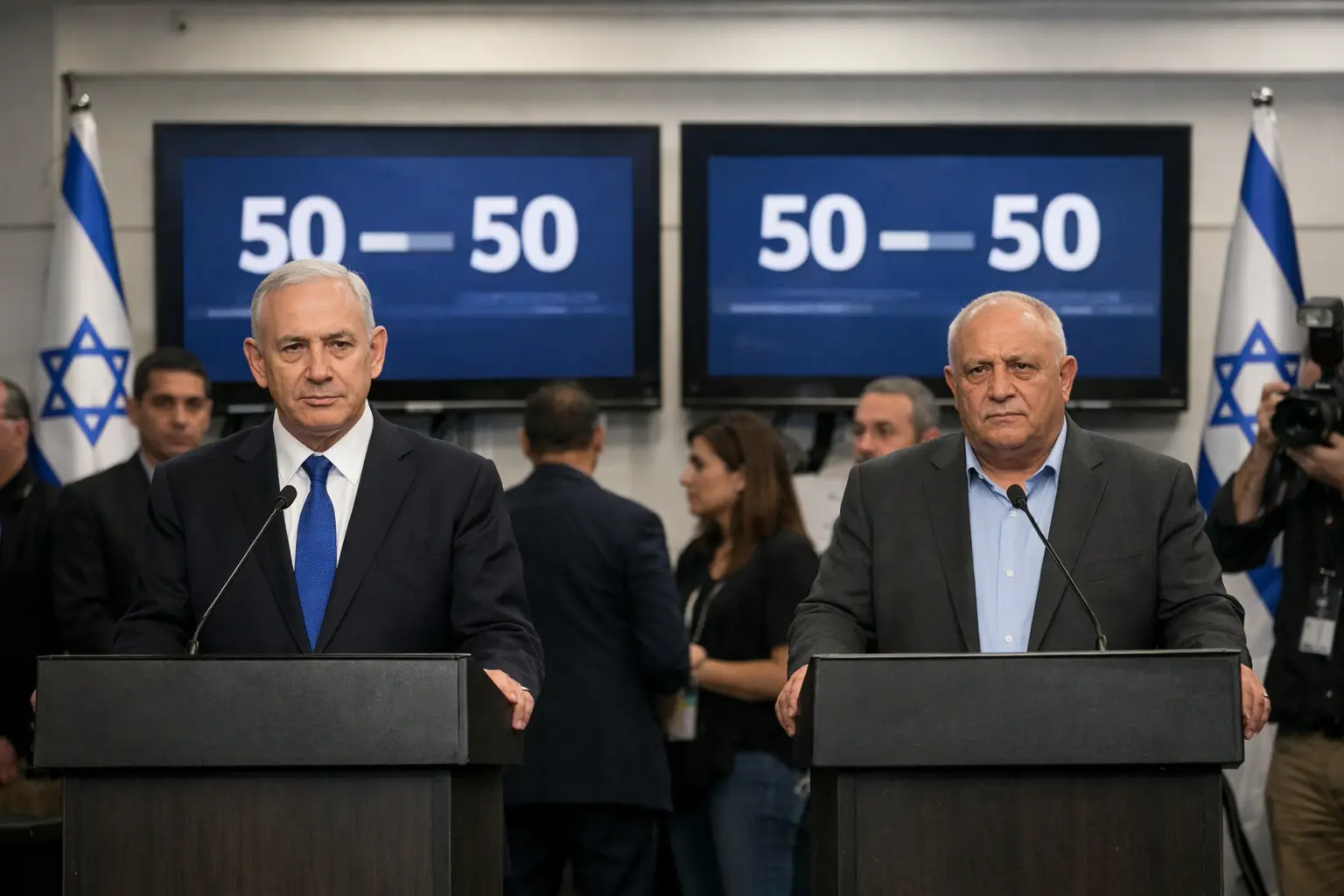
The results have placed Gadi Eisenkot, a leading opposition figure, before a strategic choice that could define the next stage of Israeli politics. He has not made a decision on whether to seek a coalition arrangement with Arab-majority factions, whose gains created new calculations inside the fragmented parliamentary landscape. In Israel, where governments depend on parliamentary majorities in the Knesset, even limited shifts among blocs can alter coalition prospects.
Arab-majority parties benefited from anger over rhetoric directed at the Arab community by Netanyahu’s hard-right government. The prime minister has intensified attacks on the minority group’s political leaders, sharpening a confrontation that has become central to the post-election debate. For many demonstrators, cooperation with Arab representatives is not only a tactical route to replacing the government but also a test of whether the opposition is prepared to build a broader parliamentary alternative.
The issue remains politically difficult. Alliances involving Arab-majority parties have long exposed divisions among Jewish opposition voters and party leaders, particularly during moments of heightened polarization. The latest protests show that part of the public now sees that hesitation as an obstacle to changing the government. At the same time, Eisenkot’s caution reflects the challenge of turning electoral gains into a workable coalition capable of surviving parliamentary pressure.
The demonstrations did not resolve the opposition’s dilemma, but they moved it further into public view. The election has left Arab-majority parties with increased leverage, while Netanyahu’s opponents face demands to clarify how far they are willing to go to assemble an alternative majority. Until that question is answered, the strengthened Arab vote will remain one of the central factors in Israel’s political negotiations.