





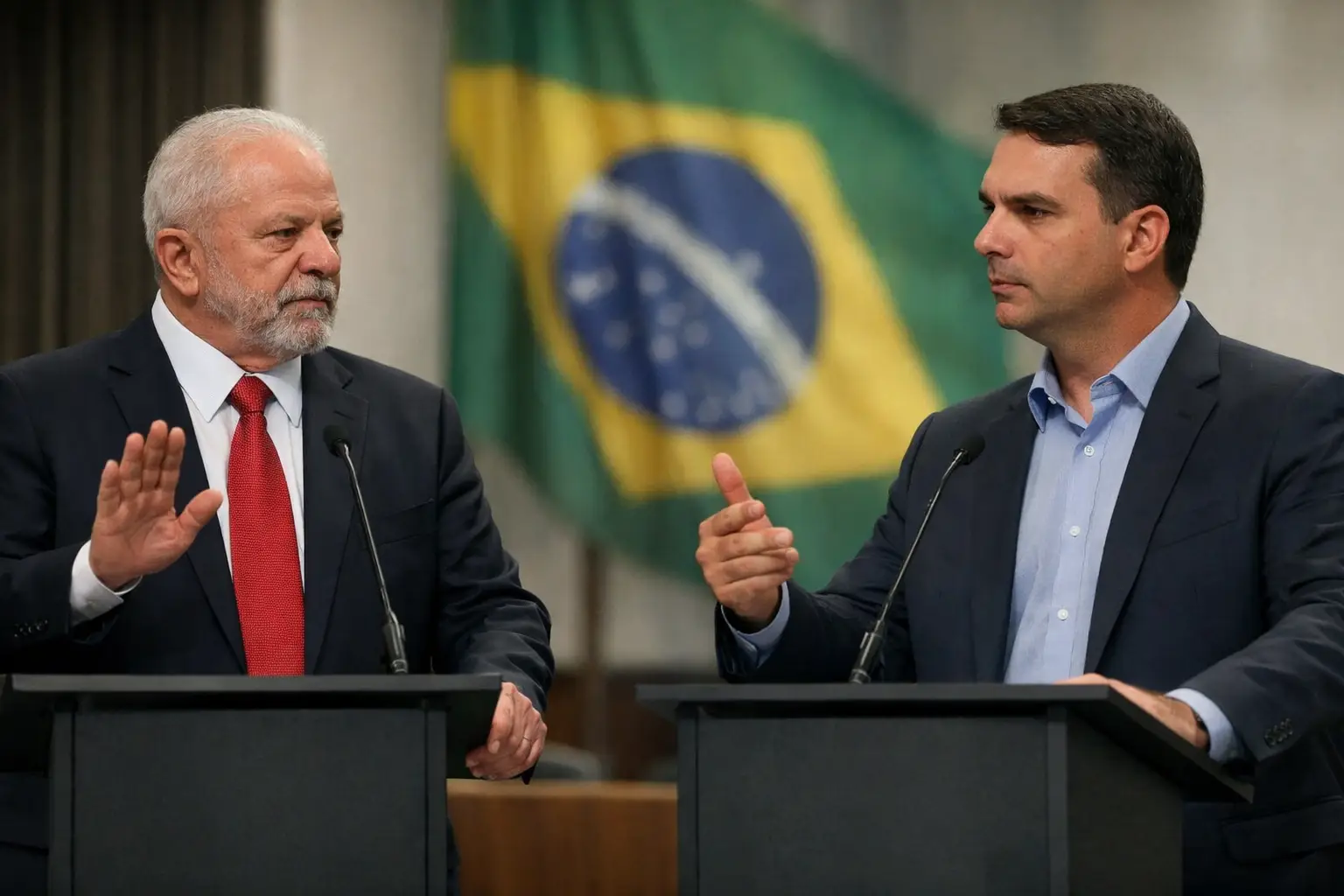
High-stakes presidential rematch in Brazil will see Luiz Inácio Lula da Silva confront Flávio Bolsonaro on October 4, 2026. Four years after a narrow victory over Jair Bolsonaro, the current contest revives a polarizing national debate and places the incumbent government and a prominent opposition figurehead back at the center of public attention.
The campaign sets two familiar political personalities against one another. Luiz Inácio Lula da Silva returns to defend his mandate and record from the presidency, while Flávio Bolsonaro, son of the former president, seeks to consolidate support among voters who backed the previous administration. The pairing marks a rare direct line of succession in Brazilian politics, with family ties and past rivalries shaping voter narratives across regions and social groups.
Observers note the rematch will carry implications beyond individual personalities. The outcome is likely to influence debates on governance, economic priorities and Brazil’s role in regional affairs. Mobilization of party bases, turnout among decisive demographic groups, and campaign strategies will be decisive factors as the country approaches election day. International attention is expected to follow the result, given Brazil’s size and influence in Latin America.
With the date set for October 4, parties and institutions are preparing for a tightly contested ballot. Analysts and voters will watch indicators such as vote margins, geographic patterns of support and the robustness of electoral procedures. The next weeks will see intensified campaigning and scrutiny, as both camps seek to persuade undecided voters and secure the necessary coalitions to govern after the vote in this closely watched presidential election.