






Air travelers face another day of disruption as the effects of a nationwide grounding ordered by the Federal Aviation Administration are expected to continue into Monday. Aircraft were seen on the ground at Ronald Reagan Washington National Airport in Arlington, Virginia, on Saturday, November 14, after the agency halted flights nationwide, a rare measure with consequences that can extend well beyond the initial order.
The interruption has renewed attention on the fragility of the United States’ aviation network, where delays in one part of the system can quickly affect aircraft positioning, crew schedules and airport operations across the country. Even after flights resume, airlines and airports often need time to restore normal timetables, move aircraft back into place and manage passengers whose journeys were interrupted. For travelers, that means delays and cancellations may remain visible after the formal end of a grounding.
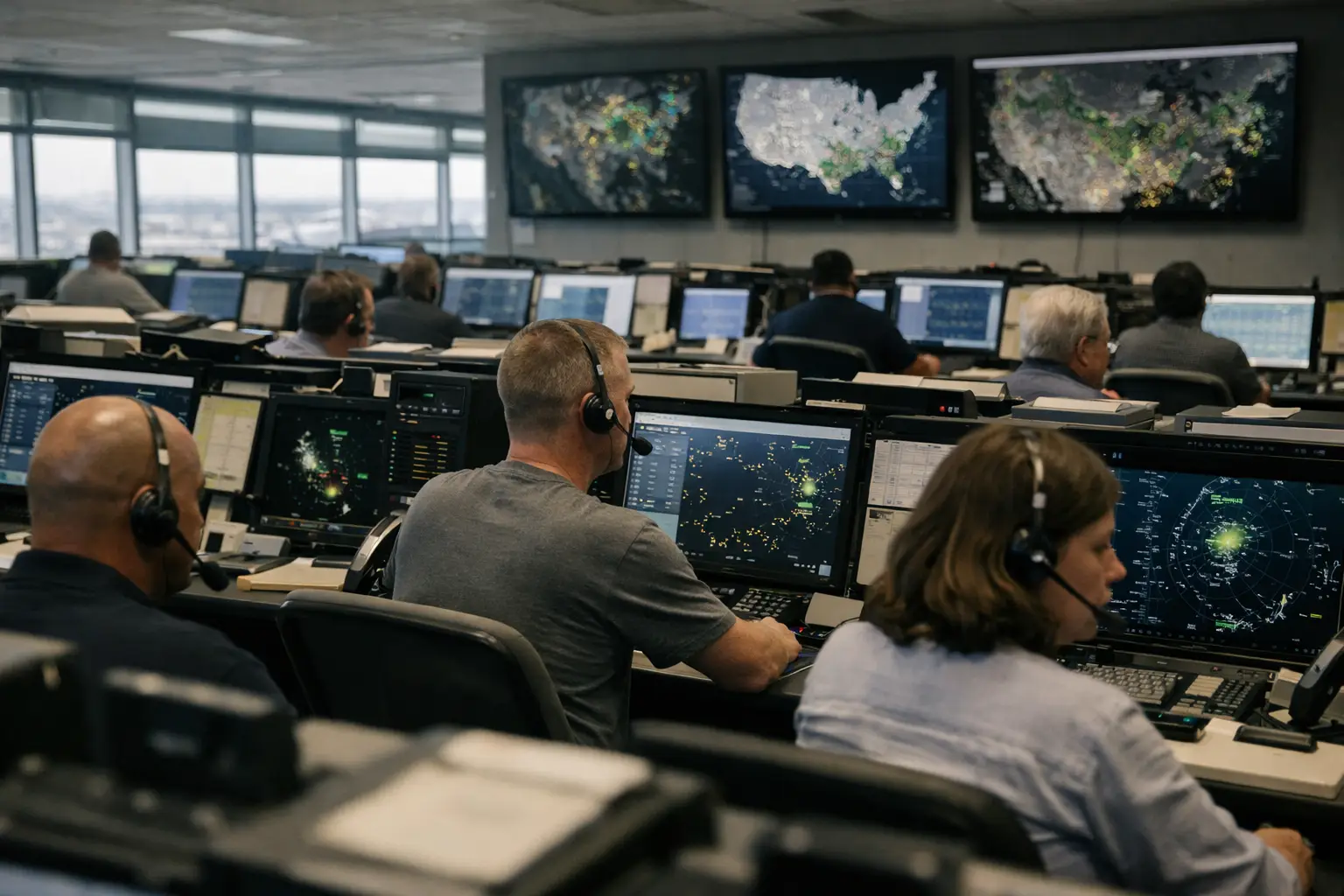
The episode comes as policymakers debate the condition of the country’s air traffic control infrastructure. Department of Transportation has recently received $12.5 billion from Congress to upgrade an aging system that remains central to the safety and efficiency of air travel. The investment is intended to support modernization of the technology and facilities that guide aircraft through one of the world’s busiest airspaces.
President Trump has indicated that he wants additional funding beyond the amount already approved. The renewed push places air traffic control modernization at the center of a broader debate over transport infrastructure, federal spending and operational resilience. While the current disruption is being felt most directly by passengers, it also highlights the strategic importance of systems that are often invisible to the public until they fail or become constrained.
For airports serving Washington and other major travel hubs, the coming hours will be important in determining how quickly schedules can be restored. The priority for federal authorities and operators is to return the network to stable service while maintaining safety standards. Until normal operations are fully re-established, passengers are likely to encounter uneven conditions across routes, with the impact varying by airport, airline and aircraft availability.