









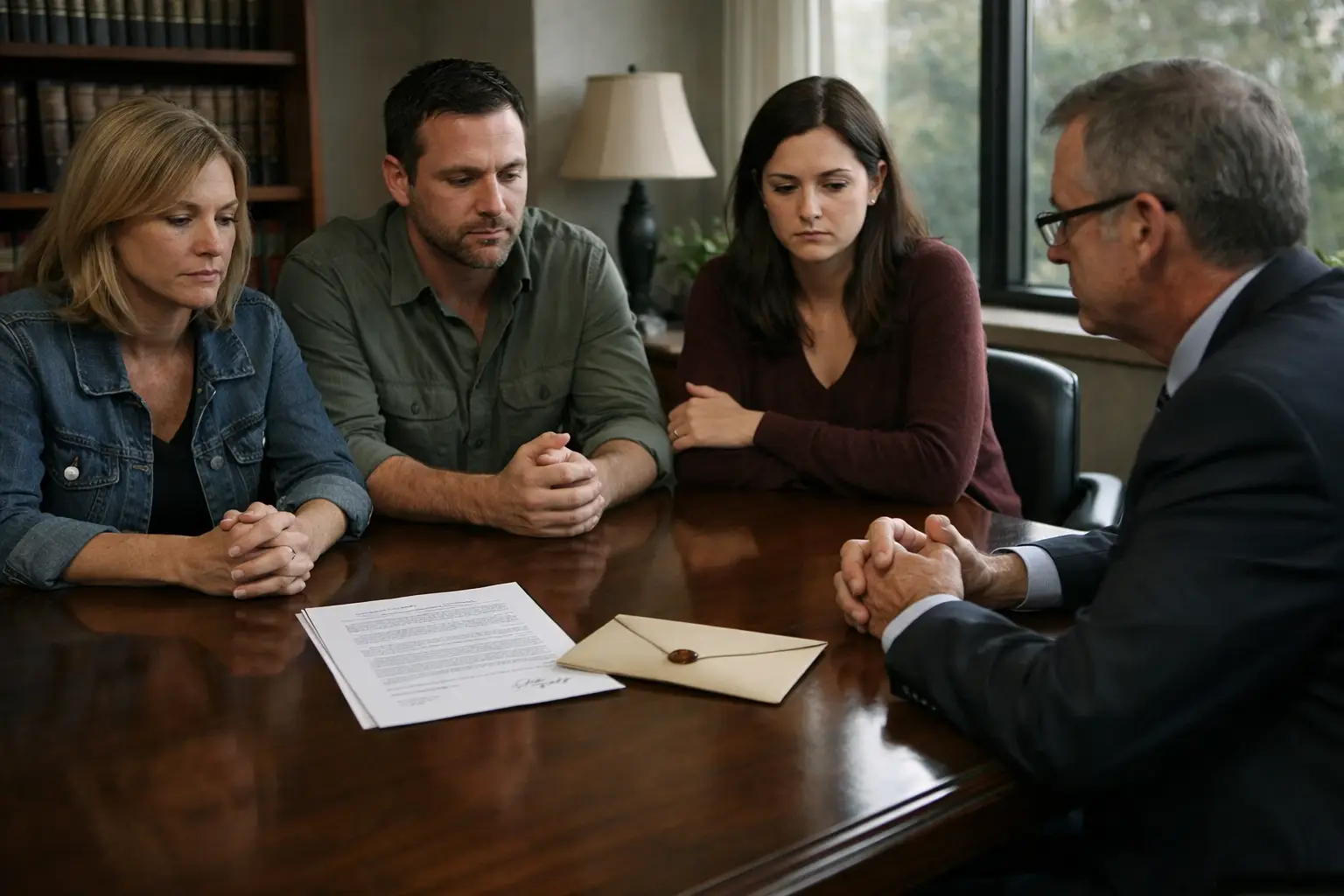
A family inheritance dispute has emerged from a stark estate-planning choice: an older brother with no children has removed his only sister from his will and left the entire estate to another sibling. The beneficiary now faces a private dilemma that many families encounter only when legal documents bring long-standing relationships into sharp focus: whether to disclose the decision before death or remain silent out of respect for the testator’s wishes.
The known facts are limited but significant. The brother is childless, has made a will, and has chosen one sibling as the sole recipient of his assets. The sister has been excluded. No reason for the decision has been provided, and there is no information suggesting incapacity, coercion or a pending legal challenge. That absence matters: in most estate matters, the central document is not a moral judgment but a legal expression of a person’s intentions, subject to the rules of the relevant jurisdiction.
The situation illustrates the tension between estate planning and family expectations. A will is often treated as a private document during a person’s lifetime, while probate or estate administration can later make parts of the arrangement visible to heirs, beneficiaries or the court. Official guidance from USA.gov notes that wills and estate processes are governed by state law in the United States, a reminder that the practical obligations of heirs and executors vary widely. In other countries, forced-heirship rules or family-provision claims may alter the effect of a testamentary decision.
For the sibling who stands to inherit, the question is not only legal. Early disclosure could give the excluded sister time to process the decision, speak directly with her brother, or seek independent advice. It could also create conflict before the brother’s death and place pressure on him to explain or revise a choice he may have made deliberately. Silence may preserve his control over the information, but it can leave the beneficiary appearing complicit when the will is eventually revealed.
The broader lesson is that inheritance decisions rarely remain confined to paperwork. Clear communication, properly drafted documents and independent legal advice can reduce disputes without requiring families to resolve every emotional grievance. Where a will excludes a close relative, the person making it may wish to document capacity, intent and the reasons for the decision with a qualified professional. For the future beneficiary, the most prudent step is to separate personal fairness from legal duty and obtain advice before acting.