








Chronicle by Isaac Hammouch
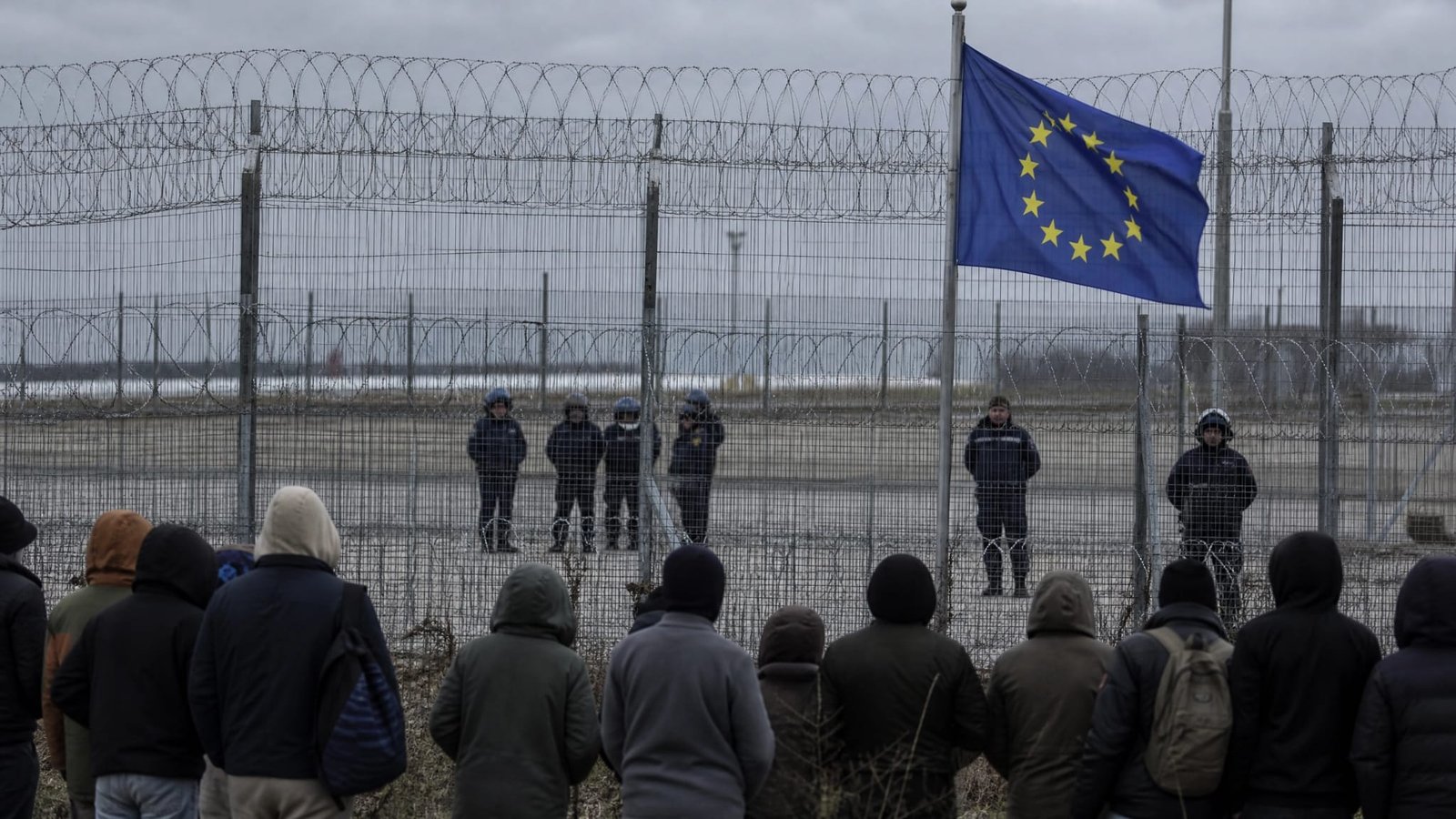
June 12, 2026, will not just be a date in the archives of the European Union; it will be the symbol of a historic renunciation. With the entry into force of the new Pact on Migration and Asylum, Europe has not merely reformed its laws; it has changed its face. This text is the culmination of a deliberate will to close off, a battle plan orchestrated for years to transform a continent that was once a land of asylum into an impregnable fortress. What is playing out today at Europe’s borders is not a response to a passing crisis, but the consecration of a political radicalization that has ultimately infused every level of power, from Brussels to national capitals.
The engineering of this closure relies on a formidable legal hypocrisy: the “fiction of non-entry.” Under this clinical term, Europe is organizing human sorting on a grand scale. From now on, thousands of men, women, and children, sometimes as young as six years old, are kept in gray zones—screening centers where the law stops at the barbed wire. Technically, they have not “entered” Europe, which allows them to be deprived of the most basic judicial guarantees. In France, Belgium, or Italy, detention capacities are exploding, testifying to a desire to file, scan, and reject before the hope of a better life can even be expressed. We no longer speak of welcoming; we speak of streams to be dried up, biometric data to be collected, and accelerated procedures that look more like sentences than examinations of rights.
This metamorphosis did not fall from the sky; it is the fruit of a political alliance that has shifted the continent’s center of gravity toward its hardest right. The European People’s Party (EPP) eventually broke its own taboos to unite with nationalist and sovereignist forces. In Belgium, Vlaams Belang and the N-VA imposed their tempo, forcing traditional parties into a security-driven escalation to avoid being swept away. In Austria, the FPÖ transformed the country into a laboratory of closure, while in France, the rhetoric of the National Rally became the default software of migration policies. This new European majority has normalized concepts that, ten years ago, would have caused a scandal: the externalization of borders, deportation to third countries with no ties to the migrant, and the financial tutelage of neighbors like Tunisia or Libya so that they do the “dirty work” of interception far from public view.
But the pact does not stop at the walls it erects; it is already preparing the great cleanup from within. This is where tomorrow’s true rupture lies: the destabilization of those who are already here. We see the emergence of a Europe where a residence permit is no longer a protection, but a revocable reprieve. The idea of stripping documented residents of their papers on grounds of “misconduct,” non-payment of taxes, or violations of social rules is becoming a legislative reality. The migrant, even when “in good standing,” becomes a second-class citizen, a guest whose lease can be terminated at the slightest misstep. It is the establishment of lifelong precarity, a sword of Damocles hanging over millions of workers and families who nevertheless contribute to the life of the continent.
In the end, this pact is the death certificate of a certain idea of European humanism. By subverting the concept of solidarity into a ransom system—where states pay 20,000 euros per person to avoid welcoming them—Europe has monetized its principles. It has chosen fear over law, withdrawal over boldness. What we leave behind with this great lockdown is not just migrants; it is our own capacity to imagine a future that is not based on exclusion. Europe may have protected itself, but above all, it has locked itself inside its own rigidity, sacrificing its soul for an illusion of security.
(*) Isaac Hammouch is a Belgian-Moroccan journalist and writer. Author of several books and numerous op-eds, he analyzes societal issues, governance questions, and the mutations of the contemporary world.