






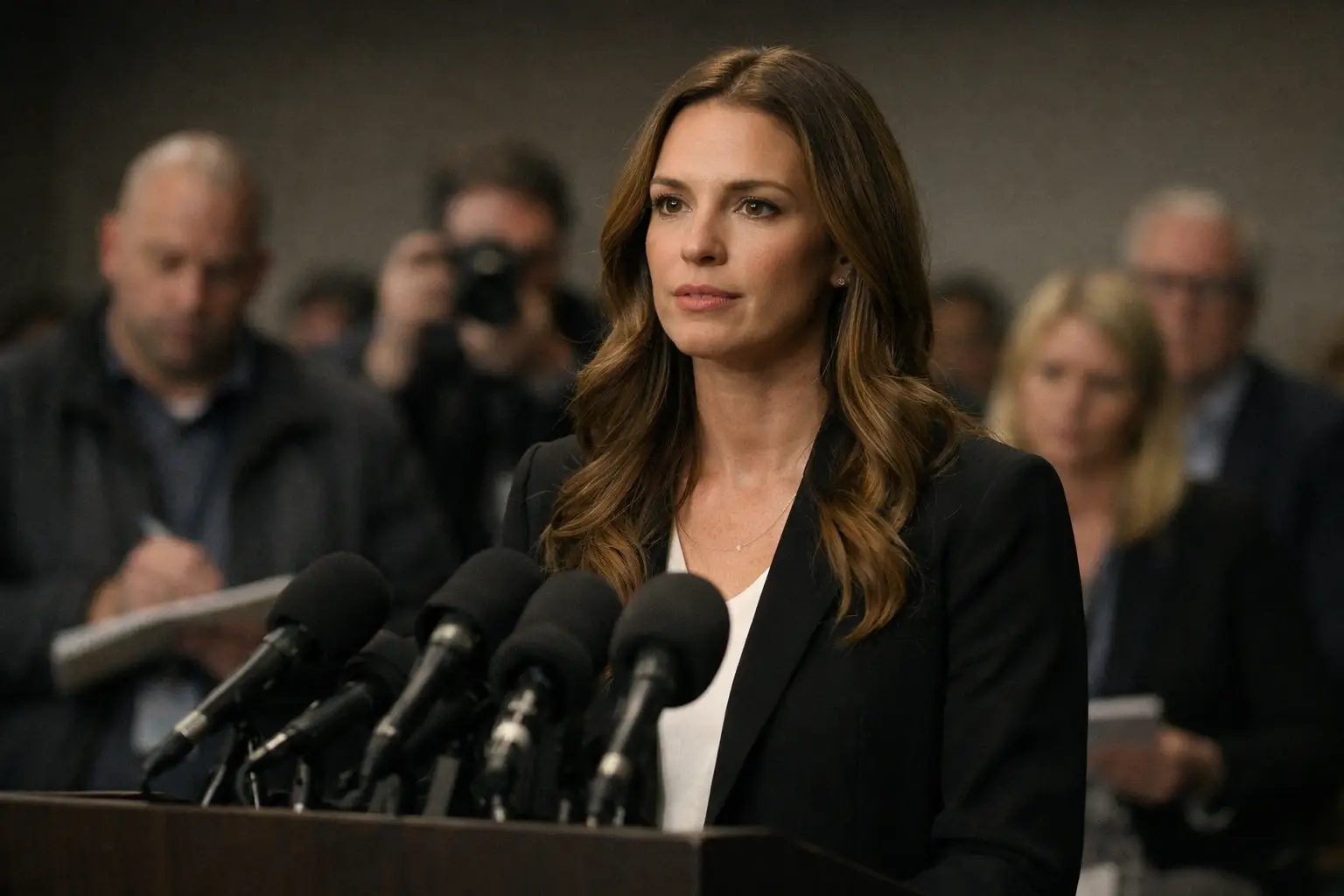
Erika Kirk has condemned jokes about political violence after Dave Chappelle referred to the killing of her husband, conservative activist Charlie Kirk, during a stand-up performance. Her criticism focused not only on the comedian but also on political commentators and online personalities who, in her view, treated an assassination as material for entertainment or partisan ridicule.
The controversy centers on Chappelle’s remark that he had been in a “good mood” since Kirk’s assassination. Erika Kirk, responding as the widow of the late activist, described the laughter around such comments as “beyond disgusting” and objected to what she characterized as left-leaning podcasters, comedians and commentators joking about a political killing. Her statement placed the episode within a broader concern over how quickly violent events involving public figures can become part of the culture-war cycle.
Charlie Kirk was a prominent conservative activist whose work made him a recognizable figure in American political media. His death has remained a point of intense emotion among supporters, and the reaction to Chappelle’s line underscores the tension between provocative comedy and the responsibilities attached to discussing real violence. Stand-up has long tested boundaries, but references to an assassination carry a different weight when family members and political communities are still confronting the loss.
The dispute also highlights the role of digital commentary in amplifying remarks originally made from a stage. Clips, reactions and partisan responses can detach a joke from the setting in which it was delivered and turn it into a public argument over decency, free expression and the normalization of violent language. For families of victims, that circulation can deepen the harm by transforming private grief into recurring public content.
Without shifting into calls for censorship, Kirk’s response draws attention to a line often debated but rarely settled: whether political humor can address violence without appearing to celebrate it. In this case, her message was direct. The killing of a political figure, she argued, should not be treated as a punchline, regardless of ideological disagreement or the performer’s reputation for provocation.