







Sudden cardiac arrest remains one of the most time-critical emergencies in medicine, and new findings indicate that training alone has not been enough to improve survival. The condition is distinct from a heart attack: the heart’s electrical system abruptly fails, causing heartbeat, breathing, pulse and blood circulation to stop. In the United States, about 350,000 people each year experience cardiac arrest outside hospital settings, and only around one in ten survives.
The result is a difficult signal for public health systems that have invested in teaching cardiopulmonary resuscitation and preparing emergency responders. CPR and defibrillation are established life-saving measures, but their effectiveness depends on how quickly they are delivered. Every minute without CPR reduces the chance of survival by about 10%, making the first moments after collapse decisive for both life and brain function.
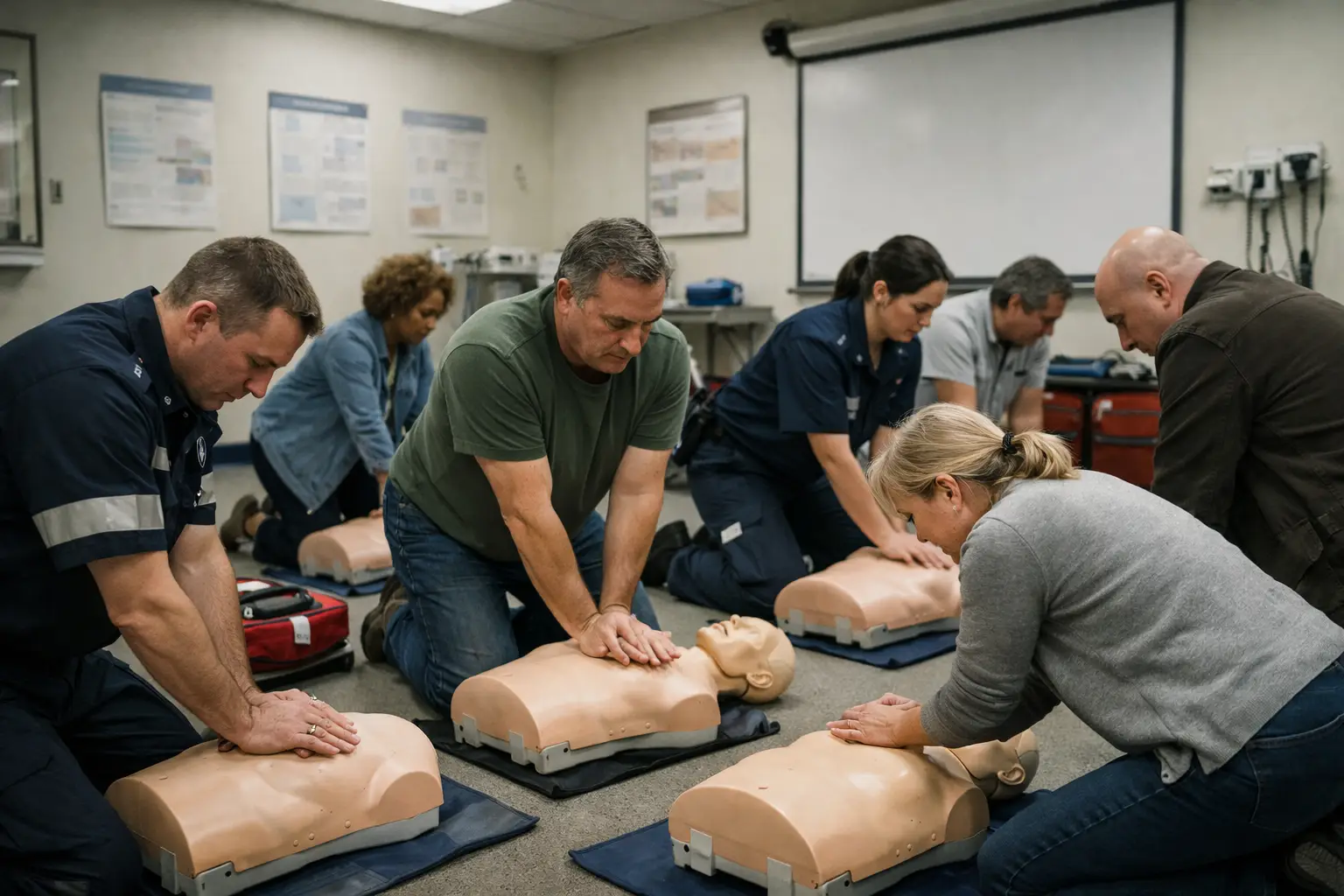
Training programmes for bystanders and emergency responders are designed to close that gap, yet the latest research found no improvement in survival after such efforts. The finding does not diminish the importance of CPR or automated external defibrillators; instead, it points to the difference between knowing what to do and making sure help reaches a patient immediately. In many out-of-hospital arrests, success depends on whether someone nearby recognises the emergency, starts chest compressions without delay and has rapid access to a defibrillator.
For organisations such as the American Heart Association, the challenge is not only education but also the reliability of the entire emergency chain. That chain includes public recognition of cardiac arrest, dispatcher guidance, bystander CPR, accessible defibrillators and coordinated emergency medical response. Weakness at any point can erase the benefit of training delivered earlier in the community.
The findings sharpen attention on implementation rather than awareness alone. Wider CPR instruction may remain essential, but survival gains are likely to require faster activation, more visible defibrillators and response systems that bring trained hands to the patient in minutes. With hundreds of thousands of out-of-hospital cases each year, even modest improvements in response could carry major consequences for emergency care and population health.