








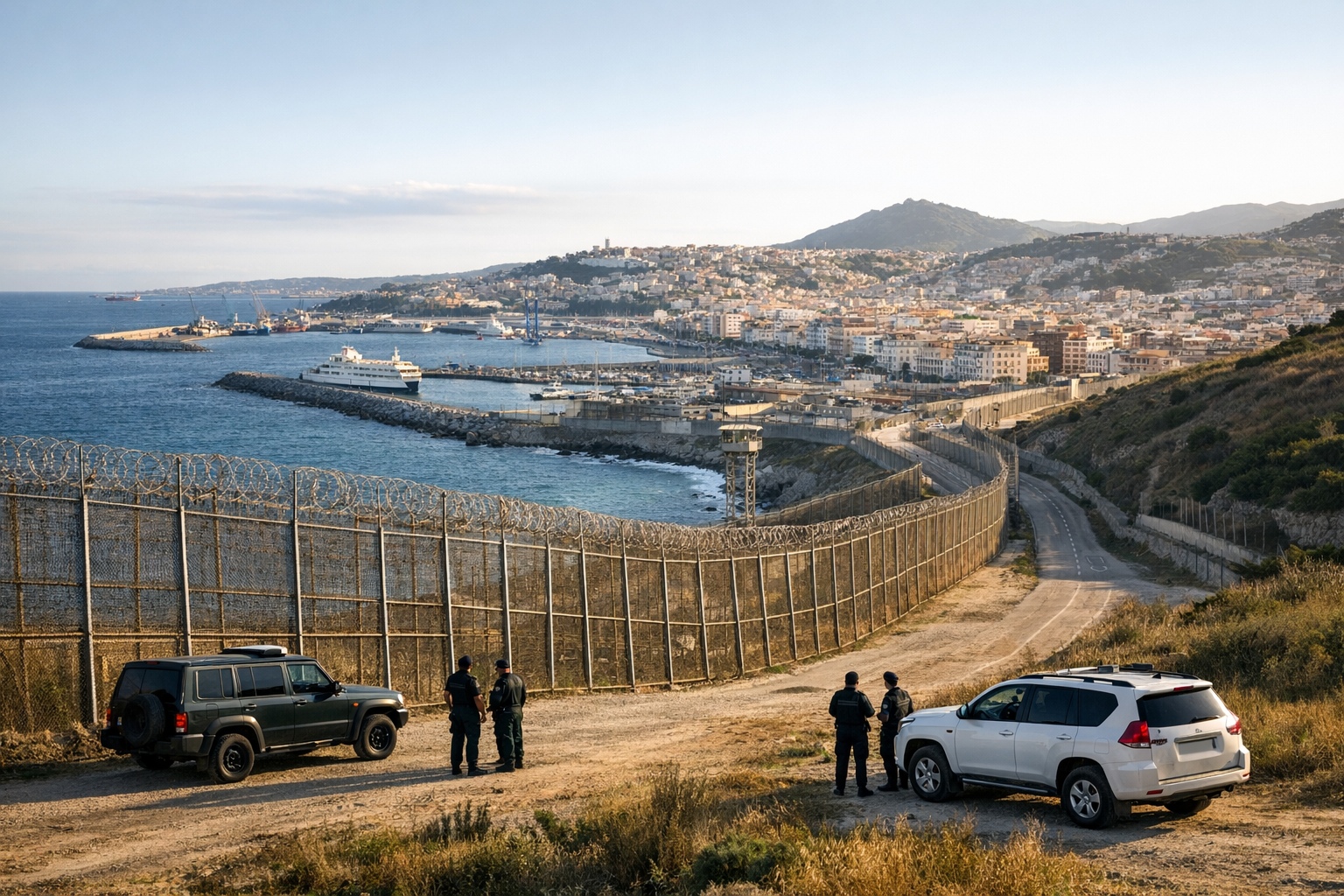
Ceuta’s layered history shapes the contemporary questions Madrid faces over sovereignty, security and day-to-day governance. The north African city is a Spanish-administered exclave on the Mediterranean coast adjacent to Morocco, and its status reflects centuries of changing control, a distinctive legal position and the practical realities of being an external frontier of the European Union.
Spain has administered Ceuta since it passed from Portuguese to Spanish sovereignty in the 17th century under the Treaty of Lisbon (1668), and the city acquired its current political status as an autonomous city in 1995. Morocco asserts a claim to the territory that dates to its independence era, a point of diplomatic friction between Rabat and Madrid. The local population—composed of Spanish citizens of varied backgrounds, including a sizable Muslim community—lives under Spanish law while facing cross-border economic and social ties with neighboring Moroccan towns.
Recent events have underscored the strategic and humanitarian dimensions that any policy must address. In May 2021, Moroccan authorities relaxed border controls and roughly 8,000 migrants entered Ceuta in a matter of days, prompting a security and reception challenge for Spanish authorities and drawing attention from the European Union. The incident highlighted the city’s role as an external EU frontier, where migration management, bilateral security cooperation and respect for residents’ rights intersect. Cross-border flows of goods and people, and persistent informal economies along the frontier, further complicate governance.
Framing future action in historical and legal context does not resolve the underlying diplomatic tensions, but it clarifies the considerations at stake: the legal status of the territory, Spain’s domestic responsibilities to residents, the operational needs of border and migration management, and the necessity of cooperation with Morocco and EU partners. Any sustainable approach will be evaluated against these factual pillars—past treaties and administrative arrangements, present-day human and security needs, and the broader European framework within which Ceuta operates.