





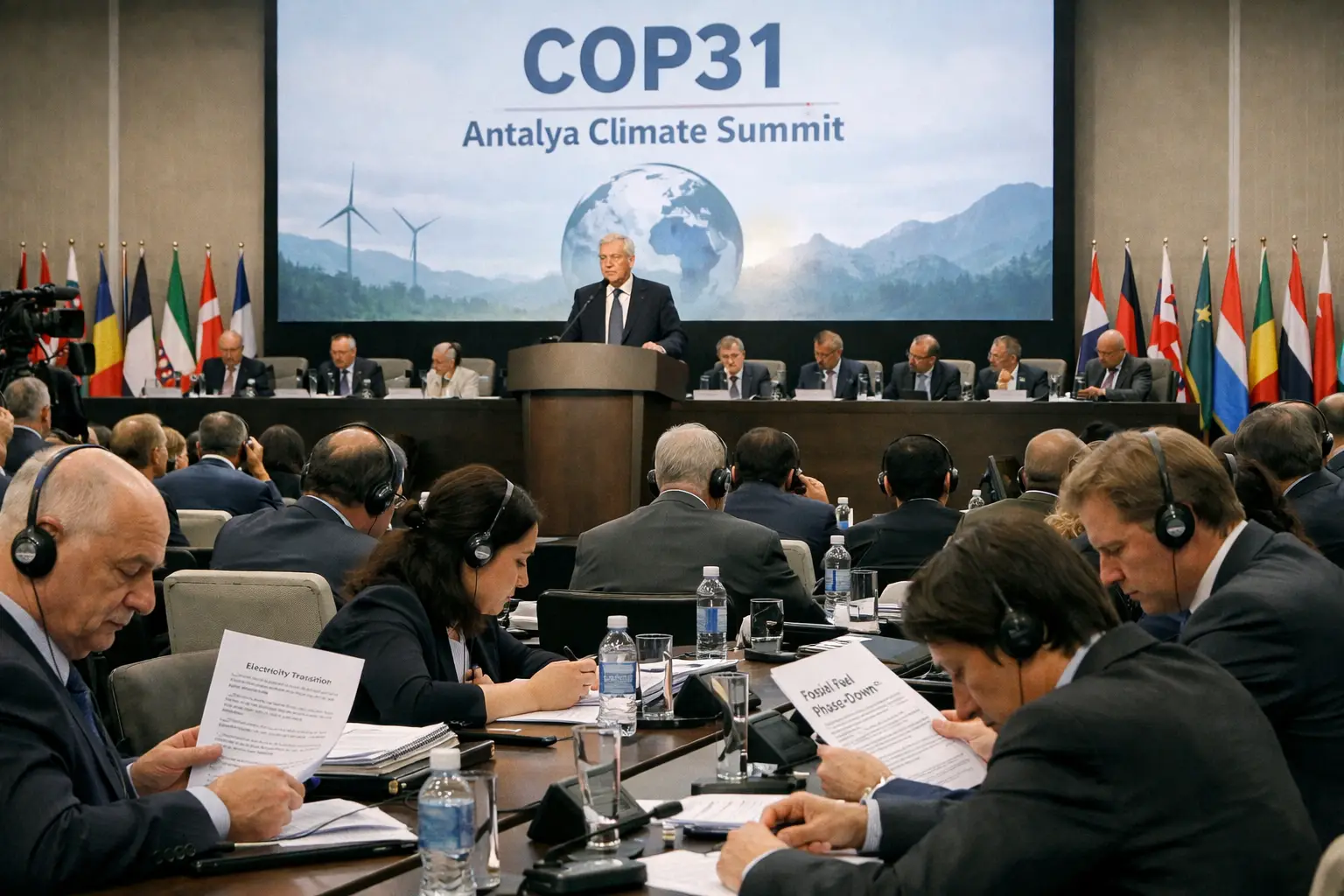
World leaders arrive at COP31 in Turkey facing a familiar but increasingly urgent test: how to turn climate pledges into a workable negotiating plan at a time when global emissions remain stubbornly high. Speeches scheduled for Wednesday in Antalya will set out national priorities as diplomats from nearly 200 countries try to build consensus around fresh language on energy, electricity and the future of fossil fuels.
The summit, held in the Mediterranean resort city, places Turkey at the centre of a diplomatic effort to revive a process strained by competing global crises. Wars, inflation and domestic political pressures have reduced the space for climate diplomacy in many capitals. Yet the central challenge remains unchanged: governments are being asked to accelerate action while protecting economic stability, energy security and development needs.
Negotiators are working on a plan to increase the share of electricity in global energy use, a priority linked to the broader electrification of transport, heating and industry. That discussion sits alongside the more politically sensitive question of how countries describe the transition away from coal, oil and gas. Efforts to advance stronger wording on fossil fuels have stalled in previous talks, reflecting sharp differences between energy producers, major consumers and vulnerable states seeking faster emissions cuts.
The talks take place under the framework of the UNFCCC, where decisions require broad agreement among parties. That structure gives the process legitimacy but also makes progress difficult when national interests diverge. For countries exposed to rising seas, droughts and extreme weather, the pace of negotiations is a matter of immediate risk. For others, the debate is closely tied to jobs, fiscal revenues and the cost of rebuilding energy systems.
COP31 will therefore be judged less by the tone of leaders’ speeches than by whether negotiators can produce a credible pathway on power use and fossil fuels. Antalya offers a stage for renewed commitments, but the substance will depend on text that governments are willing to accept. With greenhouse gas emissions showing little sign of decline, the summit is another test of whether the global climate process can move beyond recognition of the problem and deliver clearer steps toward implementation.