








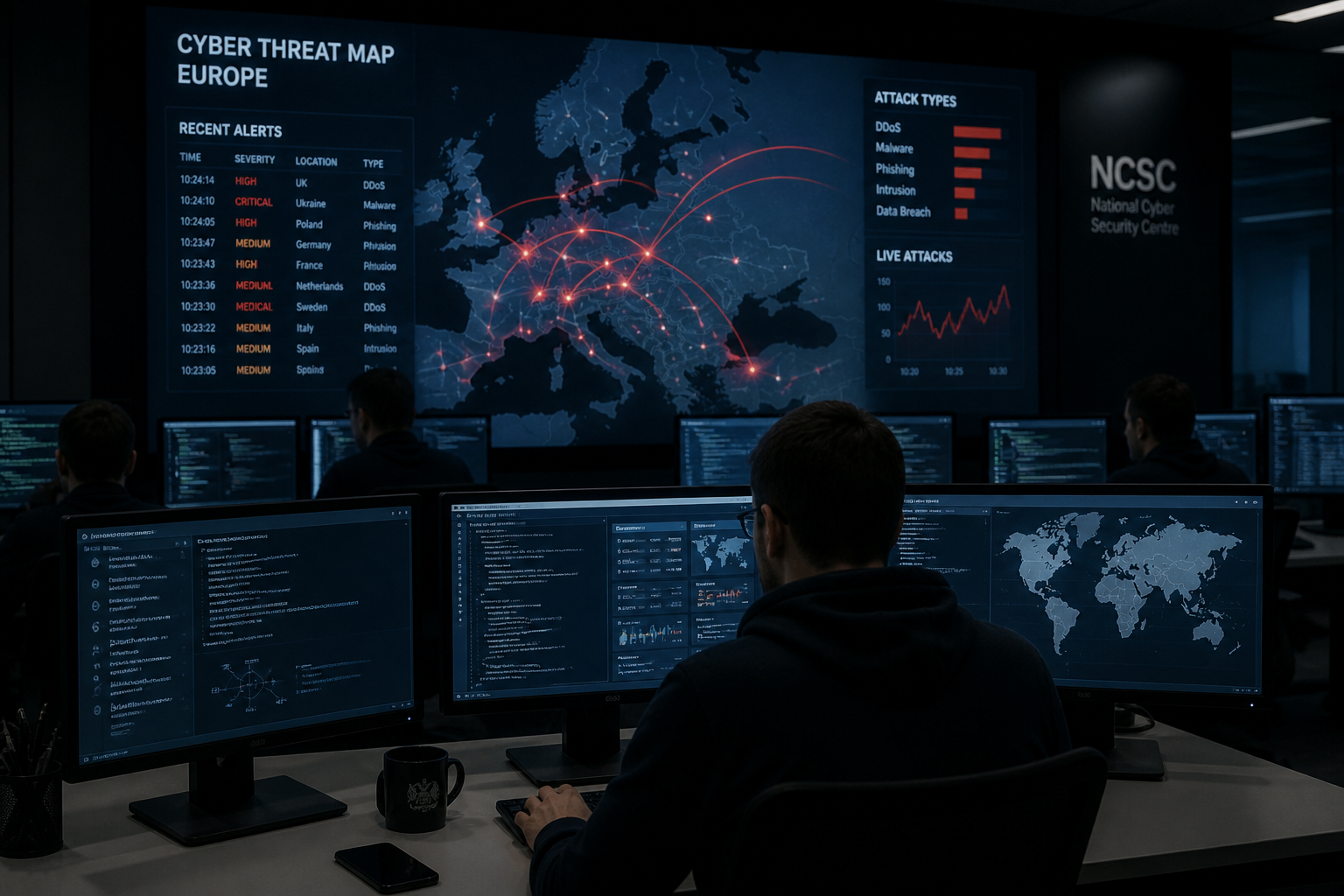
Cyberattacks have become an increasingly significant element of security discussions in Europe, particularly in the context of broader geopolitical tensions.
According to the European Union Agency for Cybersecurity (ENISA), cyber incidents targeting public institutions, private companies and critical infrastructure have increased in frequency and complexity in recent years.
Types of cyber threats
Cyberattacks in Europe include ransomware operations, data breaches and attempts to access sensitive systems. These incidents have affected sectors such as healthcare, energy, finance and transportation.
Some attacks have been attributed by national authorities to groups associated with foreign states, although attribution in cyberspace remains complex and sometimes contested.
Hybrid warfare context
Cyber operations are often discussed within the framework of hybrid warfare. This concept refers to the use of multiple tools, including cyberattacks, disinformation and economic pressure, in a coordinated manner.
These activities can take place below the threshold of conventional military conflict, making response strategies more complex.
Impact on infrastructure
Critical infrastructure has been identified as a key area of concern. Incidents involving healthcare systems and energy networks have highlighted potential vulnerabilities.
Governments and institutions have increased efforts to assess risks and strengthen cybersecurity measures.
Policy responses
The European Union has introduced regulations such as the NIS2 Directive, aimed at improving cybersecurity standards and coordination among member states.
NATO has also recognized cyberspace as an operational domain and has emphasized the importance of cooperation in cyber defense.
Ongoing developments
Cybersecurity remains an evolving field, with new threats and technologies emerging regularly. European institutions and national governments continue to adapt their policies and capabilities in response to these developments.
Discussions at international level focus on cooperation, regulation and the management of cyber risks in a global context.