







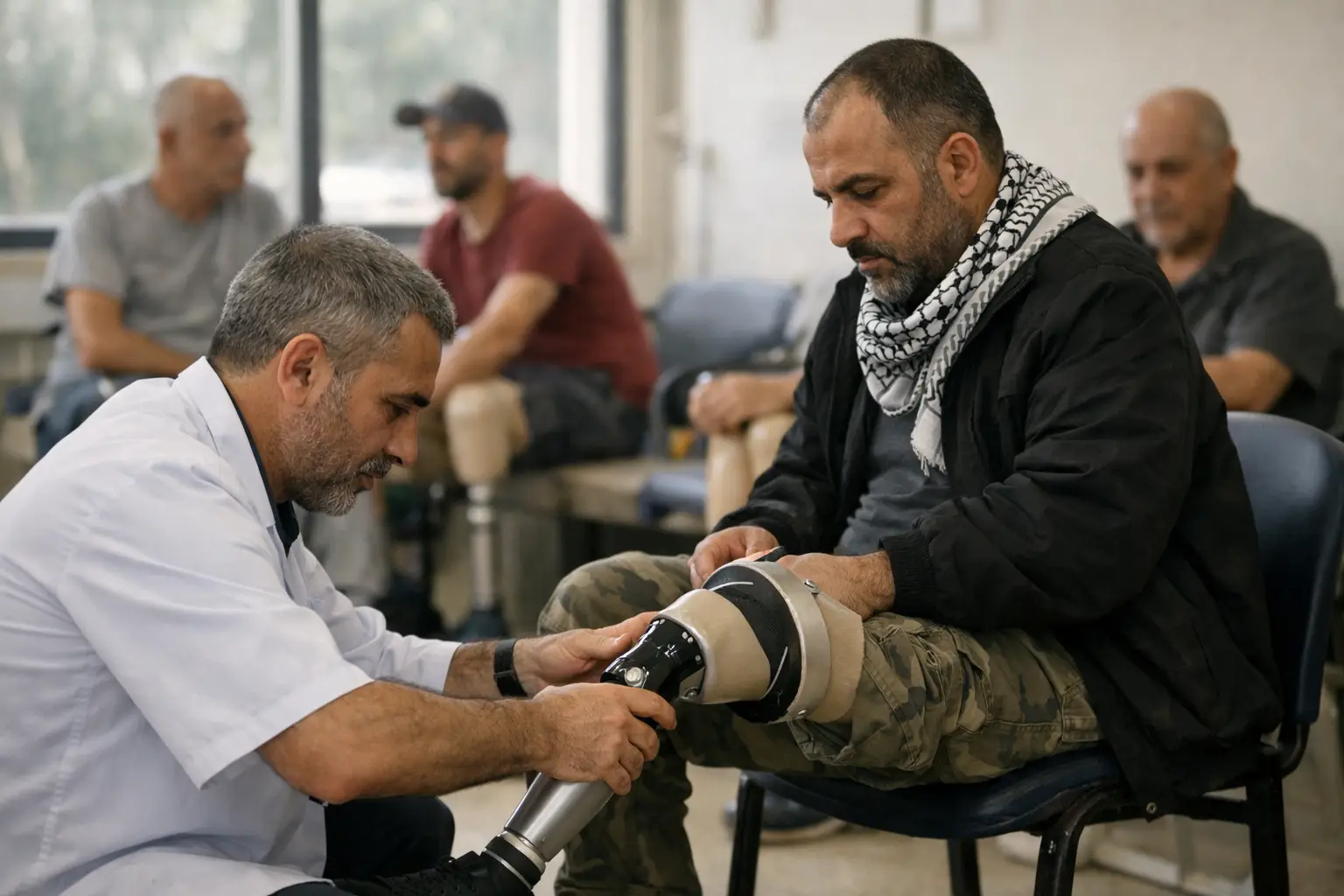
At 15 years old, Mahmoud Abou Nusair has seen his childhood ambitions altered by the loss of a leg to gunfire in Gaza. Once drawn to football, he is now one of more than 450 Palestinian amputees undergoing care and being fitted with prosthetic limbs at facilities operating in Amman and within Gaza, an effort coordinated by the Restoring Hope Society. The cases gathered at these centres span ages and injuries, but the consequences for adolescents like Mahmoud are immediate and profound.
The treatment programmes combine limb fitting with rehabilitation aimed at restoring mobility and daily function. Prosthetic fittings are only the start: recipients work with therapists and technicians to learn to use new devices and to adapt to altered physical needs. Services provided in Amman seek to complement those available inside Jordan and in Gaza, so that patients displaced by conflict or constrained by access barriers can receive follow-up care and maintenance for their prostheses.
The scale of the initiative reflects a broader challenge. Hundreds of amputations among civilians carry long-term implications for schooling, employment and social life, particularly for young people. Rehabilitation requires trained specialists, workshops for adjustments, and sustained resources for replacement parts and therapy. Cross-border coordination between centres in Amman and teams working inside Gaza has been essential to maintain continuity of care for patients who travel for fittings or who receive services locally.
For those treated, renewed mobility can mean a return to schooling, adapted sports or new livelihoods, but recovery is often a long process. Centres report that physical rehabilitation must be paired with social and educational support to help young amputees rebuild routines and ambitions. The initiative in Amman and Gaza illustrates the practical steps taken to restore movement and daily autonomy for hundreds of Palestinians, while highlighting the ongoing need for resources and trained personnel to sustain care over time.