





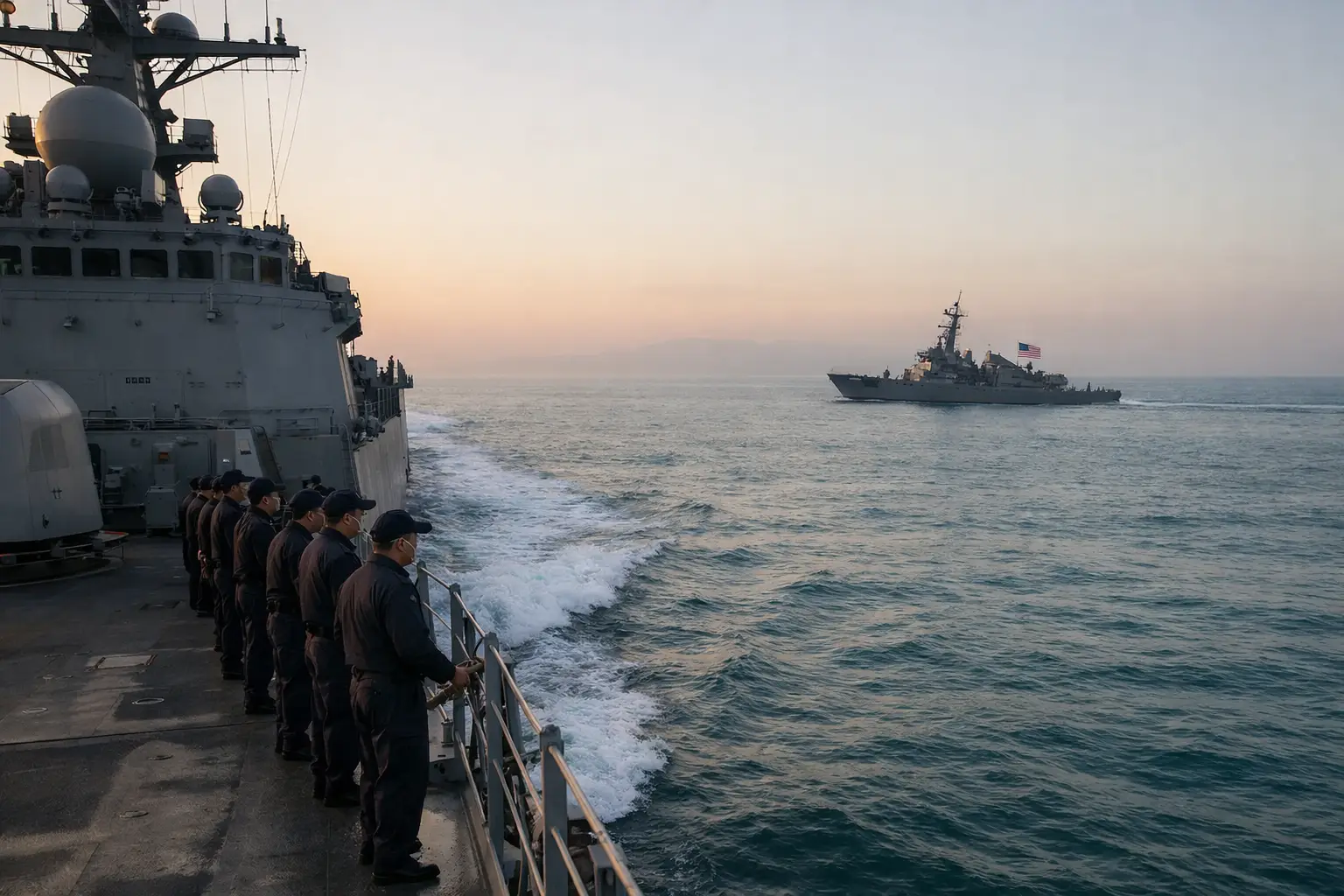
South Korea is assessing a potential enlargement of its naval operations in the Middle East, following a report in the Kyunghyang Shinmun. The newspaper said Seoul is weighing whether to broaden the patrol area of its anti-piracy detachment to include the Gulf of Oman, a move that would place South Korean warships closer to the Strait of Hormuz. The story also linked the deliberations to pressure from President Donald Trump for allied contributions amid tensions involving Iran.
The force under consideration is the long-standing Cheonghae unit, which has been deployed to the Gulf of Aden since 2009 to counter piracy and protect maritime traffic. Expanding its mandate to the Gulf of Oman would represent a geographic shift toward a narrower, more politically sensitive maritime corridor that connects the Arabian Sea with the Persian Gulf.
Any decision to extend operations carries strategic implications. The Strait of Hormuz is a major global energy transit point and has been a focal area for diplomatic and military friction. A broader operational footprint for South Korean vessels would place them nearer to contested waters and could require adjustments in logistics, rules of engagement and regional coordination with other navies operating in the area.
Seoul’s deliberations reflect the intersection of alliance dynamics and commercial imperatives. South Korea is a security partner of the United States and a major importer of Gulf energy; both considerations shape policymakers’ calculations. Expanding naval activity would signal a heightened willingness to assume maritime responsibilities beyond counter-piracy, but it would also raise questions about the political, operational and legal frameworks governing such deployments. The outcome of the review will determine whether the Cheonghae unit’s operational map is formally altered and how Seoul balances alliance expectations with regional risk management.