









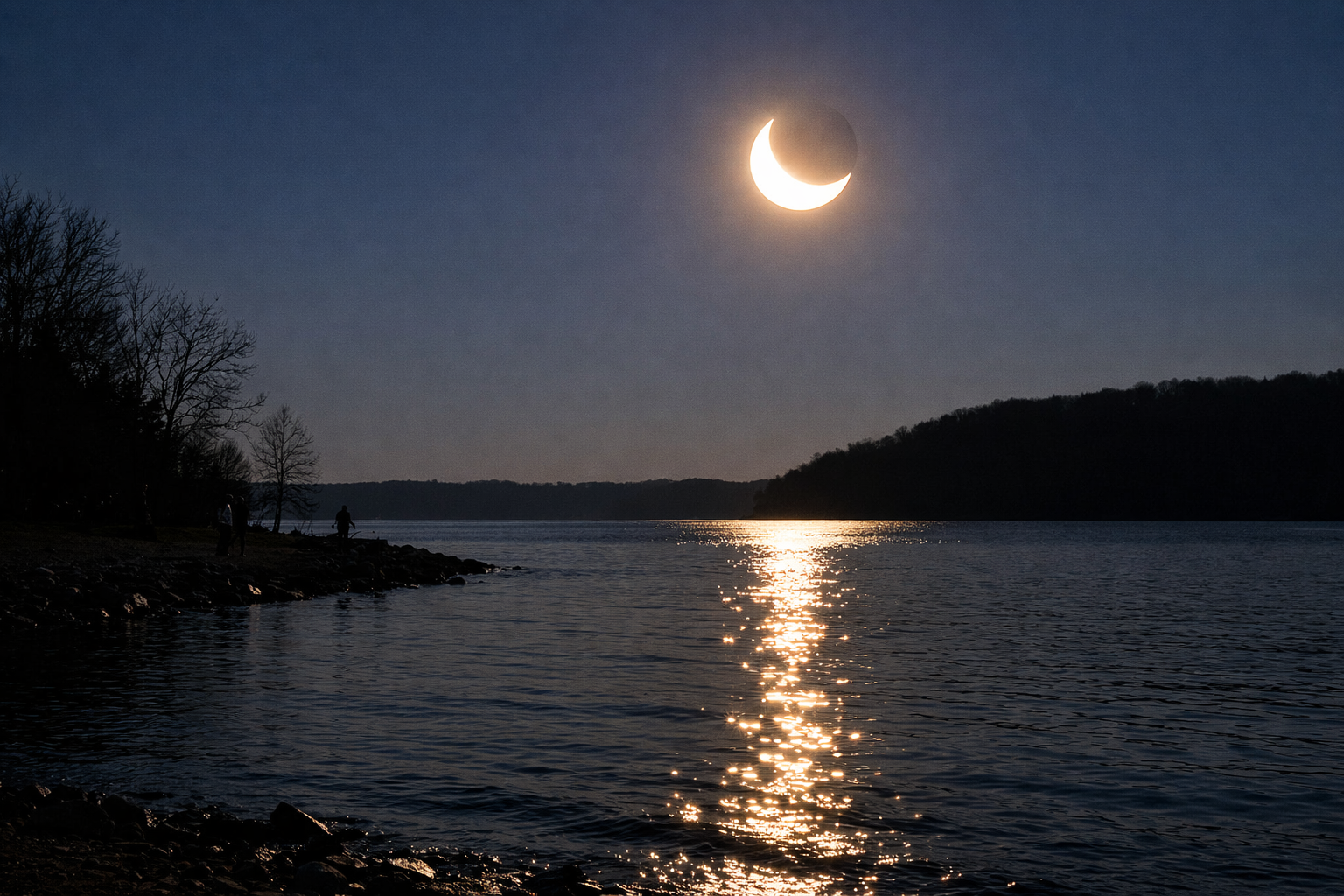
Solar eclipse will cross parts of the United States next Wednesday, offering viewers in the affected regions a chance to observe the Moon pass between Earth and the Sun. Visibility will vary by location: some communities will see a more pronounced obscuration while others will experience a partial event. Exact coverage and timing will depend on the observer’s position along the eclipse path.
For precise local start, maximum and end times consult authoritative sources such as NASA and regional observatories, which publish detailed maps and schedules ahead of the event. Local science centers and astronomy clubs frequently organize public viewings and will provide equipment and guidance. Observers are advised to confirm timings in advance, as a difference of minutes can determine whether an area falls inside a narrow band of greater coverage.
Eye safety is the primary concern for anyone planning to look toward the Sun. Use certified solar viewing glasses that meet the ISO 12312-2 standard, or view the eclipse indirectly with a pinhole projector or similar projection method. Regular sunglasses, smoked glass, or unfiltered binoculars and cameras are not safe for direct solar observation; photographers should fit appropriate solar filters to lenses before aiming equipment at the Sun.
Solar eclipses are predictable celestial events and occur several times each year in various forms; partial eclipses are relatively common while total and annular eclipses are visible from narrower geographic corridors. Individuals seeking to watch the phenomenon should rely on official resources from scientific institutions such as the American Astronomical Society and local observatories for accurate maps, safety recommendations and information about community viewing events. Reporting and updates will be available from established agencies as the event approaches.