









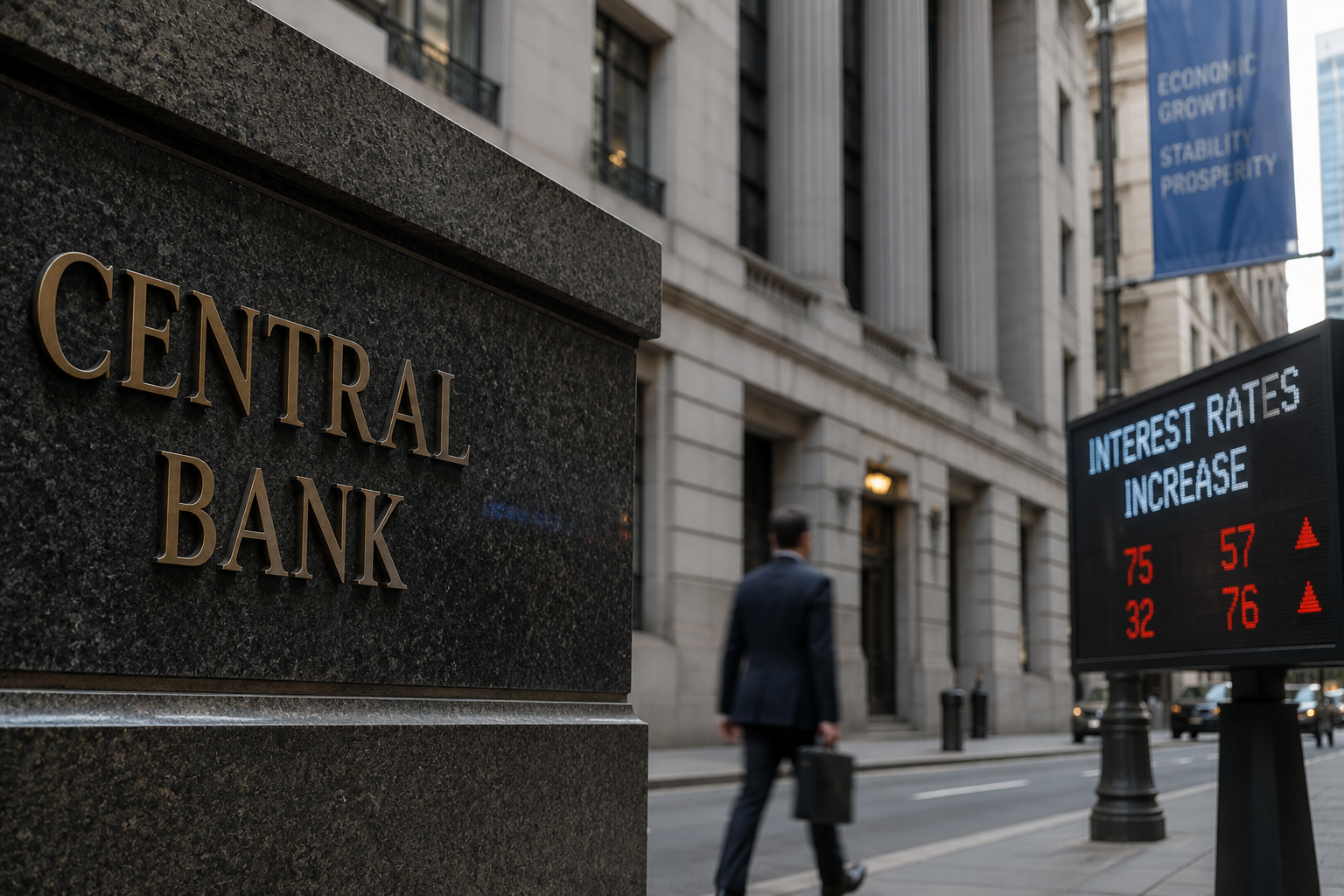
For much of the past decade, low interest rates shaped economic decisions around the world. Governments borrowed at historically low costs, businesses expanded through inexpensive financing, and households became accustomed to affordable mortgages and consumer credit. As interest rates have risen in many economies, that environment has changed significantly.
Central banks typically raise interest rates to address inflation by making borrowing more expensive and encouraging saving. While the objective is to slow price growth, the effects extend well beyond monetary policy, influencing public finances, investment decisions and everyday household budgets.
For governments, higher interest rates increase the cost of servicing public debt. Countries that regularly issue government bonds must refinance part of their debt at current market rates. As borrowing becomes more expensive, a larger share of public spending may be directed toward interest payments rather than infrastructure, healthcare or education. Fiscal planning therefore becomes more constrained, particularly for countries with high debt levels.
The private sector is affected in different ways. Companies that rely on borrowing to finance expansion, research or new facilities face higher financing costs. Some investment projects may be delayed or reconsidered if expected returns no longer justify the increased cost of capital. Businesses with stronger balance sheets may be less affected, while highly leveraged firms often face greater pressure.
Investors also adjust their strategies. When interest rates rise, government bonds and other fixed-income investments generally become more attractive because they offer higher yields with relatively lower risk. As a result, some capital may move away from equities or higher-risk assets toward more conservative investments. Financial markets often reflect these shifts as investors reassess valuations and long-term expectations.
The housing market is particularly sensitive to changes in interest rates. Higher mortgage costs reduce borrowing capacity for many households, influencing demand for residential property. In some markets, this may contribute to slower price growth or reduced transaction volumes, while the effects vary depending on local housing conditions and supply.
Consumers experience the impact through multiple channels. Mortgage repayments, personal loans and credit card borrowing may become more expensive, reducing disposable income. At the same time, higher interest rates can benefit savers, as bank deposits and fixed-income savings products often generate improved returns after extended periods of relatively low yields.
The effects are not distributed evenly across the economy. Younger households entering the housing market, businesses seeking external financing and governments with significant refinancing needs may experience stronger impacts than those with lower levels of debt or greater financial flexibility.
Central banks continuously assess economic indicators such as inflation, employment and growth when determining future interest rate decisions. If inflation moderates and economic conditions change, monetary policy may also evolve. However, interest rate adjustments typically influence the economy with a delay, and their full effects often emerge over several quarters rather than immediately.
Higher interest rates therefore represent more than a technical monetary policy tool. They influence how governments manage public finances, how businesses invest, how financial markets allocate capital and how households make decisions about borrowing, saving and spending. In an interconnected economy, a single change in the cost of money can shape decisions across nearly every sector.