









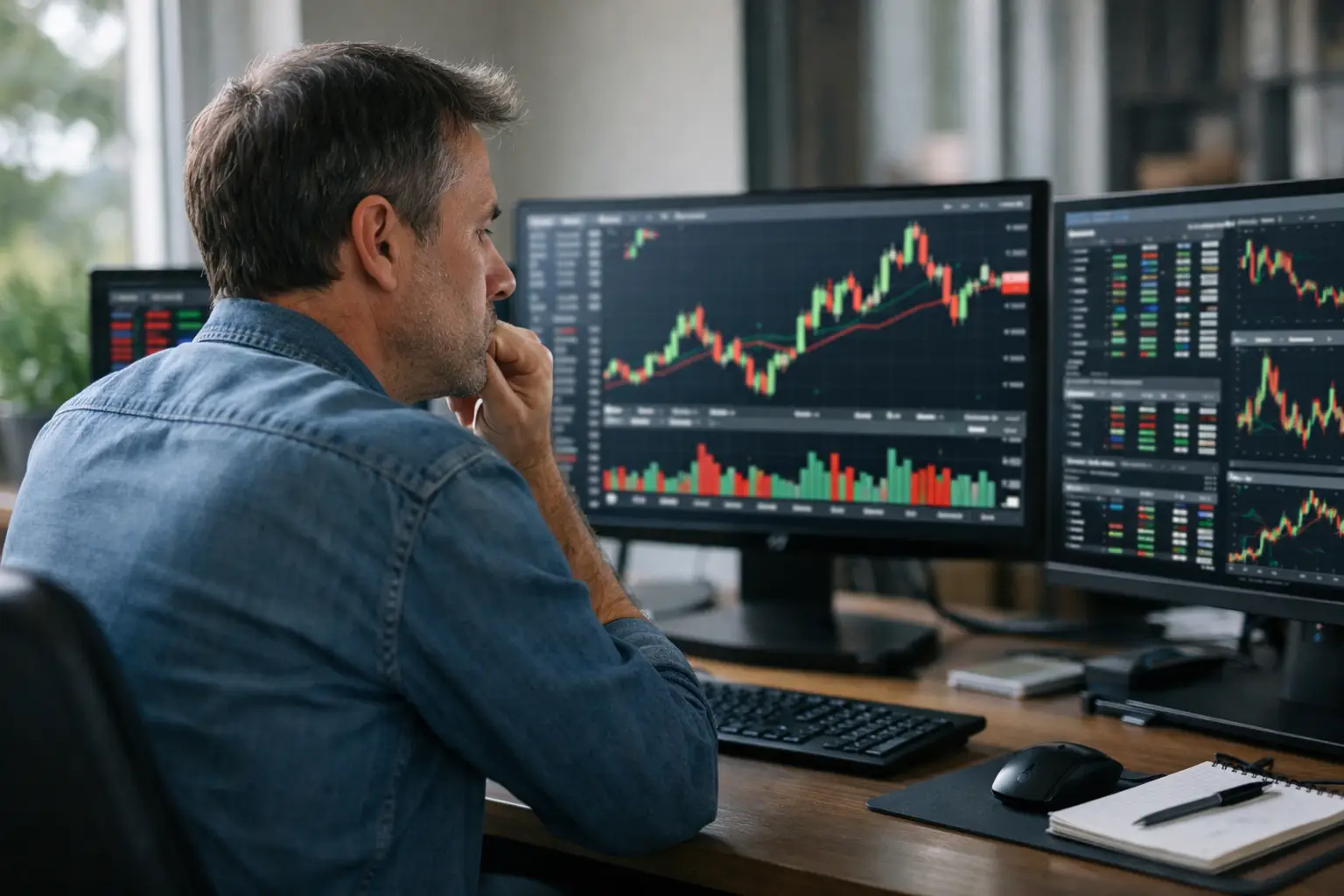
Retail investors report sharp, unsettling moves in their holdings as individual portfolios swing between gains and losses in short spans. Many who have watched positions oscillate describe frustration and uncertainty about whether the patterns signal a deeper shift or a short-lived bout of volatility. Some market participants point to profit-taking by larger, more experienced players as one plausible explanation for abrupt price moves.
Professional traders and portfolio managers often cite a handful of mechanistic drivers behind episodes like these: portfolio rebalancing at the institutional level, rotation between sectors, algorithmic trading that amplifies momentum, and sudden liquidity changes. Macro headlines — from central-bank commentary to economic data — can act as catalysts, but the immediate cause of a given swing is usually a combination of these forces rather than a single event.
For individual investors, the implications depend largely on investment objectives and time horizon. Short-term traders may seek tighter risk controls and clearer exit rules, while long-term investors typically focus on the fundamentals of the companies they own and on maintaining diversification. Cost-averaging and refraining from impulsive trades under stress are long-established approaches to managing volatility; consulting a licensed financial adviser can help align any response with personal goals and tax considerations.
Volatility also carries psychological costs: feelings of regret, doubt and the urge to act can lead to decisions that undermine long-term returns. Tracking portfolio exposures, reviewing asset allocation, and verifying that positions reflect an articulated plan can reduce the risk of reactive behavior. Readers looking to deepen their understanding of market dynamics may find broader coverage on stocks useful, and those facing significant concern should consider professional guidance to translate market noise into a disciplined strategy.