








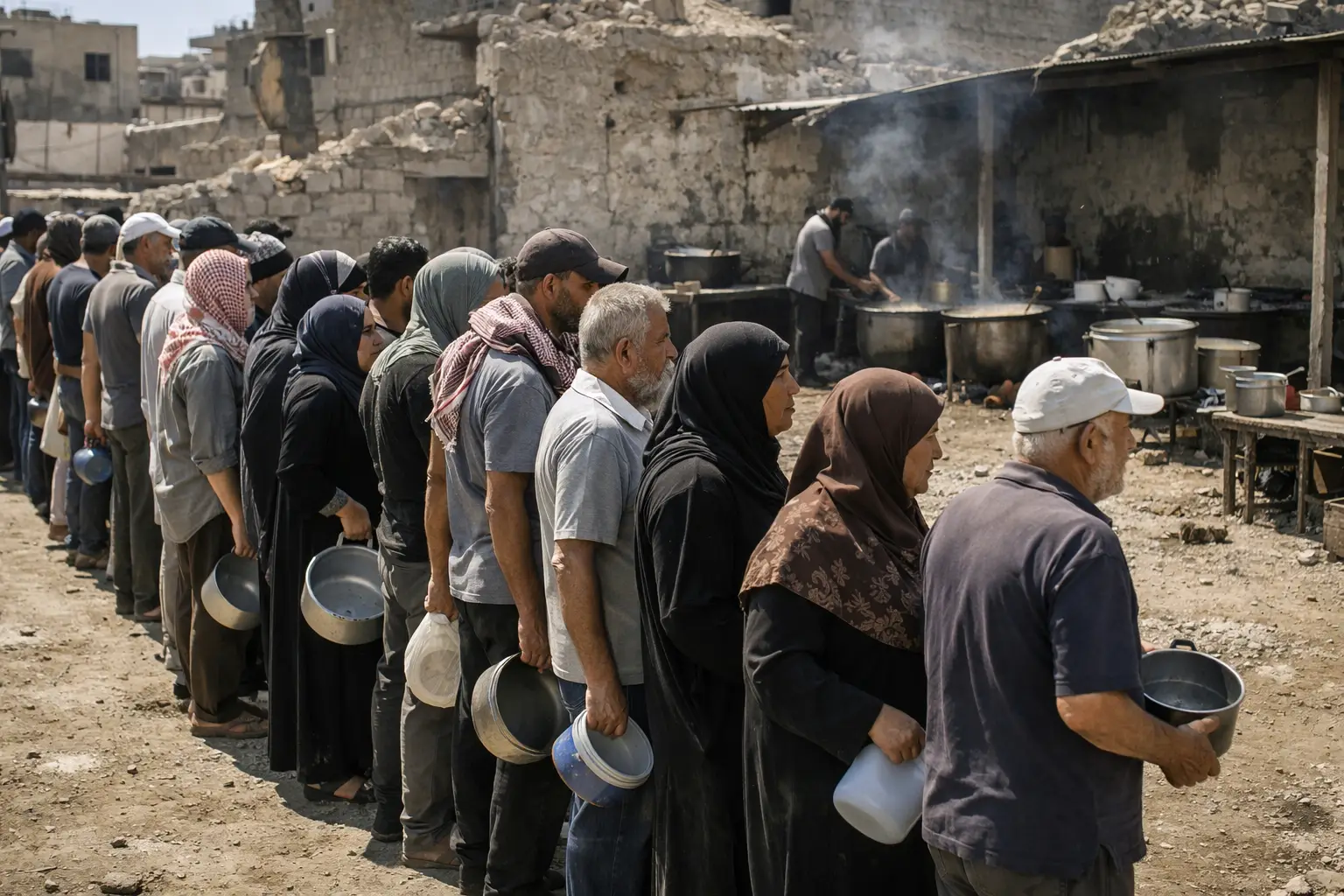
Hunger persists daily in Gaza, where long lines at community kitchens have become a routine for many families. A ceasefire reached a year ago was expected to open routes for larger volumes of food and aid, but the intended relief has not translated into widespread, stable access to sufficient meals across the territory.
Niyaha al-Masri, a 35-year-old mother of eight, spends more than six hours each day waiting at one such community kitchen in the hope of securing food for her children. She says that without the support provided by these facilities, she and her family would have “nothing at all.” The kitchens are run by humanitarian teams working to provide daily rations where formal markets and supply chains remain unreliable.
Community kitchens and other aid operations have filled a gap left by damaged infrastructure and constrained supply lines, serving thousands who lack regular income or access to functioning stores. International and local aid actors continue to operate these services amid logistical challenges; UN OCHA and other organisations describe the work as essential to preventing deeper food insecurity. For many households, these daily distributions are the primary source of sustenance.
The persistence of long queues and reliance on charitable kitchens highlights the fragile nature of recovery in the territory. Even as the ceasefire has reduced active hostilities in many areas, the expectation that food would quickly reach all communities has not been met. For residents like al-Masri, the continuation of humanitarian services remains the difference between some meals and none, underscoring the ongoing need for sustained and reliable aid delivery to prevent further deterioration in nutrition and living conditions.