








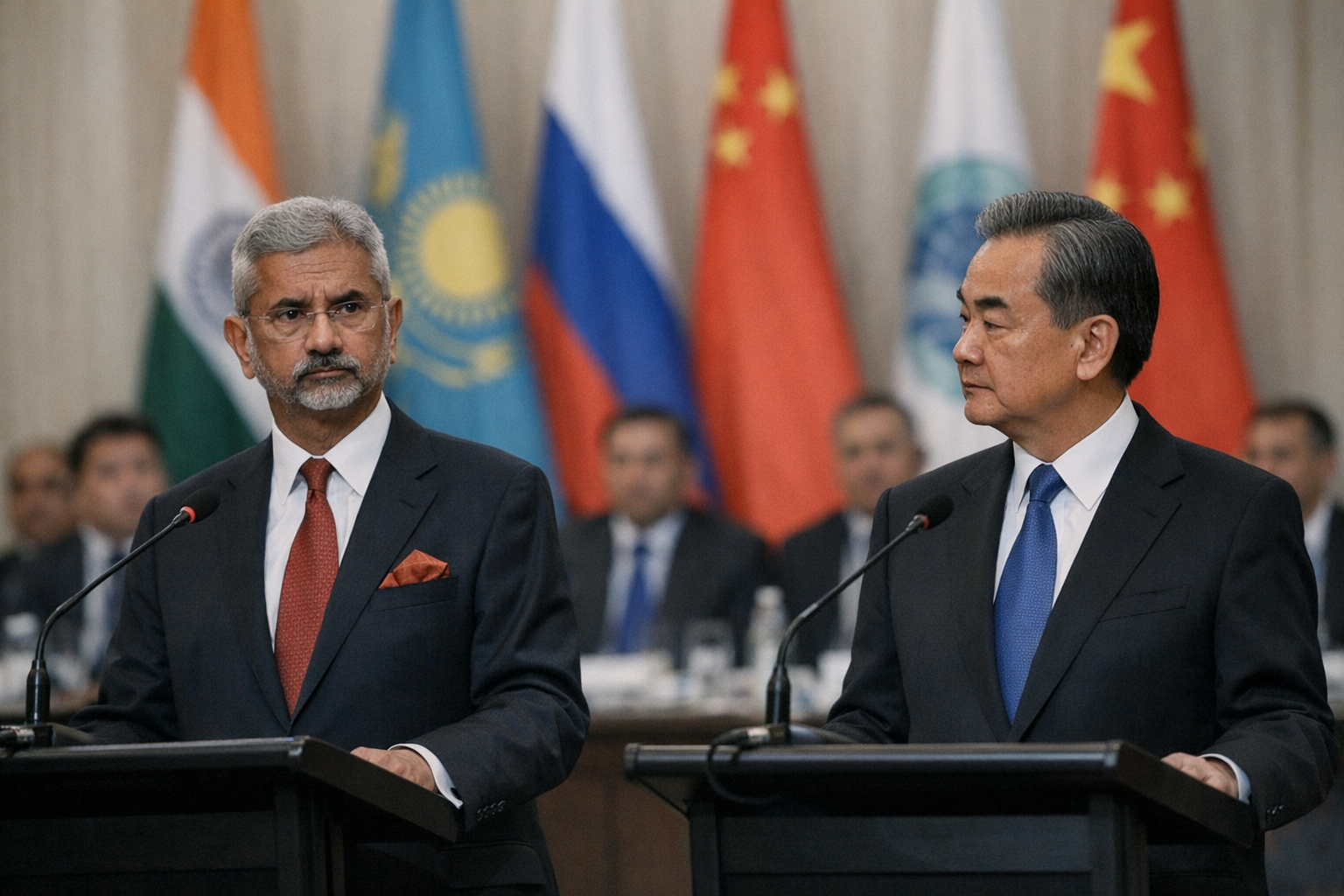
SCO’s limited returns have become increasingly evident to analysts and policymakers in India. Conceived as a regional platform for security cooperation and economic dialogue, the grouping led by China has not yielded substantial advances for New Delhi. Much like BRICS, the structure and priorities of the forum deliver diplomatic visibility but offer limited leverage on issues central to Indian strategic and economic interests. The organisation itself is presented publicly by the Shanghai Cooperation Organisation.
At its core the institution emphasises counterterrorism, connectivity discussions and intergovernmental coordination. For India, participation provides a formal channel for dialogue with neighbours and powers including China, yet the returns are constrained by differing threat perceptions and competing economic agendas among members. New Delhi’s priorities—greater market access, infrastructure reciprocity and clearer mechanisms for dispute mitigation—have not found sustained institutional remedies within the grouping’s current framework.
The limits of multilateral engagement are highlighted by ongoing bilateral frictions that cannot be resolved inside a broad regional forum. When core problems between member states are unresolved, the capacity of any multilateral body to translate meetings into tangible policy gains is reduced. India therefore treats the organisation as one instrument among many: a venue for confidence-building, information exchange and regional signalling rather than a primary vehicle for securing strategic outcomes or economic concessions.
Looking ahead, the value of the forum to New Delhi will depend on two elements: whether member states narrow gaps in priorities to pursue practical, enforceable initiatives; and whether India can convert participation into targeted cooperation on issues that match its national objectives. Absent such shifts, the grouping is likely to remain useful primarily as a diplomatic amphitheatre—allowing India to assert presence and perspectives regionally, but not as a source of major strategic or economic gains.