






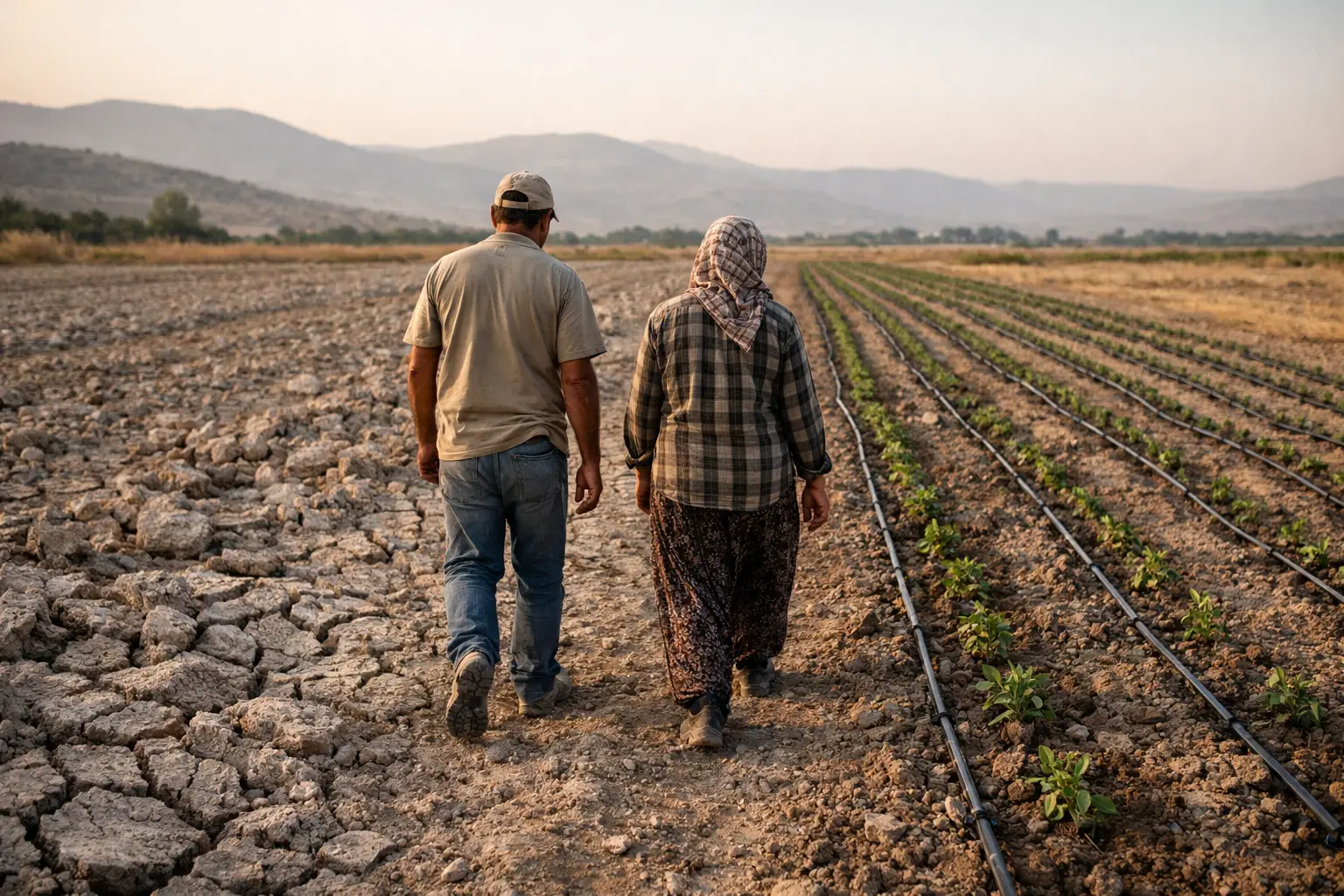
In western Turkey, farmer Mehmet Kabak is changing a routine built over decades. On land where he has long grown cotton near Soke, he is planting wheat and sunflower this season, partly because they need less water and are therefore cheaper to cultivate. His decision reflects a practical response to conditions that are becoming harder for farmers in drought-prone areas to manage.
The change carries broader significance for Turkey, which is set to host COP31, the United Nations climate summit where governments will again confront the unresolved question of who pays for adaptation to a warming world. While negotiations continue through the UNFCCC process, farmers are already making choices that affect what they grow, how much they spend and how they protect their livelihoods.
Cotton has long been associated with irrigated farming in parts of western Turkey, but crops that demand less water can reduce exposure to dry conditions and lower production costs. For growers such as Kabak, the calculation is not abstract. Water availability directly shapes planting decisions, and the economics of cultivation shift when irrigation becomes more difficult or expensive. The move from cotton to wheat and sunflower shows how agriculture is adapting field by field, often before national or international support mechanisms are fully in place.
The experience in Soke mirrors a wider global pattern. Farmers facing drought and other climate pressures are seeking their own ways to adjust rather than waiting for governments to resolve long-running disputes over adaptation finance. At climate summits, wealthier and poorer countries have repeatedly debated how to fund measures that help communities cope with the effects of climate change. On farms, those debates translate into immediate questions about seed, irrigation, input costs and the risk of planting crops that may no longer suit local conditions.
Turkey’s role as COP31 host will place additional attention on the gap between international climate diplomacy and day-to-day adaptation. Kabak’s crop switch does not resolve that gap, but it illustrates its urgency. As drought-prone regions reassess what can be grown sustainably, the pressure on policymakers to turn climate commitments into practical support is likely to intensify.