








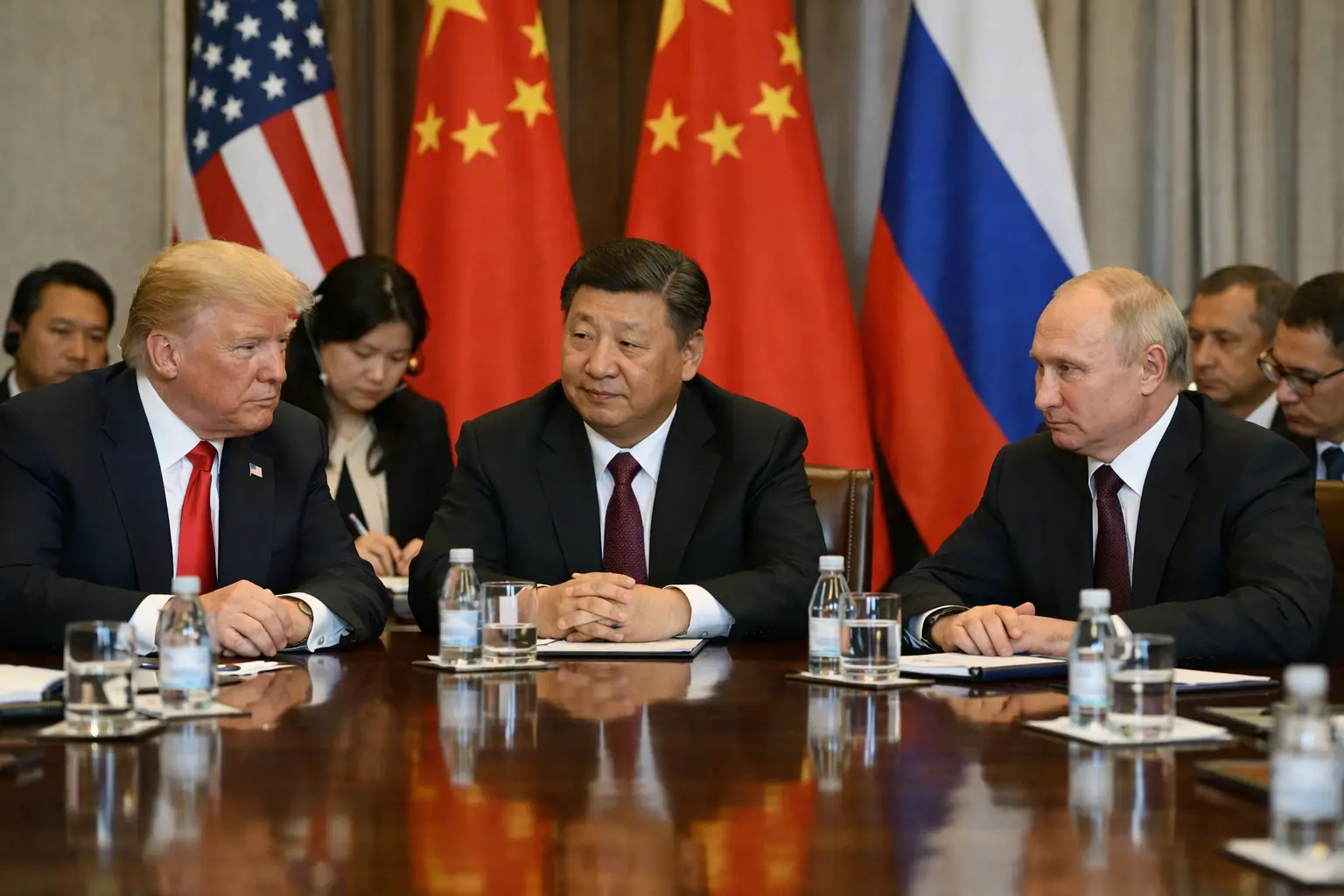
Before talks even began, Donald Trump presented his reception by Xi Jinping in Shenzhen as a political success, describing the Chinese leader’s welcome as a “big win” ahead of an unusual three-way encounter with Vladimir Putin. The meeting brings together the leaders of the United States, China and Russia, the world’s largest nuclear powers, at a moment marked by persistent disputes across security, diplomacy and trade.
The setting gives the gathering unusual symbolic weight. A United States president, China’s top leader and Russia’s president sharing the same diplomatic stage is rare, and the format has drawn close attention well beyond the three capitals. Trump, linked to the White House, used the scale of the Chinese reception to signal momentum before substantive discussions had taken place. For Xi Jinping, represented internationally through the Ministry of Foreign Affairs of China, the event also underscores Beijing’s role in high-level global diplomacy.
Expectations for concrete results remain limited. Analysts do not anticipate major agreements, given the depth of the divisions separating the three governments. The war in Ukraine, tensions involving Iran, nuclear arms issues and trade disputes all remain difficult points of contention. These subjects touch core national interests for each side, making broad compromise unlikely in a single meeting, even one involving such prominent leaders.
The summit’s consequences are being watched closely by countries outside the room. Smaller states are concerned that decisions or informal understandings among the largest powers could weaken their influence or overlook their security and economic priorities. That anxiety reflects a recurring feature of great-power diplomacy: talks intended to manage rivalry can also raise fears among allies, partners and regional actors whose interests are affected but whose voices are not directly represented.
For Vladimir Putin, whose office is represented by the Kremlin, the meeting offers another high-profile platform alongside Washington and Beijing. For Trump, the emphasis on the welcome from Xi Jinping suggests an attempt to define the encounter as successful before any diplomatic outcome is measured. The significance of the summit may therefore lie less in immediate agreements than in the message sent by the three leaders appearing together despite unresolved differences.