








Avatar photo

Nicolas Renaud

Nicolas Renaud is a Monegasque journalist specializing in international economic affairs, diplomacy, and issues related to global governance.

Why scientific research is now part of economic and strategic competition

For decades, scientific research was primarily associated with expanding knowledge, improving public health and supporting technological progress. International collaboration was considered one of its defining characteristics, with universities, laboratories and researchers sharing discoveries across borders. That model remains an essential part of modern science, but it now coexists with another reality: research has become a…

Read More

Why climate adaptation is becoming a practical test for governments

For many years, climate policy focused primarily on reducing greenhouse gas emissions. Governments introduced measures to expand renewable energy, improve energy efficiency and lower carbon emissions, with the objective of limiting long-term global warming. While these efforts remain central, a second challenge has become increasingly urgent: adapting to the effects of climate change that are…

Read More

Why companies are redesigning supply chains around geopolitical risk

For decades, many companies built their supply chains around one primary objective: efficiency. Manufacturing was concentrated where costs were lower, suppliers were selected on price and speed, and global logistics allowed products and components to move across continents with relative predictability. That model is now undergoing significant change. Recent geopolitical developments have highlighted the vulnerability…

Read More

Israel Announces Elimination of Ali Mussa Daqduq, Historical Hezbollah Figure

The Israeli army announced Sunday that it had killed Ali Mussa Daqduq, one of Hezbollah’s most experienced and wanted operatives, during a targeted strike in southern Lebanon. According to the IDF, the operation targeted a historical leader of the Lebanese Shia movement, considered by Washington and Israel to be one of the architects of several…

Read More

Iran Back Against the Wall

For several years, the Islamic Republic of Iran had never been confronted with such strong pressure. Between economic sanctions, military tensions with Israel, complex negotiations with the United States, and internal difficulties weakening the country, Tehran now finds itself facing decisive choices for its regional future. Iranian leaders assert that they maintain their willingness for…

Read More

The Maghreb’s economic future depends on borders as much as markets

Economic dynamics in the Maghreb are shaped by a combination of domestic factors, regional interactions and global market conditions. Countries such as Morocco, Algeria and Tunisia maintain trade relations with partners in Europe, Africa and beyond, while also navigating regional constraints linked to border policies and infrastructure. Trade flows in the region are influenced by…

Read More

Europe’s political center struggles to speak to anxious voters

Political parties positioned at the center of the ideological spectrum continue to play a significant role in several European countries. However, recent electoral cycles and opinion surveys indicate that these parties face challenges in addressing concerns expressed by parts of the electorate. Across multiple EU member states, issues such as the cost of living, energy…

Read More

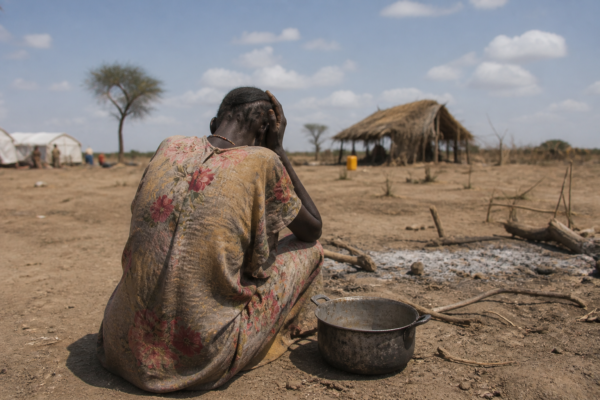
Why the food crisis in South Sudan highlights challenges in international response mechanisms

South Sudan is currently facing one of the most severe food insecurity situations in the world, according to data from the United Nations and humanitarian organizations. An estimated 7 million people are experiencing high levels of food insecurity, with some regions approaching famine-like conditions. The situation is linked to a combination of factors, including conflict,…

Read More