








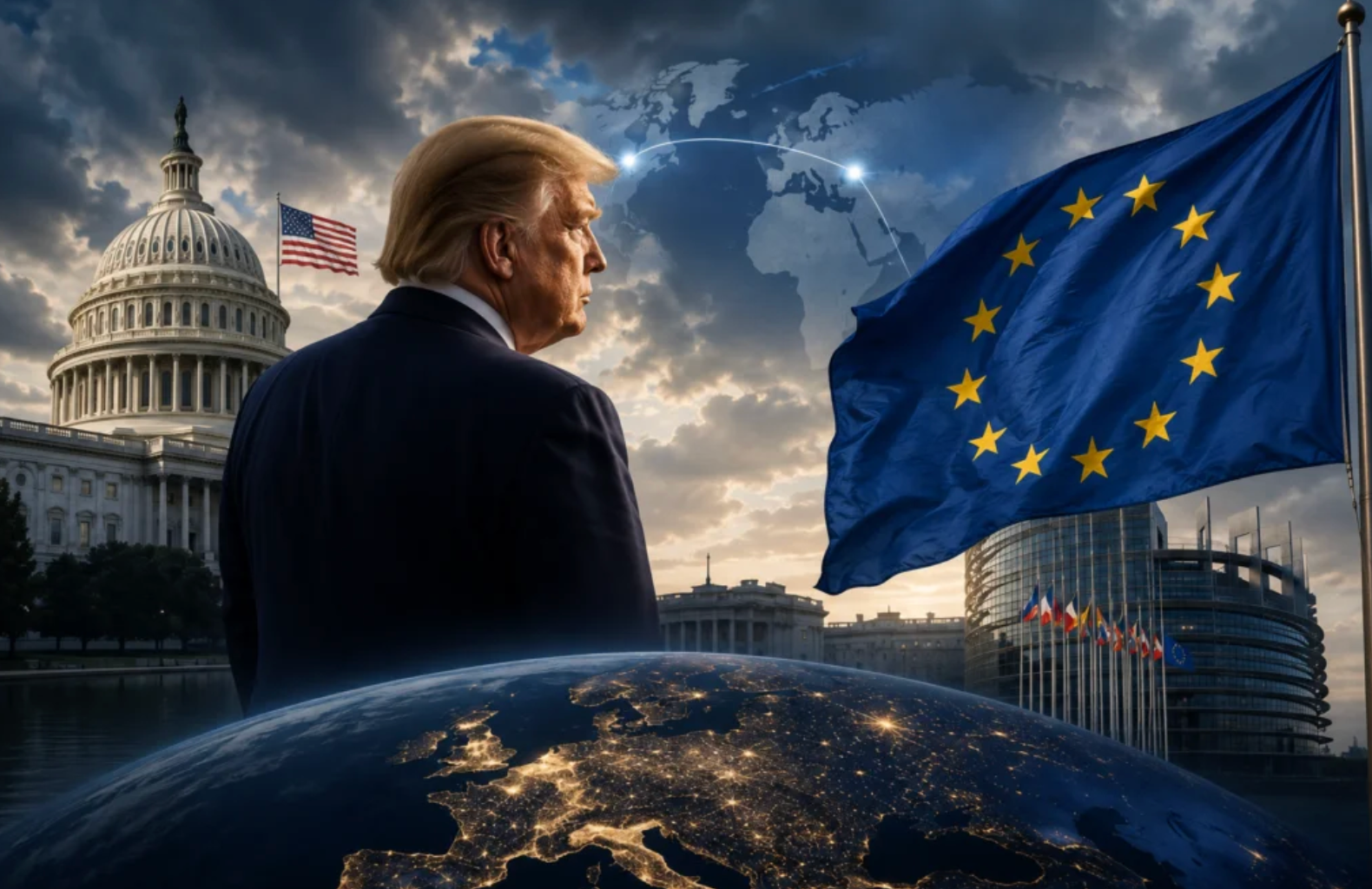
The transatlantic relationship between Europe and the United States is entering a new phase of uncertainty. The return of Donald Trump to the White House marks not only a political shift in Washington, but also a profound questioning of the strategic balances that have structured the West since the end of the Second World War.
For several decades, Europeans could rely on a solid American partnership based on a shared vision of security, trade, and liberal democracy. Today, this certainty no longer exists. The Trump administration favors a pragmatic approach, based on American national interests, even if it means shaking up certain historical alliances.
This evolution forces Europeans to ask themselves a fundamental question: are they ready to ensure their own security and economic future? The debate on European strategic autonomy, long considered theoretical, is now becoming a political necessity.
The war in Ukraine has demonstrated just how fragile the continent’s stability remains. It has also highlighted European dependencies, both in military and energy terms. Faced with an still-aggressive Russia and an increasingly influential China, Europe must learn to speak with a single voice if it wishes to maintain a significant role on the international stage.
Yet, divisions persist. National interests often diverge among member states. Some prioritize the link with Washington, while others argue for greater strategic independence. This fragmentation weakens the European Union’s ability to act effectively.
The stakes go far beyond foreign policy. They also concern economic competitiveness, technological innovation, and the control of strategic resources. In a world where power dynamics are once again becoming central, Europe can no longer afford stagnation.
Ultimately, the return of Donald Trump acts as an eye-opener. It forces Europeans to face reality: American protection is no longer a given. The time has come for Europe to choose between dependence and power.